TYPE: Commentary
Ramesh Kumar Pandey¹,²,³ , Satya Prakash Yadav⁴, Gobind Sagar Bhardwaj¹,³, Dheeraj Mittal¹, Aju Mathew George¹, Gaurav Sirola¹,³, Anukul Nath²,³, Parag Nigam²,³, Bilal Habib²,³*
¹Ministry of Environment, Forest & Climate Change (MoEFCC), Government of India, New Delhi, 110 003, India.
²Academy of Scientific and Innovative Research (AcSIR), Ghaziabad, Uttar Pradesh 201002, India.
³Wildlife Institute of India (WII), Dehradun, Uttarakhand –248 001, India.
⁴International Big Cat Alliance, New Delhi 110 003, India.

Introduction
The Asian elephant (Elephas maximus) is a keystone species in tropical forest ecosystems, playing a vital role in seed dispersal, nutrient cycling, and vegetation dynamics (Fernando & Leimgruber, 2011). As ecosystem engineers, elephants shape forest landscapes, influencing broader ecological communities. Their large home ranges and habitat requirements position them as umbrella species, ensuring the conservation of a wide array of species (Albert et al., 2018). Furthermore, their cultural and religious significance has established them as flagship species for conservation. Conserving elephants is not only essential for the survival of the species but also for maintaining the ecological integrity of tropical forests (Daniel, 1998).
Among the 13 Asian elephant range countries, India harbours more than 60% of the global population, distributed across four regional landscapes: Northwest, Northeast, East-Central, and Southern India (Pandey et al., 2024a). Although India has managed to maintain a relatively stable elephant population, the species has suffered a significant range contraction across Asia in the last few decades (Pandey et al., 2024b). Historically, elephants roamed from the Tigris-Euphrates River Basin in the west to the Yangtze River Basin in the east. However, habitat loss, fragmentation, and poaching have reduced their range to 5–7% of their historical extent, with local extinctions in several countries (MoEFCC, 2022). Even in large nations such as China, where elephants were once widespread, fewer than 300 individuals remain today (Zhang et al., 2024).
Given that India harbours more than 60% o f the global Asian elephant population, ensuring its long-term persistence within a densely populated and rapidly developing landscape presents a unique conservation challenge. Despite India’s cultural reverence for elephants, conservation challenges have become increasingly prominent since the late 20th century. During the 1970s to 1990s, rampant poaching for ivory, particularly targeting bull elephants, led to severely skewed sex ratios in populations, threatening long-term genetic viability. For instance, in the Periyar Tiger Reserve in Kerala, the male-to-female ratio dropped to an alarming 1:100 during the 1990s (Sukumar et al., 1998). Simultaneously, human-elephant conflict has escalated due to habitat encroachment, leading to significant economic losses, human casualties, and retaliatory killings. Such conflicts erode local support for conservation efforts, necessitating urgent and strategic interventions. Recognising these pressing threats, the Indian Government launched Project Elephant (PE) in 1992 as a dedicated national conservation initiative for elephant. Administered by the Ministry of Environment, Forest and Climate Change (MoEFCC), the project aims to ensure the long-term survival of wild and captive elephant populations by addressing key threats such as habitat degradation, human-elephant conflict, and poaching. Project Elephant collaborates with the state forest departments and technical institutions to achieve its objectives.
This paper synthesizes published datasets, government records, and peer-reviewed literature to critically evaluate the long-term conservation outcomes of Project Elephant (PE). By examining three decades of implementation, the study assesses the programme’s effectiveness in securing elephant populations and habitats, mitigating human–elephant conflict, and strengthening conservation governance. The review further identifies persistent challenges, emerging threats, and strategic priorities to enhance the future trajectory of elephant conservation in India.
Conservation interventions implemented under Project Elephant
Core focus
Project Elephant (PE) is a comprehensive conservation initiative by the Government of India aimed at ensuring the long-term survival of wild and captive elephants. The project focuses on protecting and restoring elephant habitats to sustain viable populations while implementing measures to mitigate human-elephant conflicts and promote coexistence. Strengthening anti-poaching strategies and curbing the illegal trade of elephant body parts are key priorities for safeguarding elephants. Additionally, PE emphasises ethical management and the welfare of captive elephants, ensuring improved living conditions. Scientific research and monitoring play crucial roles in understanding elephant ecology, population dynamics, and behaviour, contributing to more effective conservation strategies. Furthermore, the initiative actively engages local communities through education and outreach, fostering awareness and participation in conservation efforts.
Institutional framework
The MoEFCC administers PE and implements it through a collaborative approach involving multiple agencies. State forest departments play a crucial role in on-ground conservation and management efforts, ensuring the protection of elephant habitats and populations. The Wildlife Institute of India (WII) has contributed by conducting research and providing technical expertise to enhance conservation strategies (PE-WII-MoEFCC, 2024). The Central Zoo Authority (CZA) oversees the welfare and ethical management of captive elephants to ensure their well-being. Additionally, the National Tiger Conservation Authority (NTCA) collaborates on habitat protection and policymaking, reinforcing the holistic approach to elephant conservation in India. The Wildlife Crime Control Bureau (WCCB) plays a crucial role in elephant conservation by combating the illegal wildlife trade, preventing poaching, and dismantling organised wildlife crime networks.
Committees under the aegis of Project Elephant
The PE has a Steering Committee, chaired by the Hon’ble Minister of MoEFCC, which includes State Chief Wildlife Wardens, scientists, and experts outside of the government agencies. This committee regularly identifies and discusses key issues related to elephant conservation in India. Between 1992 and 2025, there were 21 meetings of the steering committee, with all topics and decisions carefully recorded. To tackle the evolving challenges, the Central Project Elephant Management Committee (CPEMC) was established on 28 December 2018, bringing together experts and officials for focused oversight. The CPEMC monitors the adherence to and implementation of directives and court orders regarding elephant conservation. Additionally, on 22 August 2019, the Captive Elephant Health Care and Welfare Committee (CEHWC) was constituted to improve the health and welfare of captive elephants across the country.
Population status and habitat conservation
Population trends, census methods and distribution
In India, Asian elephants are mainly distributed across the southern, northeastern, east-central, and northern regions (Figure 1). Accurate data on population parameters, such as distribution and abundance, are essential for the effective management of elephant populations (Pandey et al., 2024a). Historical estimates of wild elephant abundance are largely unavailable. However, contemporary accounts provide indirect evidence of their former numbers and distribution. Pyrard de Laval, a French navigator who travelled in India during the reign of Emperor Jahangir in the early seventeenth century, recorded approximately 40,000 elephants within the Mughal Empire and Bengal, a figure that likely encompassed both captive and free-ranging individuals (Sukumar, 2011). This account underscores the historical prominence of elephants across the Indian subcontinent.
The earliest known effort to estimate India’s elephant population was conducted by F. W. Champion in 1929 in the forests of the erstwhile United Provinces (now Uttar Pradesh and Uttarakhand). This was followed by population assessments carried out by the Uttar Pradesh Forest Department in 1966–67, with subsequent surveys in 1976 and 1978, marking the beginning of systematic elephant population monitoring in the country (Daniel, 1980).
Between 1978 and 1980, regional elephant population assessments undertaken in the Northeastern, Northern, East-Central, and Southern landscapes were synthesized to generate the first nationwide estimate of India’s elephant population. Based on total count surveys, the population was estimated at approximately 19,558 elephants, providing an important baseline for subsequent conservation planning and monitoring efforts (Lahiri-Choudhury, 1980; Singh, 1978; Shahi, 1980; Nair et al., 1980)
Following the launch of Project Elephant in 1992, elephant population assessments were conducted at approximately five-year intervals using a range of methods, including total counts, registration counts, waterhole counts, transect surveys, dung counts, and other site-specific approaches. Based on these surveys, India’s elephant population was estimated at 25,604 in 1993, 25,877 in 1997, 26,413 in 2002 and 27,694 during 2007–08, indicating a gradual increase in elephant numbers over this period.
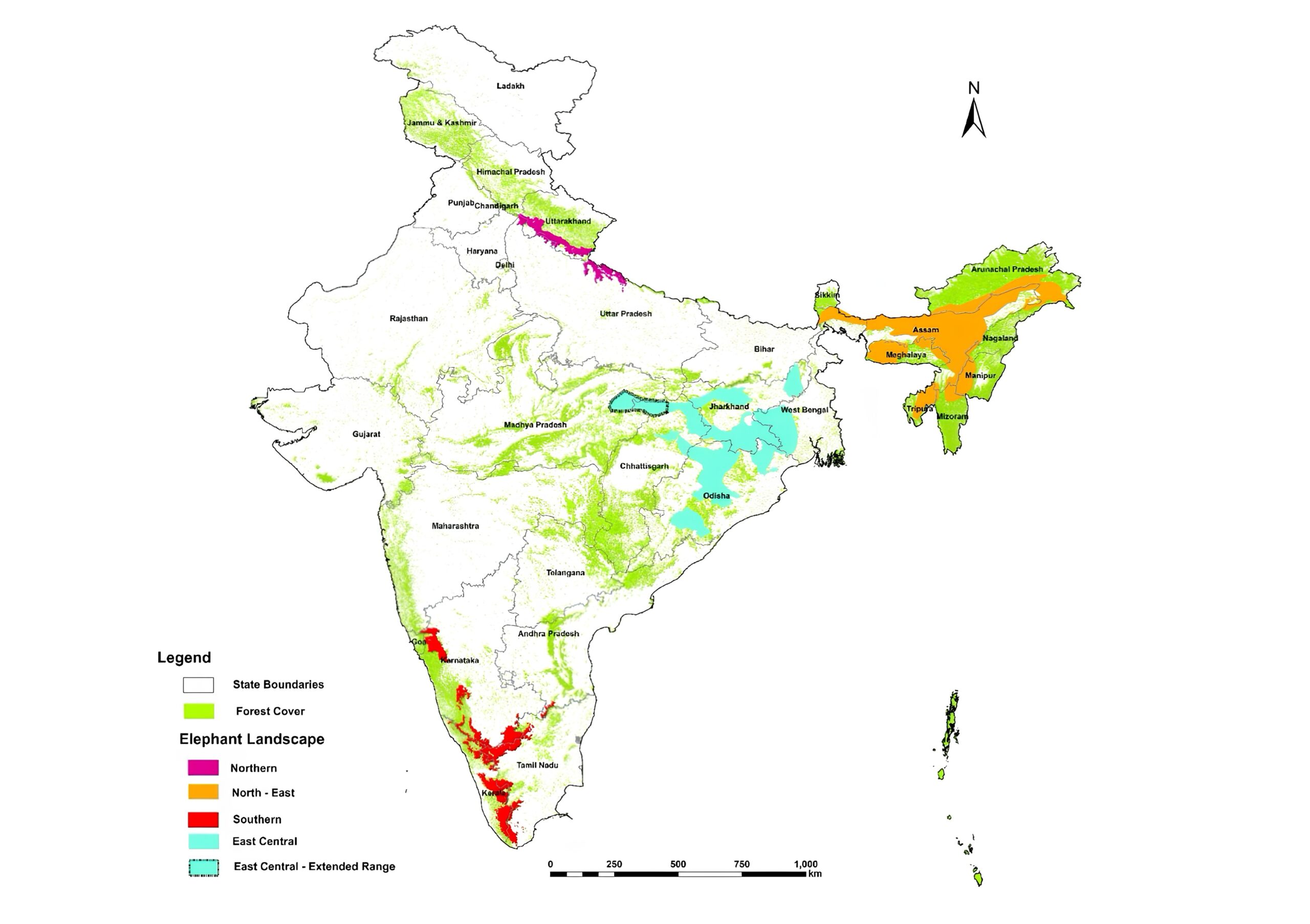
Figure 1. Major elephant landscapes of India and associated forest cover, illustrating the current distribution of elephants and areas of recent range expansion beyond their historically recognized range.
Project Elephant revised its elephant population estimation protocol in 2005, introducing synchronized surveys across all major elephant landscapes in the country. The first nationwide synchronized estimate was conducted in 2005, and the final assessment using this methodology was carried out in 2017, yielding an estimated population of 29,964 elephants (MoEFCC, 2017). The increase from 27,694 elephants in 2007–08 to 29,964 in 2017 reflects population stability rather than substantial growth. In the context of ongoing habitat fragmentation and anthropogenic pressures across elephant range states, the maintenance of a stable population underscores the role of Project Elephant as a persistence-oriented conservation programme, focused on preventing population decline and securing long-term viability (Figure 2).
In 2022, elephant population estimation was integrated into the All-India Tiger and Co-predator Assessment, marking a major methodological advancement through the adoption of DNA-based genetic mark–recapture techniques using dung samples. This approach overcame key limitations of traditional direct and indirect count methods, providing the first robust, landscape-scale estimate of India’s wild Asian elephant population at 22,446 individuals (95% CI: 18,255–26,645). Karnataka supported the largest population (6,013), followed by Tamil Nadu (3,136) and Kerala (2,785), while the Western Ghats and the North-Eastern Hills–Brahmaputra landscapes emerged as the country’s principal elephant strongholds (Qureshi et al., 2025) (Figure 3).
Growth of elephant reserves
Since PE was started in 1992, the idea of a “landscape approach” to elephant conservation has been highlighted because of the wide ranging behaviour of elephants. Considering this, the concept of Elephant Reserves (ER) was introduced, which serves as a management unit and includes forests and regions well outside of Protected Areas (PAs). Protected areas in India cover less than 40% of the elephant range. Elephant conservation cannot be ensured in the long run by concentrating only on PAs. Unlike tiger reserves, which are managed mainly by the forest department, elephant reserves require coordination with other ministries, agencies, and local communities. India has notified 33 Elephant Reserves (Figure 4) across 14 states covering an area of 80,777 km2 (± 2,564.85 SD, range = 23.5 –13440 km2). Singphan ER (23.5 km2 ) in Nagaland is the smallest ER in India, whereas Singhbhum (13,440 km2 ) in Jharkhand is the largest. Approximately 27,372.17 km2 area of ERs overlaps with of the 130 existing PAs, and accounting for 15% of the total PA area in the country. Further, a total of 33 ERs overlap with 25 Tiger Reserves (TRs) across nine states of the country (Pandey et al., 2025c). Tiger Reserves are statutory management units for the protection and conservation of tigers in the country, as per the Wildlife (Protection) Act, 1972. The expansion of elephant reserves beyond protected areas reflects a shift from site-specific to landscape-level management. This demonstrates that elephant conservation in densely populated countries depends on multi-use landscapes rather than strictly protected wilderness areas.
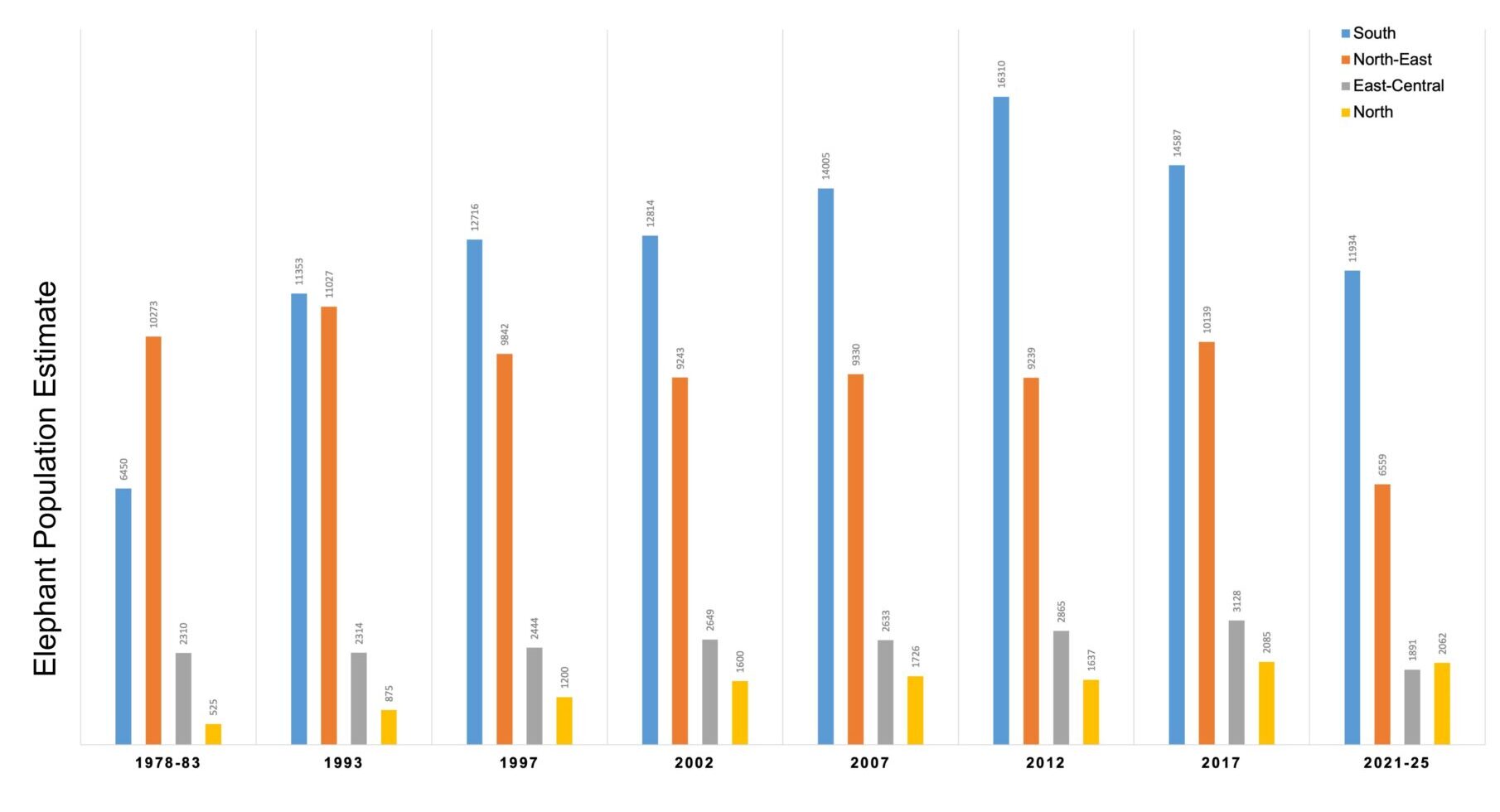
Figure 2. Trends in elephant population estimates across the four major elephant landscapes of India from 1978 to 2021–25. Estimates up to 2007 were derived primarily from total count surveys, while the 2012 and 2017 assessments employed a combination of total counts, dung-count methods, and sample block counts. The 2021–25 estimates were generated using DNA-based genetic mark–recapture analyses within a Spatially Explicit Capture–Recapture (SECR) framework. Owing to differences in survey methodologies, estimates from 2021–25 are not directly comparable with earlier assessments and should be considered a new baseline for future monitoring.
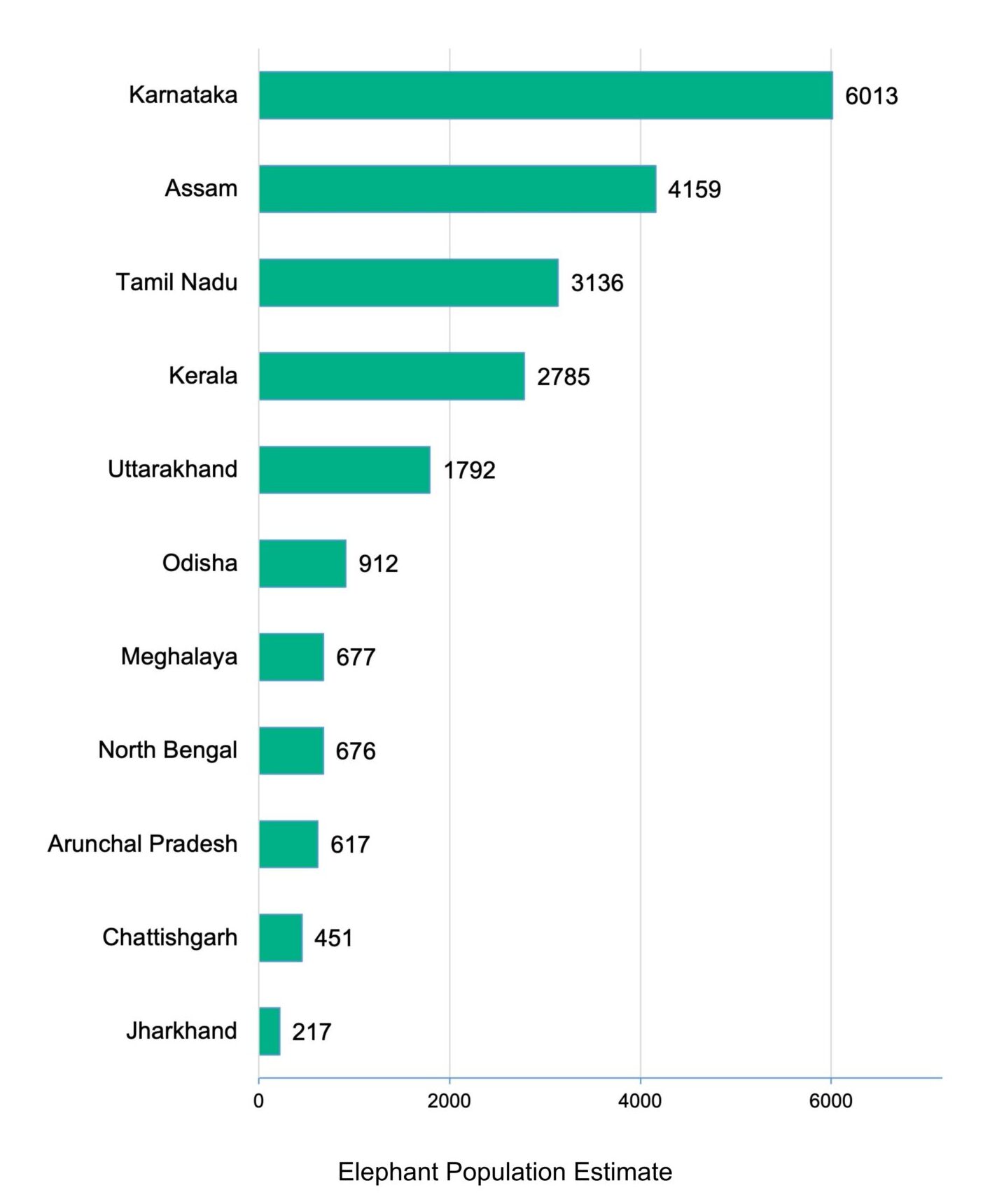
Figure 3. State-wise estimates of India’s wild elephant population derived from the DNA-based Synchronised Assessment of India’s Elephant Population (SAIEE 2021–25)
Significance of Elephant Corridor
An elephant corridor is defined as the pathway that elephants use to move between habitat patches to fulfil basic life history requirements, including habitat-use within home range, seasonal migrations. Elephant corridor protection has long been viewed as an essential measure to protect elephants and reduce HEC in India. Corridors facilitate animal movement between habitat patches, thus maintaining the long-term demographic and genetic viability of elephant populations. The Gajah-Elephant Task Force report in 2010 enlisted 88 elephant corridors throughout India (Rangarajan et al., 2010). In April 2022, during the 16th PE Steering Committee meeting, it was noted that there is a need to conduct ground validation of corridors, as the Gajah report was released 12 years ago. Given this, a team including representatives from the respective Forest Divisions of the SFDs and individuals designated by Project Elephant verified all the elephant corridors mentioned in the Gajah report and additionally suggested by the SFDs. In total, 150 elephant corridors were documented from 15 elephant range states in India’s four elephant-bearing zones (PE – MoEFCC, 2023; Pandey et al., 2024c). The highest number of elephant corridors (n = 26), which accounts for 17% of the total, is located in West Bengal. The east-central region has the most corridors (35%), followed by the northeast (32%), south (21%), and north (12%) (Figure 5). While 40% of the corridors showed increased
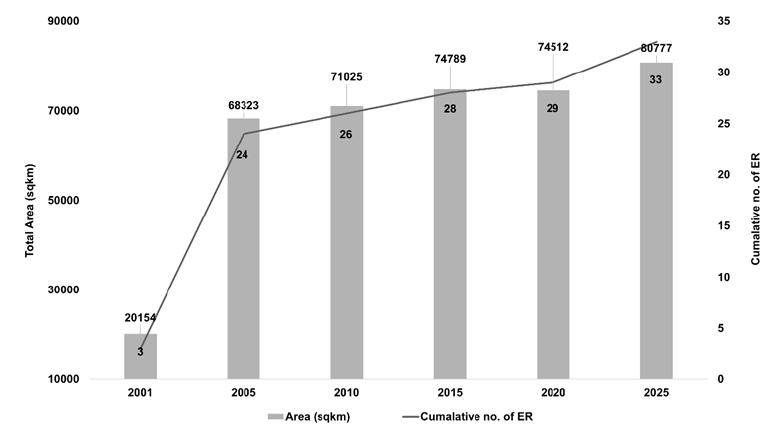
Figure 4. Growth in the number of Elephant Reserves (ERs) in India from 2000 to 2025, highlighting the progressive expansion of the protected network dedicated to elephant conservation and habitat management.
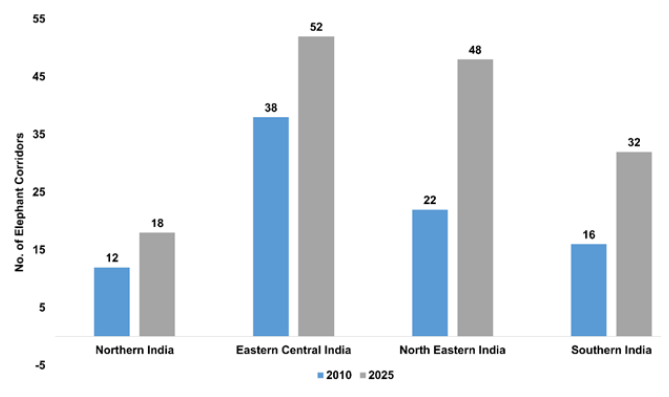
Figure 5. Region-wise increase in the number of identified elephant corridors in India between 2010 and 2025.
elephant movement, 10% are impaired and need restoration. Corridor validation and restoration indicate that functional connectivity is being maintained despite increasing infrastructure development, suggesting that connectivity management may be more critical than habitat expansion for long-term genetic viability of elephants in human-dominated landscapes.
Key conservation strategies & policy Interventions
Addressing Human–Elephant Conflict (HEC)
In India, HEC results in the loss of over 500 humans and 100 elephants annually (Pandey et al., 2024b). Given its impact on both elephant conservation and local livelihoods, the mitigation of this conflict is of utmost importance. The PE plays a key role in addressing these challenges by bridging knowledge gaps through resource materials, stakeholder consultations, and close engagement with the SFDs in the elephant range states.
Regular training programs are conducted for forest officials, covering various conflict-mitigation strategies. Additionally, best practices for managing HEC are periodically reviewed and published. Recently, with technical assistance from the WII and WWF-India, PE developed a user-friendly “Field Manual for Managing HECs in India”, available in multiple regional languages (Hindi, Assamese, Odia, Malayalam, Kannada, and Tamil), providing on-ground officials with quick-reference guidance (PE-MOEFCC, WII & WWF, 2022). The project also supports research aimed at identifying human–elephant conflict (HEC) hotspots and the underlying drivers of conflict. Recent studies from Assam, Chhattisgarh, and Jharkhand have provided comprehensive insights into the spatial and temporal patterns of HEC over the past two decades, generating critical evidence to guide targeted mitigation and management interventions (Habib et al., 2025a,b,c; Roy et al., 2025a, b; Pandey et al., 2025a,b; Pandey et al., 2026; Athira, et al., 2026).
Recognising that long-term conflict resolution takes time, immediate measures to minimise losses are crucial, particularly for marginal farmers. To support them, PE has been working to enhance ex-gratia compensation for those affected by elephant-related damage. In a significant step, crop losses due to wild animals are now covered under the Pradhan Mantri Fasal Bima Yojana (PMFBY), a national crop insurance scheme.
Project Elephant and Project Tiger were two sub-schemes under the Integrated Development of Wildlife Habitats (IDWH). Following approval from the Expenditure Finance Committee (EFC) and the Cabinet, the schemes were merged for better resource allocation, synergy, and a focused conservation approach. States now submit a single Annual Plan of Operations (APO), streamlining financial assistance and project execution. The merged scheme is called CSS-Project Tiger and Elephant (PT&E), during 2023-2024, a total of Rs. 239.59 crores was disbursed for the conservation of Tigers and Elephants under this scheme.
Establishment of the Elephant Cell
The Elephant Cell at the WII, Dehradun, was established as a technical wing of the PE Division to enhance elephant conservation efforts in India. Recommended by the Elephant Task Force (Gajah Report) and approved during the 13th Steering Committee meeting on PE (2014), the cell aims to address critical challenges, such as data management, human-elephant conflict, habitat protection, and capacity building. It strengthens efforts towards the conservation of elephants, both in the wild and in captivity. The Elephant Cell also conducts field-oriented training for PA managers and frontline staff posted in elephant reserves in India, enhancing their capacities to manage elephant populations, their habitats, and other associated concerns.
Advisory & Technical Reports
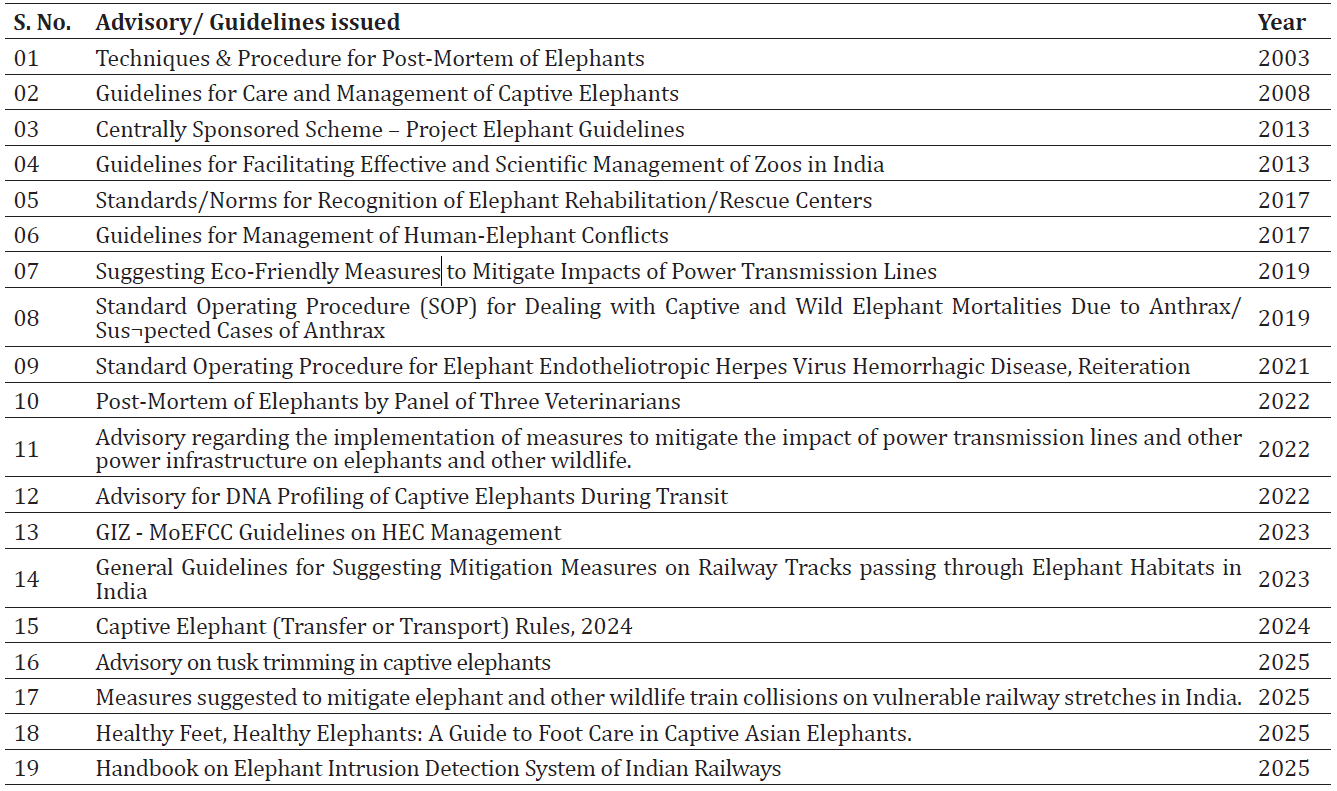
Project Elephant, in collaboration with various organisations, agencies, and ministries, has been at the forefront of developing a comprehensive set of guidelines, advisories, and rules aimed at enhancing the management of the conservation and welfare of captive elephants in India. These documents address a wide range of critical issues, including elephant healthcare, habitat conservation, human-elephant conflict mitigation, captive elephant welfare, and infrastructure-related risks, such as train accidents and power transmission lines. Several guidelines/advisories have been provided over the years, covering areas such as disease surveillance, post-mortem practices, and safety measures for power transmission and railway tracks (Table 1). Additionally, the introduction of protocols for DNA profiling of captive elephants reflects a commitment to ethical and scientific management of elephants. These advisories and guidelines are crucial for shaping national conservation policies, establishing a strong framework to protect elephants, promoting their welfare, and ensuring their long-term survival.
PE has published a range of technical documents, research reports, and articles to support elephant conservation in India. A quarterly newsletter, “Trumpet”, is published by Elephant Cell under PE, providing regular updates in the field of elephant conservation in India.
Table 1: Advisory guidelines and recommendations issued by Project Elephant and other agencies for the management and welfare of wild and captive elephants in India.
Building on these efforts, several key knowledge products have been developed under Project Elephant to support evidence-based conservation and management. Best Practices of Human–Elephant Conflict Management in India (MoEFCC-WII, 2020) compiles field-tested interventions and state-level experiences for mitigating human–elephant conflict. The Field Manual for Managing Human–Elephant Conflict (PE–MoEFCC, WII & WWF-India, 2022) provides practical guidance for frontline staff and forest managers working in conflict-prone landscapes. The Elephant Corridors of India 2023 (PE-MoEFCC, 2023) identifies and maps critical corridors that facilitate landscape connectivity, a cornerstone of long-term elephant conservation. Complementing these publications, the Elephant Reserves of India: An Atlas and the two-volume Land-Use and Land-Cover Classification series (WII–PE-MoEFCC, 2022a,b,c, 2023) provide comprehensive spatial, ecological, and habitat information for all designated elephant reserves in India, thereby strengthening conservation planning and management.
Project Elephant has developed several standard operating procedures (SOPs), technical manuals, and management frameworks to strengthen elephant conservation and management. These include the Recommended Operating Procedure for Capture and Translocation of Elephants in Distress and Conflict Situations (PE–MoEFCC–WII, 2024a) and the Necropsy and Carcass Disposal SOP (PE–MoEFCC–WII, 2023c), which provide standardized guidance for field interventions, animal rescue, translocation, and mortality investigations. The Guidelines on Human–Elephant Conflict Management (GIZ & MoEFCC, 2023) and Caring for Elephants (Nigam et al., 2022) further support effective conflict mitigation, humane handling, and improved welfare standards. In addition, the Management Effectiveness Evaluation (MEE) of Elephant Reserves in India provides a framework for assessing conservation performance, governance, and field implementation across elephant reserves (PE–MoEFCC–WII, 2023b, 2024b), while the Framework for Preparation of Elephant Conservation Plans (ECPs) offers standardized guidance for developing long-term, science-based conservation strategies (PE–WII–MoEFCC, 2024).
State-Specific Mitigation Reports and Conflict Reduction Studies
A major nationwide initiative in 2024 was the release of ten state-specific mitigation reports focusing on reducing elephant–train collisions on vulnerable railway tracks across Assam, Arunachal Pradesh, West Bengal, Odisha, Tamil Nadu, Uttarakhand, Karnataka, Madhya Pradesh, Nagaland, and Jharkhand (PE-MoEFCC-WII, 2024(c)–2024(i)). The consolidated report, including all 14 states (PE-MoEFCC-WII, 2025), was released during the 21st Steering Committee meeting of Project Elephant held on 26 June 2025. Additionally, comprehensive studies on understanding elephant conflict issues and suggesting conflict reduction measures were recently completed for the states of Assam, Chhattisgarh, and Jharkhand (Habib et al., 2025a; Habib et al., 2025b; Habib et al., 2025c).
Welfare and management of captive elephants
Under the Wildlife (Protection) Act of 1972, both wild and captive elephants receive equal legal protection. Most captive elephants in India were either caught in the wild or born to wild-captured elephants, and the country has a long history of elephant capture and training. Currently, India has approximately 2,675 captive elephants, of which 1, 821 are under private ownership. Ensuring the welfare and humane care of elephants remains a core mandate of the PE. Capacity-building and training programs are regularly organised for veterinarians and elephant handlers to improve captive elephant welfare. These sessions bring together forest veterinarians from across the country for hands-on training.
Gaj Soochana App
The PE, in collaboration with the WII, has developed the Gaj Soochana App to set up a database of captive elephants for the country. This Android-based DNA profiling application was developed exclusively for the State Forest Departments (SFDs), providing a secure platform to store vital information, such as the elephant’s identity (name, microchip number, age, origin, and facility type), ownership details, body measurements, photographs, and veterinary records. This initiative creates a comprehensive genetic and physical database, facilitating the identification and monitoring of interstate transfers and preventing illegal trade. It may also act as a tool against illegal trade, strengthening conservation efforts. A database of over 1,000 captive elephants has already been created, and 70% of the sampling has been completed. Special forensic kits have been developed for DNA sampling, and the Ministry has made DNA profiling mandatory for Captive Elephant transportation through the Captive Elephant (Transfer or Transport) Rules, 2024.
Combatting illegal trade in elephant body parts
According to the Gajah report of 2010, despite India having approximately 30,000 elephants, the number of adult tuskers was estimated to be no more than 1,200. Illegal poaching of male elephants for ivory remains a serious threat to elephant populations worldwide. It is crucial to protect these large tuskers from ivory poaching. The peak of elephant poaching in India occurred during the 1980s and 1990s (Rangarajan et al., 2010), and addressing this issue remains a complex challenge, requiring a strong intelligence network, sting operations, effective evidence gathering, and judicial support for prosecuting offenders. To enhance anti-poaching efforts, Project Elephant collaborates closely with the WCCB, SFDs, and other enforcement agencies. Structured workshops and training programs should focus on intelligence gathering, field patrolling, offender detection, and legal prosecution to strengthen wildlife protection measures.
Asian elephants have been listed in CITES Appendix I since 1975. Furthermore, the 2003 MIKE Programme (Monitoring the Illegal Killing of Elephants) was launched in South Asia, including India, under a mandate from the CITES COP Resolution 10.10. The program was designed to provide critical data on elephant poaching trends and support conservation efforts through informed decision-making. In India, the MIKE Programme operates across ten designated sites, which includes Chirang-Ripu, Deomali, Dihing Patkai, Garo Hills, Eastern Dooars, Mayurbhanj, Shivalik, Nilgiri, Anamalai, and Periyar Elephant Reserves. Project Elephant provides data on elephant poaching and ivory seizures to MIKE and CITES every year.
Anti-poaching interventions appear to have shifted the primary threat from direct hunting to habitat-related mortality, indicating a transition in conservation challenges over time from exploitation pressure to landscape pressure.
Capacity building workshops and training programs
Project Elephant regularly conducts capacity-building workshops to sensitise key stakeholders, including Railway and Electricity Board officials, distribution agencies & companies, Park Managers, and Elephant Handlers, to mitigate human-elephant conflicts and ensure wildlife safety. The workshops are directed towards reducing railway-induced elephant mortality, preventing electrocution through safer power infrastructure, and enhancing the management of elephant reserves. Special training is also provided to elephant custodians and handlers for the welfare of captive elephants through improved care. Through the introduction of new advances and technologies, workshops facilitate the adoption of wildlife-friendly infrastructure and conservation practices by stakeholders, promoting a more sustainable coexistence of human activities and elephant habitats. During the period 2019-2025, these workshops trained over 370 officials from the Railways, Power Ministry, Forest Department, and other stakeholders.
Awareness and recognition
Elephant as India’s National Heritage Animal
India’s recognition of the elephant as its National Heritage Animal in 2010 marked a significant step toward prioritising the conservation of elephants. This declaration acknowledged the elephant’s cultural and ecological importance and underscored the need to protect this majestic species. By granting the elephant this status, India aimed to promote widespread awareness of the challenges faced by elephants, such as habitat loss, poaching, and human-elephant conflict. This decision brought national attention to elephant protection, laying the groundwork for various conservation initiatives.
World Elephant Day observance & Gaj Gaurav Award
Launched in 2012, World Elephant Day, one of the prominent conservation initiatives, is observed globally every year on 12 August to raise awareness about elephant conservation. India has played a central role in this observance, with initiatives such as the Gaj Gaurav Award, launched in 2022, to recognise the contributions of captive elephant owners and those working on the frontlines of elephant welfare. This award honours the exceptional work of forest officers, private custodians, and other stakeholders committed to the care and conservation of elephants. As part of its ongoing commitment to elephant conservation, PE completed 30 years in 2022. To celebrate this achievement, the MoEFCC, in collaboration with the Government of Assam, organised Gaj Utsav 2023 at Kaziranga National Park. Held on April 7-8, 2023, the event was inaugurated by the President of India and brought together policymakers, scientists, forest officials, and conservationists to discuss the challenges and future directions for elephant conservation in India. This event highlighted India’s dedication to safeguarding elephants and reaffirmed the country’s political will to support conservation initiatives.
Political Will, Technological Advancements, and Future Conservation Needs
The Indian government’s support for elephant conservation is reflected not only through policy interventions such as the Wildlife (Protection) Act,1972, but also through the implementation of modern conservation strategies. The use of cutting-edge technologies such as GPS tracking, drones, and mobile applications plays a critical role in monitoring elephant populations, tracking migration patterns, and preventing poaching. These advancements are vital for safeguarding elephants in an increasingly human-dominated environment. However, the future of elephant conservation relies on continued investment in habitat conservation, reducing human-elephant conflicts, and strengthening anti-poaching efforts. These steps are essential for the long-term survival of the species.
Awareness Programs and Community Engagement
Awareness programs across India play a vital role in promoting elephant conservation and actively involve communities and youth in these efforts. As part of this initiative, every year, Elephant Day is celebrated to raise awareness and sensitise the masses towards elephant conservation. A notable example is World Elephant Day 2024, featuring a nationwide campaign reaching 10 lakh children across 5,000 schools, focusing on the pressing issue of HEC. Such initiatives are essential for educating the next generation about the importance of elephant protection and conflict mitigation. These large-scale campaigns highlight the significance of community participation and public engagement in the collective mission to safeguard India’s National Heritage Animal.
International collaboration in elephant conservation
India’s commitment to elephant conservation at the global level is also evident in its active participation in international collaborations. PE works closely with key global organisations, including the IUCN Asian Elephant Specialist Group, which provides scientific expertise and guidance on Asian elephant conservation. India collaborates with neighbouring countries to promote transboundary elephant conservation, acknowledging the need for coordinated efforts across borders to protect migratory elephant populations. In a significant step toward regional cooperation, India and Bangladesh signed a protocol on transboundary elephant conservation on 17th December 2020, marking a crucial moment for cross-border collaboration for the protection of elephants in South Asia. India actively participated in the 3rd and 4th Asian Elephant Range States Meetings held in Kathmandu, Nepal, and Siem Reap, Cambodia, respectively.
Conservation effectiveness of Project Elephant
The outcomes indicate that Project Elephant has functioned less as a classical species recovery programme and more as a long-term persistence strategy. Rather than pursuing rapid growth of the elephant population, the initiative has stabilised their populations within human-dominated landscapes spanning reserves, corridors, and other coexistence settings. Conflict mitigation measures, such as compensation and awareness programmes, have maintained social tolerance, reinforcing the coexistence model. Over three decades, conservation priorities have shifted from poaching to habitat fragmentation and infrastructure-related mortality, reflecting evolving threats. Thus, PE exemplifies adaptive governance, where institutional coordination, policy innovation, and technological monitoring collectively sustain species persistence. This model offers particular relevance for large mammals in high human-density regions, where protected-area-centric approaches alone remain insufficient.
Initiatives & way forward
India is taking an integrated, multidimensional approach to augmenting elephant conservation through habitat management, conflict mitigation, modern technology, infrastructure planning, and improved captive elephant management. These initiatives, through enhanced monitoring, aim to enable coexistence, thus ensuring the long-term sustainability of elephant populations in diverse landscapes.
Habitat Management
Several initiatives have been launched to address habitat fragmentation and ensure secure movement for elephants. A project on the ‘Integrated Conservation and Management Strategies for Ripu-Chirang Elephant Reserve’ focuses on a multifaceted approach to protect critical habitat at the landscape level. The framework for the preparation of the Elephant Conservation Plan (ECP) has been introduced to provide a structured, science-driven approach to elephant management. This framework integrates ecological, socio-economic, and scientific principles to create sustainable landscapes while minimising human-wildlife conflict. Designed for adaptability, the ECP evolves with new research and environmental changes. A pilot ECP is currently being implemented in the Nilgiri Elephant Reserve to refine and optimise this strategy. Moving forward, to strengthen landscape-level conservation and improve elephant reserve management, the Management Effectiveness Evaluation of Elephant Reserves (MEE-ER) framework has been expanded to all Elephant Reserves across India with the funding support of CAMPA, ensuring a holistic and standardised approach to conservation management. Additionally, the MEE-ER is being implemented to assess and improve the management of ERs. A pilot MEE-ER study was conducted in four ERs across India: Shivalik ER (northwest), Kaziranga-Karbi Anglong ER (northeast), Mayurbhanj ER (east-central), and Nilgiri ER (south).
Retrofitting and mitigation measures
Collisions between trains and elephants represent a significant cause of unnatural elephant mortality in India. In response to the adverse effects of railway operations on wildlife, particularly the incidence of elephant-train collisions, MoEFCC and the Ministry of Railways have initiated a collaborative programme aimed at mitigating fatalities and minimising habitat disruption. As part of this initiative, comprehensive joint surveys were carried out with Indian Railways, SFDs, the WII, and PE to identify site-specific challenges. These assessments informed the development of appropriate mitigation strategies.
Following an exhaustive survey covering 127 railway stretches (110 within elephant habitats and 17 in two tiger range states) totalling 3,452.4 km, 77 stretches extending over 1,965.2 km across 14 states were prioritised for mitigation measures based on the frequency of use by elephants, tigers, and other wildlife. The recommended interventions for these 77 stretches comprise 503 ramps and grade animal passage, levelled upto the top of the sleeper, 72 bridge extensions or modifications, 39 fencing, barricading, or trenching structures, 4 exit ramps, 65 new underpasses, and 22 overpasses, resulting in a total of 705 proposed structures. Implementation details and progress are systematically tracked through the dedicated Elephant Railway Portal, an online monitoring dashboard for this initiative. To ensure effective implementation, a dedicated portal has been launched to monitor the progress of mitigation measures across sensitive zones, helping to minimise wildlife mortalities and reduce the barrier effect of railway tracks passing through critical habitats (PE-MoEFCC-WII 2025).
Following the recommendations made by a committee constituted by the MoEFCC in 2023, various mitigation structures have been proposed to reduce collisions. In line with these recommendations, Southern Railway constructed an elephant underpass (Figure 6) on the Ettimadai–Walayar section in Tamil Nadu, which is now actively used by elephants. More such structures are needed in the future to enhance wildlife safety. Similarly, two underpasses and an animal passage structure have been proposed for the Bongaigaon-Goalpara-Kamakhya railway track doubling project in Assam, where North East Frontier (NF) Railways will implement the project.
In addition to railway mitigation, infrastructure developments aimed at defragmenting habitats have also been undertaken by NHAI. A 12-km elevated roadway has been constructed along the boundary of Rajaji National Park, featuring Asia’s longest wildlife corridor to facilitate safe animal passage over NH-307 with state of art wildlife friendly lighting system (Habib et al., 2024) (Figure 7). Additionally, a defragmentation study is being conducted on the Ganeshpur-Dehradun stretch of NH-307 in Uttarakhand to assess the feasibility of an elevated road for uninterrupted elephant movement. These efforts mark a significant step toward balancing infrastructure development with wildlife conservation, ensuring safer movement for elephants and other animals while minimising human-wildlife conflict (Habib et al., 2026).
Human-Elephant Conflict
Given elephants’ long range interstate movement, PE has proposed a Regional Action Plan (RAP) to enhance conservation and mitigate HEC. This strategic initiative focuses on habitat conservation, elephant corridor protection, and community participation, using a region-specific approach. Regional Coordination Meetings have been conducted in the East-Central,
Southern, and North-Eastern regions, fostering interstate cooperation. In the Southern region, a drafting sub-committee has been formed and is actively working to formulate a structured RAP. Furthermore, a study on Understanding elephant conflict issues and suggesting conflict reduction measures (Phase II) is underway in Odisha, West Bengal, Tamil Nadu, Kerala, and Karnataka to develop effective strategies to minimise human-elephant conflict. The objective is to develop effective strategies to mitigate HEC by identifying conflict hotspots and analysing seasonal trends in incidents. The insights gained from this study will aid in formulating well-informed planning and management strategies to address the issue more effectively in the affected regions. Special emphasis is being placed on reducing human-elephant conflict caused by electrocution, with improved safety measures and awareness campaigns. Additionally, efforts are underway to establish an efficient and effective compensation mechanism, with states like Karnataka and Odisha utilising apps and IT tools to streamline compensation tracking and disbursement.
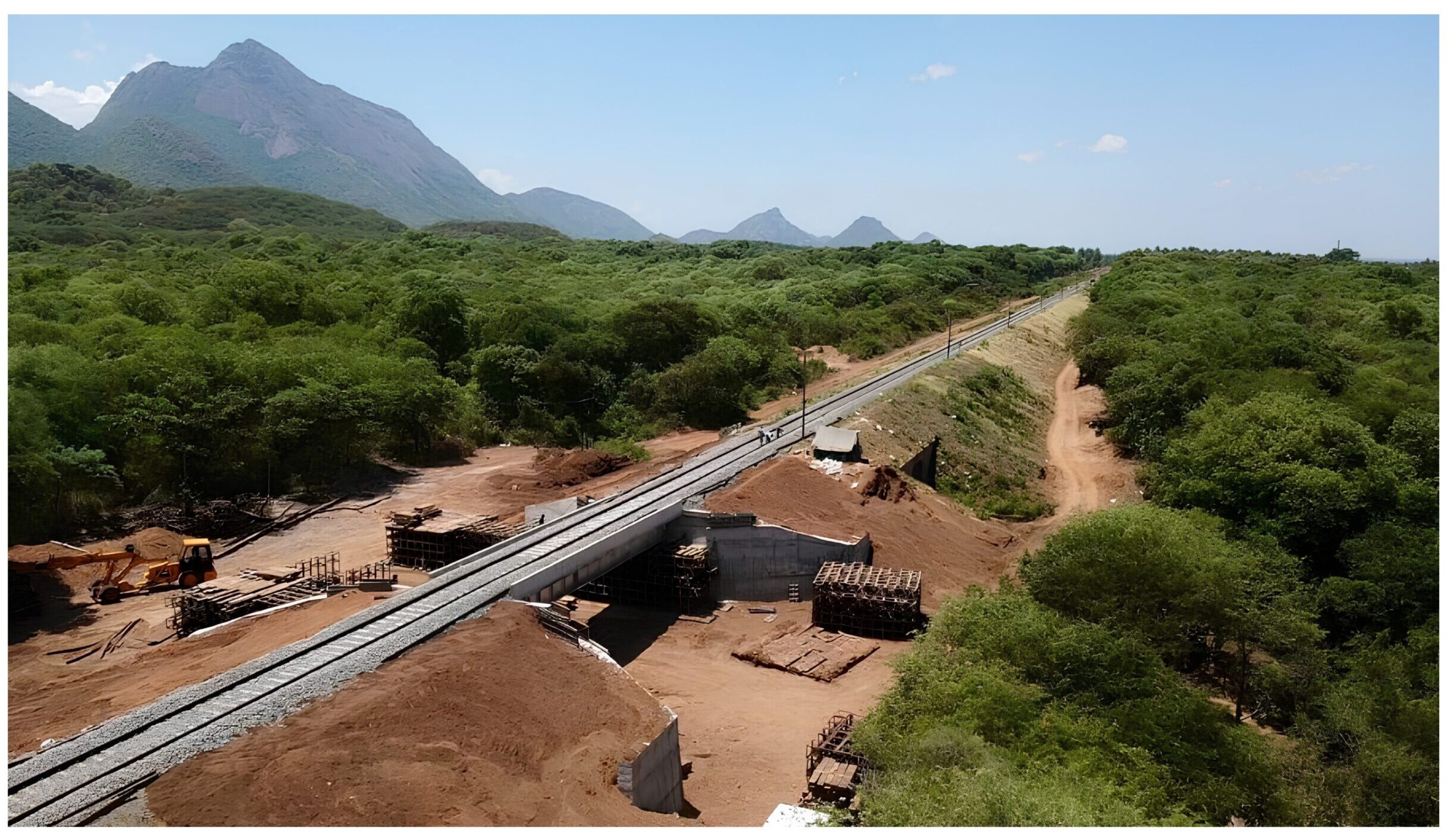
Figure 6. Railway underpass constructed to facilitate safe elephant movement along the Ettimadai–Walayar railway section in Tamil Nadu (Photo credit: Tamil Nadu Forest Department).
Integration of Advanced Technology for Conservation
India is integrating cutting-edge technology to strengthen its elephant conservation efforts. Advanced tracking systems, AI-driven monitoring, and drone surveillance are being deployed to mitigate human-elephant conflict and enhance real-time conservation efforts. One such effort is the development of an Intelligent Seismic Sensing Node (eleSeisAlert), which is a customisable, intelligent system designed to interface with seismic sensors to detect and classify ground vibrations caused by animal or human movement. This system is particularly valuable for wildlife monitoring, including the prevention of elephant-train collisions and perimeter surveillance. Piloted and validated over a ~400m range at Kansrao, Rajaji Tiger Reserve, Uttarakhand, eleSeisAlert provides early geo-tagged alerts to railway staff and forest guards, enabling them to slow down approaching trains and mitigate accidents. Beyond wildlife conservation, this technology helps reduce biodiversity loss and financial losses for Indian Railways. A spin-off version is also being explored as an early warning system to prevent crop-raiding by wild animals, offering a sustainable solution for human-wildlife conflict mitigation.
One novel approach adopted is the development of an AI-enabled Intrusion Detection System (IDS) that uses Distributed Acoustic Sensors (DAS) to identify the presence of elephants on railway tracks. The system components comprise optical fibres, hardware, and pre-installed elephant movement signatures. The technology warns loco pilots, station masters, and the Control Room when elephants move near the track, allowing them to take preventive measures in a timely manner. Future technological interventions should focus on stabilising and institutionalising these systems, ensuring that they are not mere stop-gap arrangements or experimental endeavours, but robust, scalable solutions integrated into national conservation strategies.
Developing a National Elephant Population Monitoring Protocol
Reliable monitoring of elephant populations is fundamental to conservation planning, management, and policy formulation. However, for long-lived species such as elephants, conservation assessments cannot rely solely on population size. Demographic parameters, including age and sex structure, survival, recruitment, reproductive rates, and population trends, are equally important indicators of population viability and long-term persistence. Consequently, a robust national monitoring protocol must move beyond simple abundance estimates to incorporate demographic and ecological metrics that provide a more comprehensive assessment of population status.
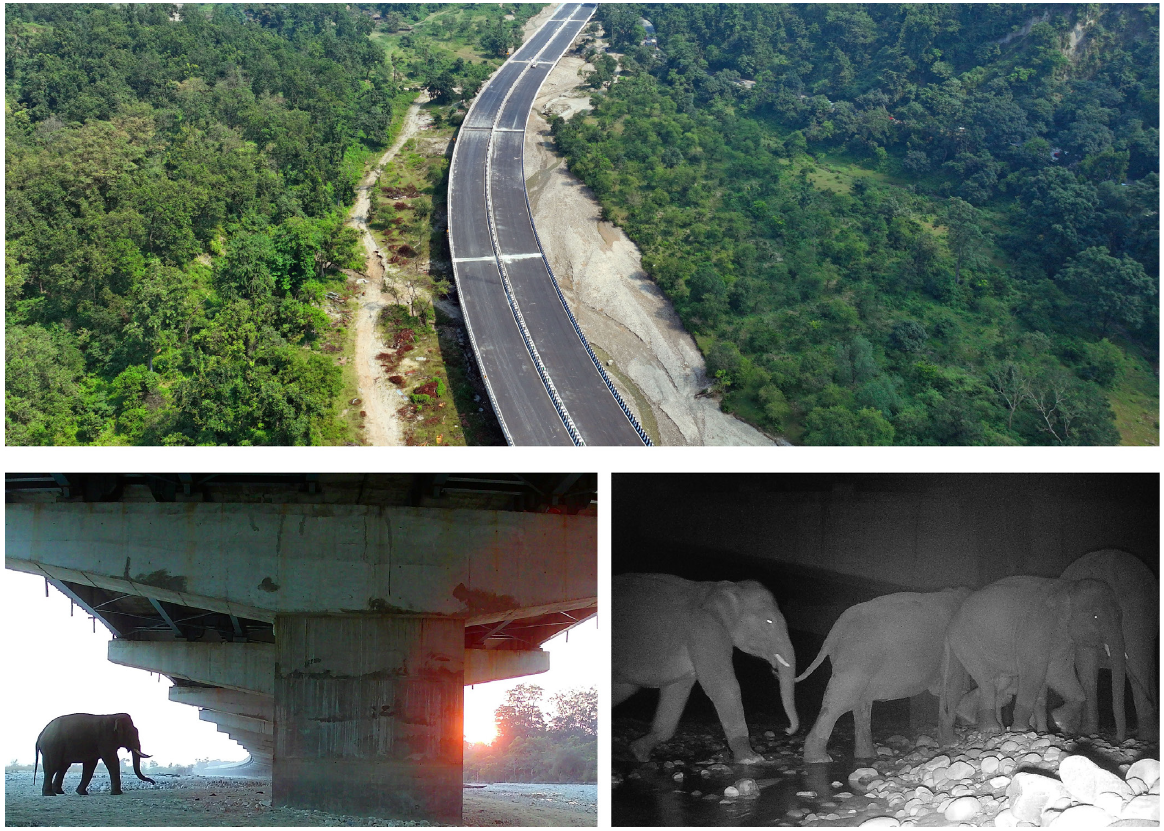
Figure 7. Wildlife underpass on NH-307, Delhi–Dehradun Expressway, one of the world’s largest wildlife viaduct/underpass. The structure is regularly used by elephants and at least 18 other wildlife species, demonstrating its effectiveness in maintaining habitat connectivity and facilitating safe movement for animals.
India recently completed its first nationwide DNA-based elephant population assessment under the Synchronised Assessment of India’s Elephant Population (SAIEE-2021), using genetic mark–recapture techniques to generate a scientifically robust estimate of wild elephant abundance (Qureshi et al., 2025). This represents a major methodological advance and establishes a new baseline for future monitoring. However, because of the shift to a fundamentally different estimation approach, these results are not directly comparable with previous population estimates and should be viewed as the starting point for a new generation of science-based elephant monitoring.
Recognizing the need for a standardized national framework, Project Elephant and the Wildlife Institute of India have undertaken extensive evaluations of alternative monitoring approaches. Comparative studies in the Western Rajaji Tiger Reserve assessed multiple direct and indirect methods, including line transects, dung counts, camera-trap–based models, and genetic mark–recapture, evaluating their precision, bias, operational feasibility, and cost-effectiveness (Habib et al., 2025). These studies provide the scientific basis for selecting appropriate methods for different landscapes and management objectives.
Ongoing research by Project Elephant and the Wildlife Institute of India is further evaluating the efficacy, scalability, and robustness of alternative methodologies to refine a nationally standardized monitoring protocol that balances scientific rigor, operational feasibility, and long-term conservation needs (Habib et al., 2025).
Management and Welfare of Captive Elephants
PE is actively working to improve the welfare of captive elephants by developing essential guidelines and best practices. These initiatives include the publication of Guidelines for Foot Care of Captive Elephants, a document on ‘Best Practices in Captive Elephant Management for Elephant Handlers’, a comprehensive guide on ‘Principles of Captive Elephant Management’, and the ‘Advisory on tusk trimming’. Efforts are also underway to complete DNA profiling of captive elephants, which will aid in their better management and protection. Recognising the need for capacity building, there has been consistent demand from states like Assam to establish a Mahout Training Institute. Proposals have been put forth for institutes like the Salim Ali Centre for Ornithology (SACON), Coimbatore, to set up mahout training schools, considering the poor health and husbandry conditions of captive elephants. Rescue and rehabilitation centres are also being planned to care for elephants with chronic ailments.
India’s way forward in elephant conservation focuses on several crucial aspects, including policy advancements, technological innovations, regional cooperation, and grassroots engagement. The completion of DNA profiling of captive elephants will further bolster the management strategies. Efforts to reduce HEC, particularly electrocution incidents, will continue with stronger safety measures. Establishing efficient compensation mechanisms, such as those implemented in Karnataka and Odisha, will ensure timely support for affected communities. The efficacy of physical barriers in conflict-prone zones will be assessed, with recommendations for state forest departments. Capacity building for mahouts, handlers, and caretakers will be expanded with dedicated training institutions in regions such as Assam and Bandhavgarh. Conservation management of elephant corridors, such as those in Segur (Tamil Nadu) and Odisha, should be prioritised. Additionally, technological interventions to monitor elephant movements and prevent train collisions will be stabilised and institutionalised. Finally, better mitigation measures and retrofitting of linear infrastructure, such as the Ganeshpur-Dehradun road and Deepor Beel elevated corridor, will facilitate safer elephant movement and minimise conflicts.
The interventions indicate that PE has effectively mitigated population decline by adopting landscape-level coexistence management, emphasising ecological connectivity and conflict mitigation, rather than relying solely on traditional recovery-oriented protection. India’s comprehensive conservation strategy, integrating policy advancements, technological innovations, regional cooperation, and grassroots engagement, provides a strong foundation for the long-term survival of elephants. PE, as the nation’s flagship initiative, reinforces this framework through science-based management and coordinated action. Sustained efforts, adaptive management, and cross-border collaboration will be crucial to ensuring that elephants continue to thrive across India’s diverse landscapes, in line with the country’s forward-looking vision to emerge as a global model in elephant conservation.
Acknowledgement
We extend our heartfelt gratitude to the Secretary and Director General of Forests, MoEFCC for their invaluable support and guidance. We also express our sincere appreciation to Raju Rawat and Kirti Bisht, DEOs, Project Elephant, MoEFCC, for their technical assistance with the editorial work.
CONFLICT OF INTEREST
Bilal Habib & Parag Nigam hold editorial positions at the Journal of Wildlife Science. However, none of them participated in the peer review process of this article except as authors. The authors declare no other conflict of interest.The authors declare that they have no competing interests.
DATA AVAILABILITY
Data is available from the corresponding author on request.
AUTHORS’ CONTRIBUTION
R.K.P., A.N., P.N., and B.H. conceived the study. R.K.P. led the compilation of information, literature synthesis, data analysis, and preparation of the first draft. S.P.Y., G.S.B., D.M., A.M.G., G.S., and A.N. contributed to data compilation, interpretation, and manuscript review. P.N. and B.H. provided technical guidance, conceptual inputs, and critical revisions throughout manuscript development. R.K.P., AN. and B.H. coordinated the overall preparation of the manuscript. All authors reviewed, edited, and approved the final version of the manuscript.
Edited By
Honnavalli Kumara
Salim Ali Centre for Ornithology and Natural History, Tamil Nadu.
*CORRESPONDENCE
Bilal Habib
✉ bh@wii.gov.in
SPECIAL ISSUE
This paper is published in the Special Issue '30 Years of Elephant Conservation in India'
CITATION
Pandey, R. K., Yadav, S. P., Bhardwaj, S. P., Mittal, D., George, A. M., Sirola, G., Nath, A., Nigam, P., Habib, B. (2026). Three Decades of Project Elephant: Conservation Efforts for Sustaining Asian Elephants in India. Journal of Wildlife Science, 3(3), 96-108. https://doi.org/10.63033/JWLS.MEHA6377
FUNDING
Project Elephant, Ministry of Environment, Forest and Climate Change, Govt. of India
COPYRIGHT
© 2026 Pandey, Yadav, Bhardwaj, Mittal, George, Sirola, Nath, Nigam, Habib. This is an open-access article, immediately and freely available to read, download, and share. The information contained in this article is distributed under the terms of the Creative Commons Attribution License (CC BY 4.0
 ), allowing for unrestricted use, distribution, and reproduction in any medium, provided the original work is properly cited in accordance with accepted academic practice. Copyright is retained by the author(s).
PUBLISHED BY
Wildlife Institute of India, Dehradun, 248 001 INDIA
PUBLISHER'S NOTE
The Publisher, Journal of Wildlife Science or Editors cannot be held responsible for any errors or consequences arising from the use of the information contained in this article. All claims expressed in this article are solely those of the author(s) and do not necessarily represent those of their affiliated organisations or those of the publisher, the editors and the reviewers. Any product that may be evaluated or used in this article or claim made by its manufacturer is not guaranteed or endorsed by the publisher.
Albert, C., Luque, G. M. & Courchamp, F. (2018). The twenty most charismatic species. PLOS ONE, 13(7), e0199149. https://doi.org/10.1371/journal.pone.0199149
Athira, N. G., Pandey, R. K., Roy, K., Dutta, A., Mittal, D., Nigam, P., Nath, A. &Habib, B. (2026). Landscape determinants of human-elephant conflict in Assam, India: insights from two decades of spatial analysis. PeerJ, 14, e21082. https://doi.org/10.7717/peerj.21082
Cheeran, J. V. & Nair, D. N. (2003). Techniques and procedures for post-mortem of elephants - A handbook of veterinarians, biologists and elephant managers. Published by Project Elephant and Central Zoo Authority. Wildlife Institute of India. p.48.
Daniel, J. C. (ed.). (1980). The status of Asian elephant in Indian subcontinent. IUCN/SSC Report, Bombay Natural History Society, Bombay.
Daniel, J. C. (1998). The Asian elephant – A natural history. Natraj Publishers, Dehradun.
Fernando, P. & Leimgruber, P. (2011). Asian elephants and seasonally dry forests. In Conservation of seasonally dry forests in Asia. CCRSL. Retrieved from http://www.ccrsl.org/userobjects/2602_661_Fernando-11-DryForest.pdf
GIZ & MoEFCC. (2023). Guidelines on human–elephant conflict management. Deutsche Gesellschaft für Internationale Zusammenarbeit (GIZ) and Ministry of Environment, Forest and Climate Change, Government of India.
Habib, B., Nath, A., Goyal, S. P., Parab, T., Madhusudanan, A. & Kadam, R. (2024). Recommendations for directional lighting on Wildlife Crossing structures; Proposal for monitoring of underpasses on Delhi-Dehradun highway (NH-307), Ganeshpur to Asharori. p.134.
Habib, B., Pandav, B., Nath, A., Parab, T., Kadam, R., Haldar, N. & Bhave, M. (2026). Landscapes Reconnected: First Evidence of Wildlife Movement Across the World’s Largest Animal Viaduct on NH-72 (Asarori-Ganeshpur), Delhi-Dehradun Expressway (February 2026).
Habib, B., Pandey, R., Nath, A., Nigam, P., Ganesan, A., Roy, K. & Dutta, A. (2025a). Elephant-human conflict in the state of Jharkhand (2000–2023). Trends, challenges and insights (TR No./2025/05, p. 64). Wildlife Institute of India & Project Elephant Division, Ministry of Environment, Forest and Climate Change, Government of India.
Habib, B., Pandey, R., Nath, A., Nigam, P., Ganesan, A., Roy, K. & Dutta, A. (2025b). Elephant-human conflict in the state of Chhattisgarh (2000–2023): Trends, challenges and insights (TR No./2025/04, p. 60). Wildlife Institute of India & Project Elephant Division, Ministry of Environment, Forest and Climate Change, Government of India.
Habib, B., Pandey, R., Nath, A., Nigam, P., Ganesan, A., Roy, K. & Dutta, A. (2025c). Elephant-human conflict in the state of Assam (2000–2023): Trends, challenges and insights (TR No./2025/03, p. 74). Wildlife Institute of India & Project Elephant Division, Ministry of Environment, Forest and Climate Change, Government of India.
Habib, B., Pandey, R. K., Nath, A., Nigam, P., Mittal, M., Bhardwaj, S., George, A. M., Parab, T., Hussain, Z., Shrotriya, S. & Goyal, S. P. (2025). Evaluation of efficacy of various population estimation methods for elephants, to develop population monitoring protocol. Wildlife Institute of India & Project Elephant Division, Ministry of Environment, Forest and Climate Change, Government of India. p.60.
Lahiri-Choudhury, D. K. (1980). The elephant in northeast India. In J. C. Daniel (e d.), The Asian Elephant in the Indian Subcontinent. IUCN/SSC Asian Elephant Specialist Group, c/o Bombay Natural History Society, Bombay.
Ministry of Railways. (2025). Handbook on Elephant Intrusion Detection System of Indian Railways. Ministry of Railways – CAMTECH/S&T/2025-26/TELE-EIDS/1.0.
MoEFCC. (2020). Best practices of human–elephant conflict management in India. Project Elephant Division, Ministry of Environment, Forest and Climate Change and Wildlife Institute of India.
MoEFCC. (2013). Guidelines for facilitating effective scientific management of zoos in India in consonance with Rule 10 of Recognition of Zoo Rules, 2009 (Amendment) Rules, 2013. Published by Project Elephant Division of MoEFCC.
MoEFCC. (2017). Synchronized Elephant Population Estimation India 2017. Project Elephant Division, Ministry of Environment, Forest and Climate Change, New Delhi.
MoEFCC. (2019). Recommendations of Task Force constituted by the Ministry vide O.M. No. 1-29/2017WL(pt.3) dt. 05/02/2019 for Suggesting Eco-Friendly Measures to Mitigate Impacts of Power Transmission Lines and Other Power Transmission Infrastructures on Elephants and Other Wildlife. Minutes of the 54th Meeting of the Standing Committee of the National Board for Wildlife held on 18 July 2019.
MoEFCC. (2022). Trumpet: Special Edition – 30 Years of Project Elephant. Project Elephant Division, Government of India, New Delhi.
MoEFCC. (2024). Captive Elephant (Transfer or Transport) Rules, 2024.
Nair, P. V., Sukumar, R. & Gadgil, M. (1980). The elephant in south India. In J. C. Daniel (Ed.), The Asian Elephant in the Indian Subcontinent. IUCN/SSC Asian Elephant Specialist Group, c/o Bombay Natural History Society, Bombay.
Nigam, P., Habib, B. & Pandey, R. (eds.). (2022). Caring for elephants: Managing health and welfare in captivity. Project Elephant Division, MoEFCC and Wildlife Institute of India.
Nigam, P., Sarma, K. K., Kumar, S. & Pandey, R. (eds.). (2025). Healthy Feet, Healthy Elephants: A Guide to Foot Care in Captive Asian Elephants. Project Elephant Division, MoEFCC, Government of India–Wildlife Institute of India. p.53. ISBN: 978-93-49520-51-6.
Pandey, R. K., Natarajan, L. & Nigam, P. (2024a). Region-specific perspectives in managing human-elephant conflict in India. Cheetal, 61, 20–29.
Pandey, R., Yadav, S. P., Selvan, K., Natarajan, L. & Nigam, P. (2024b). Elephant conservation in India: Striking a balance between coexistence and conflicts. Integrative Conservation, 3, 1–11. https://doi.org/10.1002/inc3.38
Pandey, R. K., Natarajan, L., Mittal, D., Udhayaraj, A. D., Selvin, M. K., Gupta, D. K., Kumar, R., Tiwari, V. R., Yadav, S. et al. (2024c). On The PAN-India Assessment of Elephant Corridors: Challenges, Opportunities, And Future Directions. Indian Forester, 150(10), 909–915. https://doi.org/10.36808/if/2024/v150i10/170626
Pandey, R. K., Athira, N. G., Roy, K., Dutta, A., Mittal, D., Nigam, P., Nath, A. & Habib, B. (2025a). Truncated life: Patterns and causes of elephant mortality in the state of Chhattisgarh, India. Journal of Wildlife Science (JWLS), 1–13. https://doi.org/10.63033/JWLS.WNKA3460
Pandey, R. K., Roy, K., Ganesan, A. N., Dutta, A., Mittal, D., Nigam, P., Nath, A. & Habib, B. (2025b). Quantifying elephant mortality in a changing landscape: Insights from Jharkhand, India. Frontiers in Ecology and Evolution, 13, 1722945. https://doi.org/10.3389/fevo.2025.1722945
Pandey, R. K., Udhayaraj, A. D., Nath, A., Mittal, D. & Nigam, P. (2025c). Elephant reserves of India: Spatial overlaps, land use changes and conservation implications. Gajah, 59. pp.4-10. https://doi.org/10.2305/DNNO5427
Pandey, R. K., Mittal, D., George, A. M., Sirola, G., Nigam, P., Nath, A. & Habib, B. (2026). Reframing human–elephant conflict in India through context-dependent coexistence strategies. Frontiers in Conservation Science, 7, 1762380. https://doi.org/10.3389/fcosc.2026.1762380
PE-MoEFCC. (2008). Guidelines for care and management of captive elephants. Published by Project Elephant Division of MoEFCC.
PE-MoEFCC. (2013). Centrally Sponsored Scheme "Project Elephant" Guidelines. Published by Project Elephant Division of MoEFCC.
PE-MoEFCC. (2017). Standards/Norms for recognition of elephant rehabilitation/rescue centers under Section 42 of the Wildlife Protection Act, 1972. Guidelines by Project Elephant Division of MoEFCC.
PE-MoEFCC. (2019). Dealing with captive and wild elephant mortalities due to Anthrax and suspected causes of anthrax: A standard operating procedure. Project Elephant Division of MoEFCC.
PE-MoEFCC. (2023). Elephant corridors of India 2023 (Edition 1/2023). Ministry of Environment, Forest and Climate Change, Government of India.
PE-MoEFCC. (2025). Advisory on tusk trimming in captive elephants. Advisory by the Project Elephant Division of MoEFCC.
PE-MoEFCC-WII & WWF-India. (2022). Field manual for managing human–elephant conflict (English version). Project Elephant Division, Ministry of Environment, Forest and Climate Change, and Wildlife Institute of India.
PE-MoEFCC-WII. (2023a). General guidelines for suggesting mitigation measures on railway tracks passing through elephant habitats in India. Project Elephant Division, MoEFCC and Wildlife Institute of India.
PE-MoEFCC-WII. (2023b). Management effectiveness evaluation of elephant reserves in India. Project Elephant Division, MoEFCC and Wildlife Institute of India.
PE-MoEFCC-WII. (2023c). Necropsy and carcass disposal of Asian elephant: Recommended operating procedure. Project Elephant Division, MoEFCC and Wildlife Institute of India.
PE-MoEFCC-WII. (2024a). Recommended operating procedure: Capture and translocation of elephants in distress and conflicts. Project Elephant Division, MoEFCC and Wildlife Institute of India.
PE-MoEFCC-WII. (2024b). Management effectiveness evaluation of elephant reserves in India: Pilot study and revision of criteria & indicators. Project Elephant Division, MoEFCC and Wildlife Institute of India.
PE-MoEFCC-WII. (2024c). Suggested measures to mitigate Asian elephant–train collisions on vulnerable railway stretches in Arunachal Pradesh. Project Elephant Division, MoEFCC and Wildlife Institute of India.
PE-MoEFCC-WII. (2024d). Suggested measures to mitigate Asian elephant–train collisions on vulnerable railway stretches in Assam. Project Elephant Division, MoEFCC and Wildlife Institute of India.
PE-MoEFCC-WII. (2024e). Suggested measures to mitigate Asian elephant–train collisions on vulnerable railway stretches in Jharkhand. Project Elephant Division, MoEFCC and Wildlife Institute of India.
PE-MoEFCC-WII. (2024f). Suggested measures to mitigate Asian elephant–train collisions on vulnerable railway stretches in Karnataka. Project Elephant Division, MoEFCC and Wildlife Institute of India.
PE-MoEFCC-WII. (2024g). Suggested measures to mitigate Asian elephant–train collisions on vulnerable railway stretches in Madhya Pradesh. Project Elephant Division, MoEFCC and Wildlife Institute of India.
PE-MoEFCC-WII. (2024h). Suggested measures to mitigate Asian elephant–train collisions on vulnerable railway stretches in Nagaland. Project Elephant Division, MoEFCC and Wildlife Institute of India.
PE-MoEFCC-WII. (2024i). Suggested measures to mitigate Asian elephant–train collisions on vulnerable railway stretches in Odisha. Project Elephant Division, MoEFCC and Wildlife Institute of India.
PE-MoEFCC-WII. (2024j). Suggested measures to mitigate Asian elephant–train collisions on vulnerable railway stretches in Tamil Nadu. Project Elephant Division, MoEFCC and Wildlife Institute of India.
PE-MoEFCC-WII. (2024k). Suggested measures to mitigate Asian elephant–train collisions on vulnerable railway stretches in Uttarakhand. Project Elephant Division, MoEFCC and Wildlife Institute of India.
PE-MoEFCC-WII. (2024l). Suggested measures to mitigate Asian elephant–train collisions on vulnerable railway stretches in West Bengal. Project Elephant Division, MoEFCC and Wildlife Institute of India.
PE-MoEFCC-WII. (2025). Suggested measures to mitigate elephant and other wildlife train collisions on vulnerable railway stretches in India (TR No./2025/02, p. 280). Project Elephant Division, Ministry of Environment, Forest and Climate Change, Government of India and Wildlife Institute of India.
PE–MoEFCC. (2022). MoEFCC O.M. dated 30th August, Elephant postmortem by a panel of 3 veterinarians in the presence of two representatives of civil society (working in the field of wildlife conservation) nominated by the Chief Wildlife Warden of the State.
PE–MoEFCC. (2022). Advisory on implementation of measures to mitigate the impact of power transmission lines and other power infrastructure on elephant and other wildlife issued by Ministry of Power to all DISCOMs and TRANSCOs has been circulated to all States/UTs on 16th September 2022.
PE-WII-MoEFCC. (2024). Framework for preparation of Elephant Conservation Plan (ECP) for the Elephant Reserves. Project Elephant & Wildlife Institute of India, Ministry of Environment, Forest and Climate Change.
Project Elephant, Government of India. (2020). Status and distribution of elephants in India. Ministry of Environment, Forest and Climate Change, Government of India, New Delhi.
Qureshi, Q., Kolipakam, V., Kumar, U., Jhala, Y. V., Pandey, R. K., Habib, B., Bhardwaj, G. S., Yadav, S. P. & Tiwari, V. R. (2021–2025). Status of Elephants in India: DNA based Synchronous All India Population Estimation of Elephants (SAIEE). Wildlife Institute of India. ISBN: 81-85496-85-4.
Rangarajan, M., Desai, A., Sukumar, R., Easa, P. S., Menon, V., Vincent, S., Ganguly, S., Talukdar, B. K., Singh, B., Mudappa, D., Chowdhary, S. & Prasad, A. N. (2010). Gajah: Securing the future for elephants in India. The Report of the Elephant Task Force. Ministry of Environment and Forests, Government of India.
Roy, K., Pandey, R. K., Athira, N. G., Dutta, A., Mittal, D., Nigam, P., Nath, A. & Habib, B. (2025a). Long-term trends in human fatalities from human–elephant conflict in Chhattisgarh, India. Scientific Reports, 15(1), 27360. https://doi.org/10.1038/s41598-025-13005-3
Roy, K., Pandey, R. K., Ganesan, A. N., Dutta, A., Mittal, D., Nigam, P., Nath, A. & Habib, B. (2025b). Two Decades of Human–Elephant Conflict in Jharkhand: Spatial and Ecological Drivers of Human Fatalities. Ecology and Evolution, 15(12), e72679. https://doi.org/10.1002/ece3.72679
Sangma, R., Ahmad, A., Pandey, R. K., Mittal, D., George, A. M., Barman, D., Basumatary, R., Nigam, P., Habib, B. et al. (2025). Living on the edge: Assessing spatio-temporal dynamics of human-elephant interactions in Udalguri, Assam. Journal of Wildlife Science, 2(2), 53–61. https://doi.org/10.63033/JWLS.GXXB2262
Shahi, S. P. (1980). The elephant in central India. In J. C. Daniel (ed.), The Asian Elephant in the Indian Subcontinent. IUCN/SSC Asian Elephant Specialist Group, c/o Bombay Natural History Society, Bombay.
Sharma, K. K., Mahato, G., Das, A. K., Zachariah, A., Karikalan, M., Mathur, V. & Saini, M. (2021). Standard Operating Procedure (SOP) to deal with Elephant Endotheliotropic Herpes Virus–Haemorrhagic Disease. Central Zoo Authority.
Singh, V. B. (1978). The elephant in U.P. (India): A resurvey of its status after 10 years. Journal of the Bombay Natural History Society, 75, 71–82.
Sukumar, R. (2011). The Story of Asia's Elephants. Marg Publications, Mumbai, India.
Sukumar, R., Ramakrishnan, U., & Santosh, J. A. (1998). Impact of poaching on an Asian elephant population in Periyar, southern India: A model of demography and tusk harvest. Animal Conservation, 1(4), 281–291. https://doi.org/10.1111/j.1469-1795.1998.tb00039.x
WII–Project Elephant Division, MoEFCC. (2022a). Elephant reserves of India: Land-use and land-cover classification (Version 1/2022). Wildlife Institute of India.
WII–Project Elephant Division, MoEFCC. (2022b). Elephant reserves of India: Land-use and land-cover classification (Version 2/2022). Wildlife Institute of India.
WII–Project Elephant Division, MoEFCC. (2022c). Elephant reserves of India: An atlas (Edition 1/2022). Wildlife Institute of India.
WII–Project Elephant Division, MoEFCC. (2023). Elephant reserves of India: An atlas (Version 2/2023). Wildlife Institute of India.
WII–PE-MoEFCC. (2023). General Guidelines for Suggesting Mitigation Measures on Railway Tracks Passing Through Elephant Habitats in India. Published by Wildlife Institute of India and Project Elephant Division, MoEFCC.
Zhang, L., Li, C., Yue, C., Luo, H., Li, X., Yu, Q., Li, J., Shen, J., Yang, S. & Chen, F. (2024). Habitat Suitability Evaluation and Ecological Corridor Construction for Asian Elephants: The Case of Jiangcheng, a New Range for Elephants in Southwestern China. Forests, 15(7), 1195. https://doi.org/10.3390/f15071195

Edited By
Honnavalli Kumara
Salim Ali Centre for Ornithology and Natural History, Tamil Nadu.
*CORRESPONDENCE
Bilal Habib
✉ bh@wii.gov.in
SPECIAL ISSUE
This paper is published in the Special Issue '30 Years of Elephant Conservation in India'
CITATION
Pandey, R. K., Yadav, S. P., Bhardwaj, S. P., Mittal, D., George, A. M., Sirola, G., Nath, A., Nigam, P., Habib, B. (2026). Three Decades of Project Elephant: Conservation Efforts for Sustaining Asian Elephants in India. Journal of Wildlife Science, 3(3), 96-108. https://doi.org/10.63033/JWLS.MEHA6377
FUNDING
Project Elephant, Ministry of Environment, Forest and Climate Change, Govt. of India
COPYRIGHT
© 2026 Pandey, Yadav, Bhardwaj, Mittal, George, Sirola, Nath, Nigam, Habib. This is an open-access article, immediately and freely available to read, download, and share. The information contained in this article is distributed under the terms of the Creative Commons Attribution License (CC BY 4.0), allowing for unrestricted use, distribution, and reproduction in any medium, provided the original work is properly cited in accordance with accepted academic practice. Copyright is retained by the author(s).
PUBLISHED BY
Wildlife Institute of India, Dehradun, 248 001 INDIA
PUBLISHER'S NOTE
The Publisher, Journal of Wildlife Science or Editors cannot be held responsible for any errors or consequences arising from the use of the information contained in this article. All claims expressed in this article are solely those of the author(s) and do not necessarily represent those of their affiliated organisations or those of the publisher, the editors and the reviewers. Any product that may be evaluated or used in this article or claim made by its manufacturer is not guaranteed or endorsed by the publisher.
Albert, C., Luque, G. M. & Courchamp, F. (2018). The twenty most charismatic species. PLOS ONE, 13(7), e0199149. https://doi.org/10.1371/journal.pone.0199149
Athira, N. G., Pandey, R. K., Roy, K., Dutta, A., Mittal, D., Nigam, P., Nath, A. &Habib, B. (2026). Landscape determinants of human-elephant conflict in Assam, India: insights from two decades of spatial analysis. PeerJ, 14, e21082. https://doi.org/10.7717/peerj.21082
Cheeran, J. V. & Nair, D. N. (2003). Techniques and procedures for post-mortem of elephants - A handbook of veterinarians, biologists and elephant managers. Published by Project Elephant and Central Zoo Authority. Wildlife Institute of India. p.48.
Daniel, J. C. (ed.). (1980). The status of Asian elephant in Indian subcontinent. IUCN/SSC Report, Bombay Natural History Society, Bombay.
Daniel, J. C. (1998). The Asian elephant – A natural history. Natraj Publishers, Dehradun.
Fernando, P. & Leimgruber, P. (2011). Asian elephants and seasonally dry forests. In Conservation of seasonally dry forests in Asia. CCRSL. Retrieved from http://www.ccrsl.org/userobjects/2602_661_Fernando-11-DryForest.pdf
GIZ & MoEFCC. (2023). Guidelines on human–elephant conflict management. Deutsche Gesellschaft für Internationale Zusammenarbeit (GIZ) and Ministry of Environment, Forest and Climate Change, Government of India.
Habib, B., Nath, A., Goyal, S. P., Parab, T., Madhusudanan, A. & Kadam, R. (2024). Recommendations for directional lighting on Wildlife Crossing structures; Proposal for monitoring of underpasses on Delhi-Dehradun highway (NH-307), Ganeshpur to Asharori. p.134.
Habib, B., Pandav, B., Nath, A., Parab, T., Kadam, R., Haldar, N. & Bhave, M. (2026). Landscapes Reconnected: First Evidence of Wildlife Movement Across the World’s Largest Animal Viaduct on NH-72 (Asarori-Ganeshpur), Delhi-Dehradun Expressway (February 2026).
Habib, B., Pandey, R., Nath, A., Nigam, P., Ganesan, A., Roy, K. & Dutta, A. (2025a). Elephant-human conflict in the state of Jharkhand (2000–2023). Trends, challenges and insights (TR No./2025/05, p. 64). Wildlife Institute of India & Project Elephant Division, Ministry of Environment, Forest and Climate Change, Government of India.
Habib, B., Pandey, R., Nath, A., Nigam, P., Ganesan, A., Roy, K. & Dutta, A. (2025b). Elephant-human conflict in the state of Chhattisgarh (2000–2023): Trends, challenges and insights (TR No./2025/04, p. 60). Wildlife Institute of India & Project Elephant Division, Ministry of Environment, Forest and Climate Change, Government of India.
Habib, B., Pandey, R., Nath, A., Nigam, P., Ganesan, A., Roy, K. & Dutta, A. (2025c). Elephant-human conflict in the state of Assam (2000–2023): Trends, challenges and insights (TR No./2025/03, p. 74). Wildlife Institute of India & Project Elephant Division, Ministry of Environment, Forest and Climate Change, Government of India.
Habib, B., Pandey, R. K., Nath, A., Nigam, P., Mittal, M., Bhardwaj, S., George, A. M., Parab, T., Hussain, Z., Shrotriya, S. & Goyal, S. P. (2025). Evaluation of efficacy of various population estimation methods for elephants, to develop population monitoring protocol. Wildlife Institute of India & Project Elephant Division, Ministry of Environment, Forest and Climate Change, Government of India. p.60.
Lahiri-Choudhury, D. K. (1980). The elephant in northeast India. In J. C. Daniel (e d.), The Asian Elephant in the Indian Subcontinent. IUCN/SSC Asian Elephant Specialist Group, c/o Bombay Natural History Society, Bombay.
Ministry of Railways. (2025). Handbook on Elephant Intrusion Detection System of Indian Railways. Ministry of Railways – CAMTECH/S&T/2025-26/TELE-EIDS/1.0.
MoEFCC. (2020). Best practices of human–elephant conflict management in India. Project Elephant Division, Ministry of Environment, Forest and Climate Change and Wildlife Institute of India.
MoEFCC. (2013). Guidelines for facilitating effective scientific management of zoos in India in consonance with Rule 10 of Recognition of Zoo Rules, 2009 (Amendment) Rules, 2013. Published by Project Elephant Division of MoEFCC.
MoEFCC. (2017). Synchronized Elephant Population Estimation India 2017. Project Elephant Division, Ministry of Environment, Forest and Climate Change, New Delhi.
MoEFCC. (2019). Recommendations of Task Force constituted by the Ministry vide O.M. No. 1-29/2017WL(pt.3) dt. 05/02/2019 for Suggesting Eco-Friendly Measures to Mitigate Impacts of Power Transmission Lines and Other Power Transmission Infrastructures on Elephants and Other Wildlife. Minutes of the 54th Meeting of the Standing Committee of the National Board for Wildlife held on 18 July 2019.
MoEFCC. (2022). Trumpet: Special Edition – 30 Years of Project Elephant. Project Elephant Division, Government of India, New Delhi.
MoEFCC. (2024). Captive Elephant (Transfer or Transport) Rules, 2024.
Nair, P. V., Sukumar, R. & Gadgil, M. (1980). The elephant in south India. In J. C. Daniel (Ed.), The Asian Elephant in the Indian Subcontinent. IUCN/SSC Asian Elephant Specialist Group, c/o Bombay Natural History Society, Bombay.
Nigam, P., Habib, B. & Pandey, R. (eds.). (2022). Caring for elephants: Managing health and welfare in captivity. Project Elephant Division, MoEFCC and Wildlife Institute of India.
Nigam, P., Sarma, K. K., Kumar, S. & Pandey, R. (eds.). (2025). Healthy Feet, Healthy Elephants: A Guide to Foot Care in Captive Asian Elephants. Project Elephant Division, MoEFCC, Government of India–Wildlife Institute of India. p.53. ISBN: 978-93-49520-51-6.
Pandey, R. K., Natarajan, L. & Nigam, P. (2024a). Region-specific perspectives in managing human-elephant conflict in India. Cheetal, 61, 20–29.
Pandey, R., Yadav, S. P., Selvan, K., Natarajan, L. & Nigam, P. (2024b). Elephant conservation in India: Striking a balance between coexistence and conflicts. Integrative Conservation, 3, 1–11. https://doi.org/10.1002/inc3.38
Pandey, R. K., Natarajan, L., Mittal, D., Udhayaraj, A. D., Selvin, M. K., Gupta, D. K., Kumar, R., Tiwari, V. R., Yadav, S. et al. (2024c). On The PAN-India Assessment of Elephant Corridors: Challenges, Opportunities, And Future Directions. Indian Forester, 150(10), 909–915. https://doi.org/10.36808/if/2024/v150i10/170626
Pandey, R. K., Athira, N. G., Roy, K., Dutta, A., Mittal, D., Nigam, P., Nath, A. & Habib, B. (2025a). Truncated life: Patterns and causes of elephant mortality in the state of Chhattisgarh, India. Journal of Wildlife Science (JWLS), 1–13. https://doi.org/10.63033/JWLS.WNKA3460
Pandey, R. K., Roy, K., Ganesan, A. N., Dutta, A., Mittal, D., Nigam, P., Nath, A. & Habib, B. (2025b). Quantifying elephant mortality in a changing landscape: Insights from Jharkhand, India. Frontiers in Ecology and Evolution, 13, 1722945. https://doi.org/10.3389/fevo.2025.1722945
Pandey, R. K., Udhayaraj, A. D., Nath, A., Mittal, D. & Nigam, P. (2025c). Elephant reserves of India: Spatial overlaps, land use changes and conservation implications. Gajah, 59. pp.4-10. https://doi.org/10.2305/DNNO5427
Pandey, R. K., Mittal, D., George, A. M., Sirola, G., Nigam, P., Nath, A. & Habib, B. (2026). Reframing human–elephant conflict in India through context-dependent coexistence strategies. Frontiers in Conservation Science, 7, 1762380. https://doi.org/10.3389/fcosc.2026.1762380
PE-MoEFCC. (2008). Guidelines for care and management of captive elephants. Published by Project Elephant Division of MoEFCC.
PE-MoEFCC. (2013). Centrally Sponsored Scheme "Project Elephant" Guidelines. Published by Project Elephant Division of MoEFCC.
PE-MoEFCC. (2017). Standards/Norms for recognition of elephant rehabilitation/rescue centers under Section 42 of the Wildlife Protection Act, 1972. Guidelines by Project Elephant Division of MoEFCC.
PE-MoEFCC. (2019). Dealing with captive and wild elephant mortalities due to Anthrax and suspected causes of anthrax: A standard operating procedure. Project Elephant Division of MoEFCC.
PE-MoEFCC. (2023). Elephant corridors of India 2023 (Edition 1/2023). Ministry of Environment, Forest and Climate Change, Government of India.
PE-MoEFCC. (2025). Advisory on tusk trimming in captive elephants. Advisory by the Project Elephant Division of MoEFCC.
PE-MoEFCC-WII & WWF-India. (2022). Field manual for managing human–elephant conflict (English version). Project Elephant Division, Ministry of Environment, Forest and Climate Change, and Wildlife Institute of India.
PE-MoEFCC-WII. (2023a). General guidelines for suggesting mitigation measures on railway tracks passing through elephant habitats in India. Project Elephant Division, MoEFCC and Wildlife Institute of India.
PE-MoEFCC-WII. (2023b). Management effectiveness evaluation of elephant reserves in India. Project Elephant Division, MoEFCC and Wildlife Institute of India.
PE-MoEFCC-WII. (2023c). Necropsy and carcass disposal of Asian elephant: Recommended operating procedure. Project Elephant Division, MoEFCC and Wildlife Institute of India.
PE-MoEFCC-WII. (2024a). Recommended operating procedure: Capture and translocation of elephants in distress and conflicts. Project Elephant Division, MoEFCC and Wildlife Institute of India.
PE-MoEFCC-WII. (2024b). Management effectiveness evaluation of elephant reserves in India: Pilot study and revision of criteria & indicators. Project Elephant Division, MoEFCC and Wildlife Institute of India.
PE-MoEFCC-WII. (2024c). Suggested measures to mitigate Asian elephant–train collisions on vulnerable railway stretches in Arunachal Pradesh. Project Elephant Division, MoEFCC and Wildlife Institute of India.
PE-MoEFCC-WII. (2024d). Suggested measures to mitigate Asian elephant–train collisions on vulnerable railway stretches in Assam. Project Elephant Division, MoEFCC and Wildlife Institute of India.
PE-MoEFCC-WII. (2024e). Suggested measures to mitigate Asian elephant–train collisions on vulnerable railway stretches in Jharkhand. Project Elephant Division, MoEFCC and Wildlife Institute of India.
PE-MoEFCC-WII. (2024f). Suggested measures to mitigate Asian elephant–train collisions on vulnerable railway stretches in Karnataka. Project Elephant Division, MoEFCC and Wildlife Institute of India.
PE-MoEFCC-WII. (2024g). Suggested measures to mitigate Asian elephant–train collisions on vulnerable railway stretches in Madhya Pradesh. Project Elephant Division, MoEFCC and Wildlife Institute of India.
PE-MoEFCC-WII. (2024h). Suggested measures to mitigate Asian elephant–train collisions on vulnerable railway stretches in Nagaland. Project Elephant Division, MoEFCC and Wildlife Institute of India.
PE-MoEFCC-WII. (2024i). Suggested measures to mitigate Asian elephant–train collisions on vulnerable railway stretches in Odisha. Project Elephant Division, MoEFCC and Wildlife Institute of India.
PE-MoEFCC-WII. (2024j). Suggested measures to mitigate Asian elephant–train collisions on vulnerable railway stretches in Tamil Nadu. Project Elephant Division, MoEFCC and Wildlife Institute of India.
PE-MoEFCC-WII. (2024k). Suggested measures to mitigate Asian elephant–train collisions on vulnerable railway stretches in Uttarakhand. Project Elephant Division, MoEFCC and Wildlife Institute of India.
PE-MoEFCC-WII. (2024l). Suggested measures to mitigate Asian elephant–train collisions on vulnerable railway stretches in West Bengal. Project Elephant Division, MoEFCC and Wildlife Institute of India.
PE-MoEFCC-WII. (2025). Suggested measures to mitigate elephant and other wildlife train collisions on vulnerable railway stretches in India (TR No./2025/02, p. 280). Project Elephant Division, Ministry of Environment, Forest and Climate Change, Government of India and Wildlife Institute of India.
PE–MoEFCC. (2022). MoEFCC O.M. dated 30th August, Elephant postmortem by a panel of 3 veterinarians in the presence of two representatives of civil society (working in the field of wildlife conservation) nominated by the Chief Wildlife Warden of the State.
PE–MoEFCC. (2022). Advisory on implementation of measures to mitigate the impact of power transmission lines and other power infrastructure on elephant and other wildlife issued by Ministry of Power to all DISCOMs and TRANSCOs has been circulated to all States/UTs on 16th September 2022.
PE-WII-MoEFCC. (2024). Framework for preparation of Elephant Conservation Plan (ECP) for the Elephant Reserves. Project Elephant & Wildlife Institute of India, Ministry of Environment, Forest and Climate Change.
Project Elephant, Government of India. (2020). Status and distribution of elephants in India. Ministry of Environment, Forest and Climate Change, Government of India, New Delhi.
Qureshi, Q., Kolipakam, V., Kumar, U., Jhala, Y. V., Pandey, R. K., Habib, B., Bhardwaj, G. S., Yadav, S. P. & Tiwari, V. R. (2021–2025). Status of Elephants in India: DNA based Synchronous All India Population Estimation of Elephants (SAIEE). Wildlife Institute of India. ISBN: 81-85496-85-4.
Rangarajan, M., Desai, A., Sukumar, R., Easa, P. S., Menon, V., Vincent, S., Ganguly, S., Talukdar, B. K., Singh, B., Mudappa, D., Chowdhary, S. & Prasad, A. N. (2010). Gajah: Securing the future for elephants in India. The Report of the Elephant Task Force. Ministry of Environment and Forests, Government of India.
Roy, K., Pandey, R. K., Athira, N. G., Dutta, A., Mittal, D., Nigam, P., Nath, A. & Habib, B. (2025a). Long-term trends in human fatalities from human–elephant conflict in Chhattisgarh, India. Scientific Reports, 15(1), 27360. https://doi.org/10.1038/s41598-025-13005-3
Roy, K., Pandey, R. K., Ganesan, A. N., Dutta, A., Mittal, D., Nigam, P., Nath, A. & Habib, B. (2025b). Two Decades of Human–Elephant Conflict in Jharkhand: Spatial and Ecological Drivers of Human Fatalities. Ecology and Evolution, 15(12), e72679. https://doi.org/10.1002/ece3.72679
Sangma, R., Ahmad, A., Pandey, R. K., Mittal, D., George, A. M., Barman, D., Basumatary, R., Nigam, P., Habib, B. et al. (2025). Living on the edge: Assessing spatio-temporal dynamics of human-elephant interactions in Udalguri, Assam. Journal of Wildlife Science, 2(2), 53–61. https://doi.org/10.63033/JWLS.GXXB2262
Shahi, S. P. (1980). The elephant in central India. In J. C. Daniel (ed.), The Asian Elephant in the Indian Subcontinent. IUCN/SSC Asian Elephant Specialist Group, c/o Bombay Natural History Society, Bombay.
Sharma, K. K., Mahato, G., Das, A. K., Zachariah, A., Karikalan, M., Mathur, V. & Saini, M. (2021). Standard Operating Procedure (SOP) to deal with Elephant Endotheliotropic Herpes Virus–Haemorrhagic Disease. Central Zoo Authority.
Singh, V. B. (1978). The elephant in U.P. (India): A resurvey of its status after 10 years. Journal of the Bombay Natural History Society, 75, 71–82.
Sukumar, R. (2011). The Story of Asia's Elephants. Marg Publications, Mumbai, India.
Sukumar, R., Ramakrishnan, U., & Santosh, J. A. (1998). Impact of poaching on an Asian elephant population in Periyar, southern India: A model of demography and tusk harvest. Animal Conservation, 1(4), 281–291. https://doi.org/10.1111/j.1469-1795.1998.tb00039.x
WII–Project Elephant Division, MoEFCC. (2022a). Elephant reserves of India: Land-use and land-cover classification (Version 1/2022). Wildlife Institute of India.
WII–Project Elephant Division, MoEFCC. (2022b). Elephant reserves of India: Land-use and land-cover classification (Version 2/2022). Wildlife Institute of India.
WII–Project Elephant Division, MoEFCC. (2022c). Elephant reserves of India: An atlas (Edition 1/2022). Wildlife Institute of India.
WII–Project Elephant Division, MoEFCC. (2023). Elephant reserves of India: An atlas (Version 2/2023). Wildlife Institute of India.
WII–PE-MoEFCC. (2023). General Guidelines for Suggesting Mitigation Measures on Railway Tracks Passing Through Elephant Habitats in India. Published by Wildlife Institute of India and Project Elephant Division, MoEFCC.
Zhang, L., Li, C., Yue, C., Luo, H., Li, X., Yu, Q., Li, J., Shen, J., Yang, S. & Chen, F. (2024). Habitat Suitability Evaluation and Ecological Corridor Construction for Asian Elephants: The Case of Jiangcheng, a New Range for Elephants in Southwestern China. Forests, 15(7), 1195. https://doi.org/10.3390/f15071195


