TYPE: Natural History Note
Harshvardhan Singh Rathore¹* , Jagyandatt Pati², Samrat Gowda², Sai Kiran D. N.², M. Yogajayananda², Prakash Chand Gogineni², Manoj V. Nair², Bivash Pandav¹, Samrat Mondol¹*
¹Wildlife Institute of India, Chandrabani, Dehradun 248001, Uttarakhand
²Odisha Forest Department

Introduction
The Indian chevrotain (Moschiola indica), also commonly known as the mouse deer, is a small, primitive ruminant and even-toed ungulate. This species is native to the Indian subcontinent, with a distribution across the Western Ghats, the Eastern Ghats up to Odisha, and the forests of central India (Prater, 1971), as well as parts of southern Nepal (Mitchell & Punzo, 1976). However, recent reports suggest that there is no current evidence of the species in Nepal (Duckworth & Timmins, 2015). This species inhabits tropical deciduous, moist evergreen, and semi-evergreen forests covering the plateaus, plains, and hills of peninsular India (Prater, 1971; Raman, 2004). Due to its broad distribution, relative habitat stability, and continued common status, the species is classified as Least Concern (Duckworth & Timmins, 2015), yet it remains one of the most hunted species (Madhusudan & Karanth, 2002). In India, the chevrotain is listed in Schedule I of the Wildlife (Protection) Act, 1972, which ensures the highest level of legal protection. Much of the ecological information about chevrotains is anecdotal (Raman, 2015). They are generally solitary, except for mother-offspring pairs (Figure 1) or during courtship. Their diet primarily consists of fallen fruits (Prasad & Sukumar, 2010), along with young leaves, buds, and shoots (Sridhara et al., 2013). The Indian chevrotain is part of the diet of a number of large carnivores, such as leopard (Panthera pardus) (Karanth & Sunquist, 2000), tiger (Panthera tigris), and dhole (Cuon alpinus) (Raman, 2004), and smaller mammals, such as the Nilgiri marten (Martes gwatkinsii) (Mudappa, 1999; John & Madhukumar, 2002). Reptiles, including pythons (Python molurus), crocodiles (Crocodylus palustris) (Raman, 2004) and various birds of prey, such as eagles (Raman, 2015) and large owls (Nandini, 2005), also prey on chevrotains. In this paper, we report a natural history observation of predation on an Indian chevrotain by a spot-bellied eagle owl (Bubo nipalensis) in the Similipal Tiger Reserve (STR), located in Mayurbhanj district, Odisha. STR is home to a significant population of Indian chevrotain (Mohapatra et al., 2019) with a reported population density of 1.88 ± 1.19/km2 (Palei et al., 2016).
To monitor tiger, and and copredator movement in STR, we deployed motion-sensor Cuddeback C-1 camera traps, strategically along a forest road. On 14 December 2021, the camera-trap was triggered at 02.58 hrs. by the action of a large owl swooping on an Indian chevrotain in the Tropical Moist Deciduous Forest of Jenabil Range in the STR (21°40’28.4″N, 86°23’17.5″E) (see Figure 2). The image shows the dorsal side of a large owl in low flight, clutching the Indian chevrotain in its talons, with a noticeable fresh wound evident on the ventral side of the chevrotain’s body.
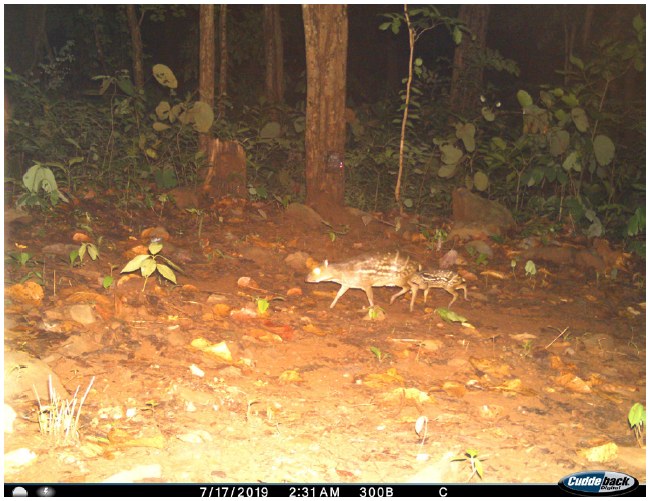
Figure 1. An adult female Indian chevrotain with its offspring in Similipal Tiger Reserve, Odisha
The Similipal TR hosts five commonly observed large owl species: mottled wood-owl (Strix ocellata), rock eagle-owl (Bubo bengalensis), brown fish-owl (Ketupa zeylonensis), brown wood-owl (Strix leptogrammica), and the spot-bellied eagle-owl (Bubo nipalensis). Mottled wood-owl and rock eagle-owl are generally associated with dry deciduous forests and rocky outcrops, primarily found near forest edges and in the drier northern ridges. At the observation site, the bird could be either brown fish-owl, brown wood-owl, or spot-bellied eagle-owl. The brown fish-owl usually has a pale brown upper part with dark streaks on the upper back and largely unmarked lower back, rump, and tail coverts (König & Weick, 2008). The brown wood-owl generally has a uniformly plain brown back without spots or barring (Mikkola, 2017), which does not match the plumage observed in our camera trap photo. From the wing pattern, we deduce that the species could be a spot-bellied eagle-owl, as it has diagnostic pale silver-grey upper part colour, prominent white scapular patches, and distinct continuous dark barring across the rump and tail coverts, which separate it from the other sympatric owl species in Similipal TR.
The spot-bellied eagle owl preys on snakes, lizards, large birds, and mammals (Ali & Ripley, 1981; Mikkola, 2017). Owls are opportunistic hunters with specialised flight structures that enable silent movement, which is essential for hunting using visual and auditory cues close to the ground surface (Mikkola, 2017). The Indian chevrotain, weighing around 3 kilograms (Raman, 2015), is one of the largest mammalian prey species that exceeds the body weight of the spot-bellied eagle owl (1.3 to 1.5 kilograms, Mikkola, 2017), highlighting its ability to capture prey that exceeds its own body mass. The other large mammalian prey species recorded for the spot-bellied eagle owl include golden jackal (Canis aureus), Indian hare (Lepus nigricollis), and fawns of northern red muntjac (Muntiacus vaginalis) (Ali & Ripley, 1981; König & Weick, 2008). Both, Indian chevrotain and spot-bellied eagle-owl, are nocturnal in their activity (Raman, 2004; König & Weick, 2008), but an earlier observation documented the spot-bellied eagle owl’s predation on Indian chevrotain during daylight hours in a rain forest patch, adjoining Valparai in the Anamalai hills (Nandini, 2005). Our observation indicates that the spot-bellied eagle owl can prey on the Indian chevrotain during the day as well as at night.
In Odisha, the Indian chevrotain inhabits protected areas like Similipal TR, Satkosia TR, Kotagarh Wildlife Sanctuary, Badrama Wildlife Sanctuary, Ushakothi Wildlife Sanctuary, and other forested habitats of Angul, Athagarh, Berhampur, Bolangir, Boudh, Cuttack, Dhenkanal, Jeypore, Kalahandi, Koraput, Malkangiri, Phulbani, etc. (Mohapatra et al., 2019). The Indian
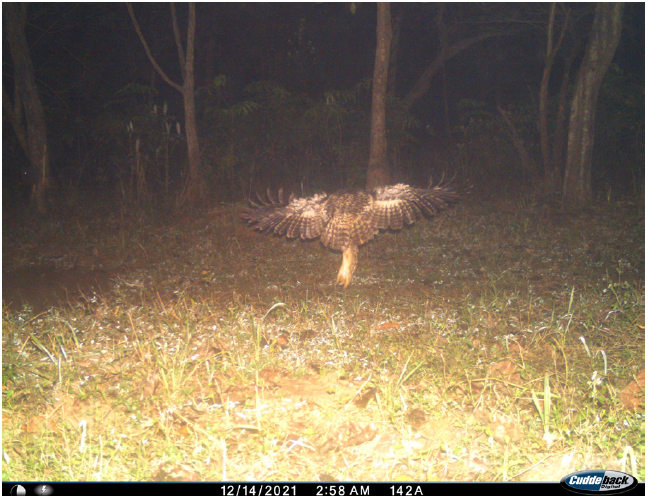
Figure 2. Indian chevrotain predated upon by a spot-bellied eagle owl in Similipal Tiger Reserve, Odisha
chevrotain prefers habitats that offer refuges and a complex understory to decrease predation risk (Sridhara et al., 2013). However, in Similipal TR, several photographs of the Indian chevrotain have been taken along the open forest roads (Palei et al., 2015), where the species is vulnerable to predation by birds of prey, such as the spot-bellied eagle owl. This indicates wider habitat preferences and behaviour plasticity in the Indian chevrotain. Combined with the natural history observation presented, it provides another compelling reason for detailed studies to better understand the ecology of the Indian chevrotain across its range.
Acknowledgement
We express our gratitude to the Odisha Forest Department for granting the necessary permission (Letter no: 10451/4WL-630/2018) and logistic support during the fieldwork. We also thank the director, dean, and research coordinator of the Wildlife Institute of India for providing us with the necessary facilities and infrastructure. We are sincerely grateful to Dr. Heimo Mikkola and Dr. Vivek Sarkar for their valuable assistance in identifying the owl species. Special thanks are due to Mr. Laxman Dalei and the frontline staff of Similipal Tiger Reserve for their invaluable help in the field. The Odisha Forest Department has provided funding for this work.
CONFLICT OF INTEREST
Manoj V. Nair, Bivash Pandav & Samrat Mondol are academic editors at the Journal of Wildlife Science. However, none of them participated in the peer review process of this article except as authors. The authors declare no other conflict of interest.
DATA AVAILABILITY
Data is available from the corresponding author on request.
AUTHORS’ CONTRIBUTION
All enlisted authors have collaborated in developing and designing the paper.
Harshvardhan Singh Rathore: Data generation, data curation, conceptualization, validation, investigation, writing original draft, writing-review and editing.
Jagyandatt Pati, Samrat Gowda, Sai Kiran DN, M. Yogajayananda, Prakash Chand Gogineni, Manoj V. Nair : Data curation, resources, writing – review and editing.
Bivash Pandav: Conceptualization, resources, writing-review and editing, supervision, funding acquisition.
Samrat Mondol: Conceptualization, resources, writing – original draft, writing -review and editing, supervision, project administration, funding acquisition.
Edited By
Manjari Jain
Department of Biological Sciences, IISER Mohali.
*CORRESPONDENCE
Harshvardhan Singh Rathore
✉ harshvardhan@wii.gov.in
Samrat Mondol
✉ samrat@wii.gov.in
CITATION
Rathore, H. S., Pati, J., Gowda, S., Sai Kiran D. N., Yogajayananda, M., Gogineni, P. C., Nair, M. V., Pandav, B. & Mondol, S. (2026). A natural history note from Similipal Tiger Reserve, Odisha, India: Predation of Indian chevrotain Moschiola indica by Spot-bellied eagle owl Bubo nipalensis. Journal of Wildlife Science, Online Early Publication, 01-03 . https://doi.org/10.63033/JWLS.YPOI3713
FUNDING
Funding for this work has been provided by the National Tiger Conservation Authority, Government of India through the Odisha Forest Department
COPYRIGHT
© 2026 Rathore, Pati, Gowda, Sai Kiran, Yogajayananda, Gogineni, Nair, Pandav & Mondol. This is an open-access article, immediately and freely available to read, download, and share. The information contained in this article is distributed under the terms of the Creative Commons Attribution License (CC BY 4.0
 ), allowing for unrestricted use, distribution, and reproduction in any medium, provided the original work is properly cited in accordance with accepted academic practice. Copyright is retained by the author(s).
PUBLISHED BY
Wildlife Institute of India, Dehradun, 248 001 INDIA
PUBLISHER'S NOTE
The Publisher, Journal of Wildlife Science or Editors cannot be held responsible for any errors or consequences arising from the use of the information contained in this article. All claims expressed in this article are solely those of the author(s) and do not necessarily represent those of their affiliated organisations or those of the publisher, the editors and the reviewers. Any product that may be evaluated or used in this article or claim made by its manufacturer is not guaranteed or endorsed by the publisher.
Ali, S. & Ripley, S. D. (1981). Handbook of the birds of India and Pakistan together with those of Bangladesh, Nepal, Bhutan and Ceylon, 3. Stone Curlews to Owls (2nd ed.). Oxford University Press.
Duckworth, J. W. & Timmins, R. (2015). Moschiola indica. The IUCN Red List of Threatened Species 2015: e.T136585A61979067. https://doi.org/10.2305/IUCN.UK.2015-2.RLTS.T136585A61979067.en
John, J. & Madhukumar (2002). Hunting attempt by Nilgiri Marten Martes gwatkinsi Horsfield, Family Mustelidae, in Periyar Tiger Reserve, Kerala. The Journal of the Bombay Natural History Society, 99, 286. https://www.biodiversitylibrary.org/part/155701
Karanth, K. U. & Sunquist, M. E. (2000). Behavioural correlates of predation by tiger (Panthera tigris), leopard (Panthera pardus) and dhole (Cuon alpinus) in Nagarahole, India. Journal of Zoology, 250(2), 255-265. https://doi.org/10.1111/j.1469-7998.2000.tb01076.x
König, C. & Weick, F. (2008). Owls of the world. A&C Black.
Madhusudan, M. D. & Karanth, K. U. (2002). Local Hunting and the Conservation of Large Mammals in India. AMBIO: A Journal of the Human Environment, 31(1), 49-54. https://doi.org/10.1579/0044-7447-31.1.49
Mikkola, H. (2017). Owls of the world: A photographic guide (2nd ed.). Bloomsbury Publishing Plc.
Mitchell, R. & Punzo, F. (1976). New Mammal Records from Nepal. The Journal of the Bombay Natural History Society, 73, 54-58. https://www.biodiversitylibrary.org/part/152087
Mohapatra, P., Behera, S., Dutta, S., Mahapatra, C. & Upadhyay, H. (2019). Mammals of Odisha, India: Updated checklist, distribution, and conservation status. Pranikee: Journal of Zoological Society of Orissa, 31, 1–113.
Mudappa, D. (1999). Lesser known carnivores of the Western Ghats. ENVIS Bulletin, 2(2), 65–70.
Nandini, R. (2005). Predation by Forest Eagle-Owl Bubo nipalensis on Mouse Deer Moschiola meminna. Indian Birds, 1(5), 119–120.
Palei, H. S., Pradhan, T., Sahu, H. K. & Nayak, A. K. (2015). Estimating mammalian abundance using camera traps in the tropical forest of Similipal Tiger Reserve, Odisha, India. Proceedings of the Zoological Society, 69(2), 181–188. https://doi.org/10.1007/s12595-015-0143-x
Palei, H. S., Sahu, H. K. & Nayak, A. K. (2016). Ungulate densities and biomass in the tropical moist deciduous forest of Similipal Tiger Reserve, India. National Academy Science Letters, 39(4), 255-258. https://doi.org/10.1007/s40009-016-0470-0
Prasad, S. & Sukumar, R. (2010). Context‐dependency of a complex fruit–frugivore mutualism: temporal variation in crop size and neighborhood effects. Oikos, 119(3), 514-523. https://doi.org/10.1111/j.1600-0706.2009.17971.x
Prater, S. (1971). The book of Indian animals. Bombay Natural History Society.
Raman, T. R. S. (2004). Mouse deer (Moschiola meminna Erxleben, 1777). ENVIS Bulletin, 7, 131–140.
Raman, T. R. S. (2015). The chevrotains (Family: Tragulidae). In: Johnsingh, A. J. T. & Manjrekar, N. (eds.), Mammals of South Asia. University Press. pp.146–158.
Sridhara, S., Edgaonkar, A. & Kumar, A. (2013). Understorey structure and refuges from predators influence habitat use by a small ungulate, the Indian chevrotain (Moschiola indica) in Western Ghats, India. Ecological research, 28(3), 427-433. https://doi.org/10.1007/s11284-013-1031-3

Edited By
Manjari Jain
Department of Biological Sciences, IISER Mohali.
*CORRESPONDENCE
Harshvardhan Singh Rathore
✉ harshvardhan@wii.gov.in
Samrat Mondol
✉ samrat@wii.gov.in
CITATION
Rathore, H. S., Pati, J., Gowda, S., Sai Kiran D. N., Yogajayananda, M., Gogineni, P. C., Nair, M. V., Pandav, B. & Mondol, S. (2026). A natural history note from Similipal Tiger Reserve, Odisha, India: Predation of Indian chevrotain Moschiola indica by Spot-bellied eagle owl Bubo nipalensis. Journal of Wildlife Science, Online Early Publication, 01-03 . https://doi.org/10.63033/JWLS.YPOI3713
FUNDING
Funding for this work has been provided by the National Tiger Conservation Authority, Government of India through the Odisha Forest Department
COPYRIGHT
© 2026 Rathore, Pati, Gowda, Sai Kiran, Yogajayananda, Gogineni, Nair, Pandav & Mondol. This is an open-access article, immediately and freely available to read, download, and share. The information contained in this article is distributed under the terms of the Creative Commons Attribution License (CC BY 4.0), allowing for unrestricted use, distribution, and reproduction in any medium, provided the original work is properly cited in accordance with accepted academic practice. Copyright is retained by the author(s).
PUBLISHED BY
Wildlife Institute of India, Dehradun, 248 001 INDIA
PUBLISHER'S NOTE
The Publisher, Journal of Wildlife Science or Editors cannot be held responsible for any errors or consequences arising from the use of the information contained in this article. All claims expressed in this article are solely those of the author(s) and do not necessarily represent those of their affiliated organisations or those of the publisher, the editors and the reviewers. Any product that may be evaluated or used in this article or claim made by its manufacturer is not guaranteed or endorsed by the publisher.
Ali, S. & Ripley, S. D. (1981). Handbook of the birds of India and Pakistan together with those of Bangladesh, Nepal, Bhutan and Ceylon, 3. Stone Curlews to Owls (2nd ed.). Oxford University Press.
Duckworth, J. W. & Timmins, R. (2015). Moschiola indica. The IUCN Red List of Threatened Species 2015: e.T136585A61979067. https://doi.org/10.2305/IUCN.UK.2015-2.RLTS.T136585A61979067.en
John, J. & Madhukumar (2002). Hunting attempt by Nilgiri Marten Martes gwatkinsi Horsfield, Family Mustelidae, in Periyar Tiger Reserve, Kerala. The Journal of the Bombay Natural History Society, 99, 286. https://www.biodiversitylibrary.org/part/155701
Karanth, K. U. & Sunquist, M. E. (2000). Behavioural correlates of predation by tiger (Panthera tigris), leopard (Panthera pardus) and dhole (Cuon alpinus) in Nagarahole, India. Journal of Zoology, 250(2), 255-265. https://doi.org/10.1111/j.1469-7998.2000.tb01076.x
König, C. & Weick, F. (2008). Owls of the world. A&C Black.
Madhusudan, M. D. & Karanth, K. U. (2002). Local Hunting and the Conservation of Large Mammals in India. AMBIO: A Journal of the Human Environment, 31(1), 49-54. https://doi.org/10.1579/0044-7447-31.1.49
Mikkola, H. (2017). Owls of the world: A photographic guide (2nd ed.). Bloomsbury Publishing Plc.
Mitchell, R. & Punzo, F. (1976). New Mammal Records from Nepal. The Journal of the Bombay Natural History Society, 73, 54-58. https://www.biodiversitylibrary.org/part/152087
Mohapatra, P., Behera, S., Dutta, S., Mahapatra, C. & Upadhyay, H. (2019). Mammals of Odisha, India: Updated checklist, distribution, and conservation status. Pranikee: Journal of Zoological Society of Orissa, 31, 1–113.
Mudappa, D. (1999). Lesser known carnivores of the Western Ghats. ENVIS Bulletin, 2(2), 65–70.
Nandini, R. (2005). Predation by Forest Eagle-Owl Bubo nipalensis on Mouse Deer Moschiola meminna. Indian Birds, 1(5), 119–120.
Palei, H. S., Pradhan, T., Sahu, H. K. & Nayak, A. K. (2015). Estimating mammalian abundance using camera traps in the tropical forest of Similipal Tiger Reserve, Odisha, India. Proceedings of the Zoological Society, 69(2), 181–188. https://doi.org/10.1007/s12595-015-0143-x
Palei, H. S., Sahu, H. K. & Nayak, A. K. (2016). Ungulate densities and biomass in the tropical moist deciduous forest of Similipal Tiger Reserve, India. National Academy Science Letters, 39(4), 255-258. https://doi.org/10.1007/s40009-016-0470-0
Prasad, S. & Sukumar, R. (2010). Context‐dependency of a complex fruit–frugivore mutualism: temporal variation in crop size and neighborhood effects. Oikos, 119(3), 514-523. https://doi.org/10.1111/j.1600-0706.2009.17971.x
Prater, S. (1971). The book of Indian animals. Bombay Natural History Society.
Raman, T. R. S. (2004). Mouse deer (Moschiola meminna Erxleben, 1777). ENVIS Bulletin, 7, 131–140.
Raman, T. R. S. (2015). The chevrotains (Family: Tragulidae). In: Johnsingh, A. J. T. & Manjrekar, N. (eds.), Mammals of South Asia. University Press. pp.146–158.
Sridhara, S., Edgaonkar, A. & Kumar, A. (2013). Understorey structure and refuges from predators influence habitat use by a small ungulate, the Indian chevrotain (Moschiola indica) in Western Ghats, India. Ecological research, 28(3), 427-433. https://doi.org/10.1007/s11284-013-1031-3


