TYPE: Research Article
Himangshu Borah¹,²,³* , Govindan Veeraswami Gopi¹,², Sandeep Bendi4, Varun Kher¹,²*
¹Wildlife Institute of India, Chandrabani, Dehradun 248001, Uttarakhand, India.
²Academy of Scientific and Innovative Research (AcSIR), Kamla Nehru Nagar, Ghaziabad 201002, Uttar Pradesh, India.
³School of Environment and Natural Resources (SENR) Doon University, Kedarpur, Dehradun, Uttarakhand 248012, India.
4The Assam State Department of Environment and Forests, Assam Aranya Bhawan, Panjabari, Guwahati, Kamrup (Metropolitan), Government of Assam, India.

Introduction
Robust ecological knowledge is very important for planning conservation actions for a threatened species; however, this knowledge remains limited for tropical fauna, even though these regions, rich in biodiversity and endemism, are among the world’s least studied and rapidly changing ecosystems (Myers et al., 2000; Barlow et al., 2018). In India, our knowledge about the status of mammals has improved significantly over the last few years due to surveys conducted under the umbrella of tiger, elephant, and rhinoceros monitoring programs; however, many gaps still remain. Ungulates in India have been surveyed extensively under the flagship Project Tiger (Jhala et al., 2020), but the information generated by these surveys has only been ancillary and thus less detailed. Hog deer Axis porcinus (Zimmermann, 1780) is one such species, for which secondary information is available in plenty, but focused studies have rarely been conducted.
Hog deer is an “Endangered” ungulate species (IUCN Red List; Timmins et al., 2015), historically distributed from Pakistan to Southeast Asia. Within its native range, there are two recognized subspecies of hog deer – the Southeast Asian subspecies (A. p. annamiticus), found in Thailand, China, Lao PDR, Vietnam, Cambodia, and India (Manipur); and the Indian subspecies (A. p. porcinus), occurring in India, Nepal, Bangladesh, and Myanmar (Biswas & Mathur, 2000; Gupta et al., 2018; Angom et al., 2020). The species is presumed locally extinct in China, Bangladesh, Vietnam, and the Lao People’s Democratic Republic (Lao PDR), and persists in Thailand and Pakistan only as reintroduced populations (Brook et al., 2015; Hossen et al., 2017; Ding et al., 2022). Additionally, hog deer were introduced into Sri Lanka (Vishvanath et al., 2014) and Australia during the nineteenth century for hunting purposes, and stable populations now exist in both countries (Hill et al., 2017).
In India, hog deer are restricted to the wet floodplain grasslands found along the Ganga and Brahmaputra River systems in northern and northeastern India, respectively. Here, they coexist with a wide diversity of threatened species, including the tiger (Panthera tigris), the greater one-horned rhinoceros (Rhinoceros unicornis), the hispid hare (Caprolagus hispidus), and the Bengal florican (Eupodotis bengalensis), etc. (Peet et al., 1999; Odden et al., 2005; van Berkel et al., 2022). In contemporary times, these habitats have faced a variety of threats, including land-use change, alteration of flow regimes, spread of invasive weeds and woody plants, and nutrient losses (Biswas & Mathur, 2000). Hog deer are known to prefer floodplains and tall grasses (Bhattarai & Kindlmann, 2013), mainly feeding on fluvial grasses (van Berkel et al., 2022). Conversion of floodplain grasslands to agriculture and hunting pressures over its range are touted as the two major threats contributing to the global decline of this species (Ding et al., 2022; van Berkel et al., 2022). According to Angom et al. (2020), the species is believed to have undergone a 50% global decline in the last 21 years, with its population in Southeast Asia decreasing by more than 90%.
Protected areas along the Brahmaputra floodplains harbor some of the highest reported densities of hog deer in the world (Angom et al., 2020; Jhala et al., 2020), and the species serves as an important prey for the Royal Bengal tiger in this region. Consequently, understanding its status and ecology is vital for conservation planning within this unique riverine landscape. Orang National Park and Tiger Reserve represents one of the most intact and well-protected remnants of the Brahmaputra floodplain ecosystem, encompassing a diverse mosaic of grasslands, wetlands, and woodlands that support high densities of large herbivores such as the greater one-horned rhinoceros (Rhinoceros unicornis) and Asiatic water buffalo (Bubalus arnee), along with one of the densest tiger populations in South Asia (Jhala et al., 2020). Unlike many other protected areas in the region, Orang experiences relatively low anthropogenic pressures owing to effective protection, minimal grazing, and limited human habitation within its boundaries. However, seasonal flooding and the encroachment of invasive vegetation pose continuing ecological challenges (Biswas & Mathur, 2000; Lahkar et al., 2020). At the same time, the area is surrounded by settlements and agriculture on all sides but one, thus limiting animal movement outside the protected area (Qureshi et al., 2023). Previous assessments under national monitoring programs have reported high hog deer densities in Orang (Jhala et al., 2020), but these were derived from general prey surveys rather than dedicated, species-focused studies.
In this context, our study aimed to generate focused ecological information on the hog deer in Orang National Park by examining (i) its spatial distribution and diel activity pattern across the major habitat types of Orang National Park, and (ii) habitat-specific variation in population density. These objectives were designed to establish reliable baseline data for the species in one of its remaining strongholds and to provide methodological insights for future monitoring and management across the Brahmaputra floodplain ecosystem.
Materials and Methods
Study area
Orang National Park (ONP, hereafter) is an IUCN Category II Protected Area in the northeastern Indian state of Assam (Dudley, 2008). It is also recognized as a tiger reserve and receives the highest level of protection possible in India. The area harbors one of the densest tiger populations in South Asia (10.62 tigers/100 km² in Jhala et al., 2020; 11.34 tigers/100 km² in Qureshi et al., 2023) and is one of the last few refuges of the greater one-horned rhinoceros. ONP is characterized by the interspersion and juxtaposition of beels (marshy wetlands), man-made ponds, grasslands, and woodlands. The grasslands are dominated by Saccharum spontaneum, Imperata cylindrica, and Phragmites karka. The woodlands are dominated by Bombax ceiba, Lagerstroemia speciosa, and Acacia catechu. The present study was conducted in the core area of ONP (~80 km2) and covered most of the grassland and woodland habitats (Figure 1).
Field and analytical methods
- Spatio-temporal distribution and diel activity pattern:
Motion-triggered camera traps (n=123) were deployed to estimate the occupancy and diel activity pattern of hog deer and other co-occurring animals in ONP (Figure 1). Given the dense vegetation in the area, camera traps were placed on narrow animal trails and small natural openings in each grid. The camera trap survey was conducted from February to May 2020, coinciding with the dry season in the study area.
Our total trapping effort consisted of 3,934 trap nights (32 ± 0.73 SE trap nights/camera), which captured a total of 33,439 photographs during the sampling period. Of these records, 6,051 were independent captures (i.e., ≥ 600-second difference between consecutive photographs of the same species). Out of these, 3,672 photographs captured hog deer and were used for further analysis of spatio-temporal patterns.
To describe the diel activity pattern of hog deer, the camera trap data were temporally thinned by selecting captures at 10-minute intervals. Diel activity was quantified by computing the circular kernel density of photo captures. The overlap between diel activity in grassland and woodland habitats was compared to assess habitat-specific behavioral differences. All temporal analyses were conducted using the ‘activity’ (v. 1.3.4; Rowcliffe, 2023) and ‘overlap’ overlap (v. 0.3.4; Meredith, Ridout & Campbell, 2013) R packages.
- Density estimation:
We surveyed line transects following a Distance sampling framework to estimate hog deer density and abundance (Buckland et al., 2015). The survey platform was stratified by habitat type: transects in tall alluvial grasslands were conducted exclusively on elephant-back to ensure observer safety and adequate visibility in tall grass cover, whereas six transects in woodland habitats, where ground-based surveys provided better visibility, were conducted on foot. We surveyed 15 line transects, each two kilometers long, and repeated them four times (cumulative effort of 120 km) to estimate the density of hog deer. Post-stratification, 74 % of the total transect effort was in grassland and 26 % in woodland (Figure 1).
The transects were then stratified into grassland and woodland categories post-facto, based on habitat data sampled along the transect. Post-stratification, a total of 24 segments of average length 919 ± 130 m were surveyed in grasslands, and 17 segments of 475 ± 106 m length were surveyed in woodland. All the transects were surveyed during the month of April 2020, which is the post-burning season in the region.
We recorded animals on both sides of the transect, and for each detection, we noted the observer’s location, the transect bearing, the animal’s bearing, and the distance between the animal and observer. These data were then used to estimate the animal’s location and the perpendicular distance from the line. Line transects were conducted during peak activity periods (0530–0800 hrs) to maximize encounter rates, improve visibility, and enhance detection, as many species, including hog deer, are most active during these hours. This timing also minimizes disturbance and ensures safer working conditions for field researchers. Additionally, camera trap data indicated that Hhog Ddeer in the park exhibit primarily diurnal and cathemeral activity patterns, suggesting that morning and evening transects would yield comparable results. Besides hog deer, line transects were also conducted to survey other mammal species in the park, including wild boar and Asiatic water buffalo.
We analyzed the collected data using the Distance sampling approach, which corrects naive encounter rates with a detection function to estimate density. The detection function in the distance sampling framework summarizes how the cumulative
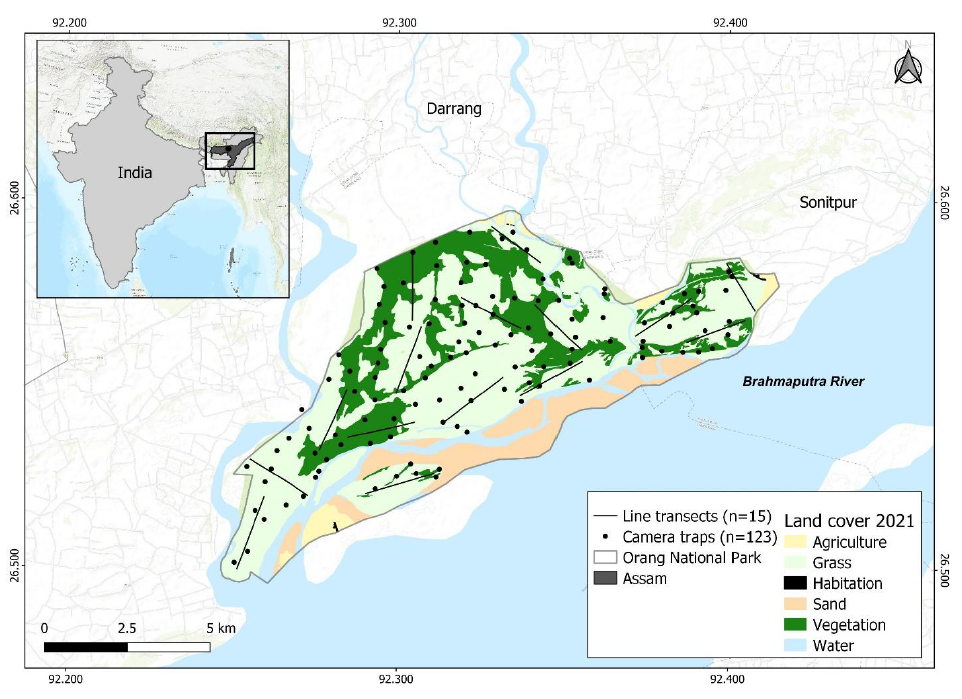
Figure 1. Spatial distribution of camera traps and line transects in the study area.
detection of an animal reduces as a function of increasing perpendicular distance from the observer. The rate of decline is dependent on environmental variables that influence detectability, such as vegetation density, and is expected to differ for distinct habitats including woodlands and grasslands. Thus, we modeled detection functions for each of the two habitats separately. In each set, we ran candidate detection models using half-normal, uniform, and hazard rate key functions along with cosine adjustment terms (Buckland et al., 2015). The models were compared using the Akaike information criterion (AIC), and the model with the lowest AIC value was selected as the best model. Model fit was evaluated using the Chi-squared goodness-of-fit statistic. Along with the habitat-specific models, a set of pooled models without any habitat-specific stratification was also computed. The best model from this pooled set was then compared with the best-fitting habitat-specific models described by Rexstad (2022).
Like detection, encounter rates are expected to vary across habitats, partly due to differences in detectability as discussed earlier. To account for habitat variability, we used the stratified transects to estimate encounter rates for each habitat type. The stratum-specific parameter estimates were then pooled to calculate density and abundance estimates for the entire 80 km² study area. To assess whether large groups disproportionately influenced the encounter rate and, thus, the density estimate, a bootstrapped density estimate was computed based on the selected detection model and stratified encounter rates (following Rexstad, 2022). This approach provided density estimates for hog deer across the park, accounting for spatial variability in both encounter rates and habitat influences. All parameters were computed in the Distance R package version 0.9.6 (Miller, 2016).
Results
Spatio-temporal distribution
We recorded dog deer hog deer in 116 out of 123 camera traps, corresponding to a detection rate of 94.3% across all stations. Detection rates remained consistently high across habitat strata: 90.0% in grasslands, 94.0% in woodlands, and 100% in mixed habitats.
We found that hog deer in ONP are diurnal with the highest activity during early morning and late evening. The diel activity pattern was similar between grasslands and woodlands with a temporal overlap (D-hat) of 86.9% [Bootstrapped CI: 80.8–87.7%]. However, activity in woodlands was more concentrated around midday hours, showing a narrower diurnal window compared to the broader and more pronounced bimodal peaks observed in grasslands (see Figure 2).
The habitat-specific density of hog deer in Orang NP
A total of 222 hog deer sightings (174 from grasslands and 48 from woodland) were used to model the detection function. The maximum perpendicular detection distance in grasslands was 181 m, while in woodlands it was 170 m. Given the differences in structural characteristics between the two habitats, separate sets of detection functions were computed for each habitat. The detection probability of hog deer in grasslands was best described by a hazard rate model with cosine adjustment, while detection in woodlands was best described by a half-normal model with cosine adjustment (Supplementary material Table: 1-5, Figures 2 & 3). However, the detection probability and associated effective strip width for the best- fitting model were not significantly different between grasslands and woodlands (ESW: 36 ± 4 SE m in Grasslands vs 40 ± 4 SE m in Woodland).
Consequently, we computed a set of models with a pooled detection function (the same detection function applied to both habitats). The best pooled detection function was defined by a hazard rate model without any adjustment term. This model had a lower AIC as compared to the stratum-specific detection models and was thus selected for further analysis. The selection of the hazard rate function indicated that detection probability was very high close to the line and dropped sharply with increasing distance. The effective strip width of the pooled model was 35 ± 3 SE m, and the Cramér–von Mises goodness-of-fit test yielded a p-value of 0.80. Further details about the detection models and their selection are provided in Table 1.
Using the pooled detection model and stratum-specific estimates of group sizes and encounter rate, we estimated density of hog deer in grasslands to be 121.58 ± 30.54 (SE) km2
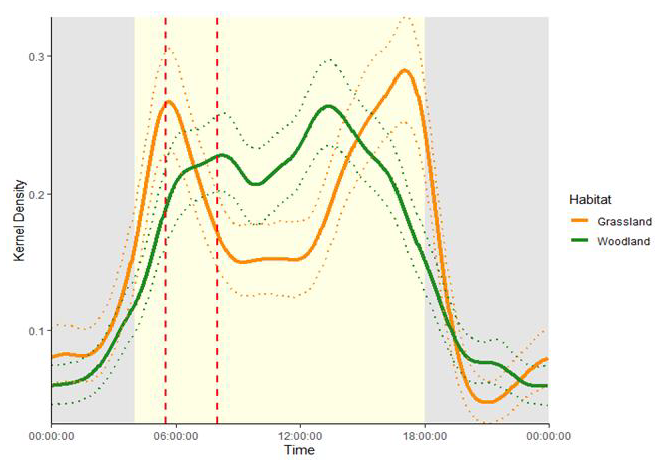
Figure 2. Spatio-temporal activity of hog deer in different habitat types in Orang National Park
and in woodland to be 69.92 ± 36.30 (SE) km2. To determine if the density estimate for grasslands was inflated by large congregations, we used a bootstrapped model with a pooled detection function running 300 iterations (following Rexstad, 2022). The bootstrapped density matched the stratum-specific estimate, indicating that large groups had minimal impact on the overall density estimate.
Given the juxtaposition of grasslands and woodlands at the landscape scale, the hog deer density was not uniformly distributed across Orang National Park, and higher densities were observed in the central and southwestern parts of the park that support extensive grassland patches. In contrast, lower densities occurred in the northern and eastern areas dominated by woodland and mixed vegetation (Figure 3).
Table 1. Summary of detection functions from the three sets of models.
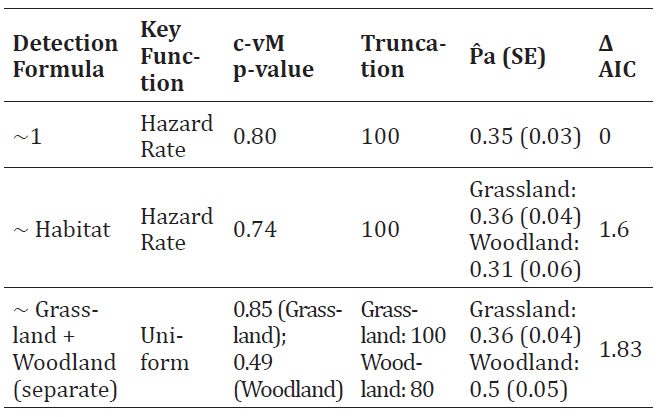
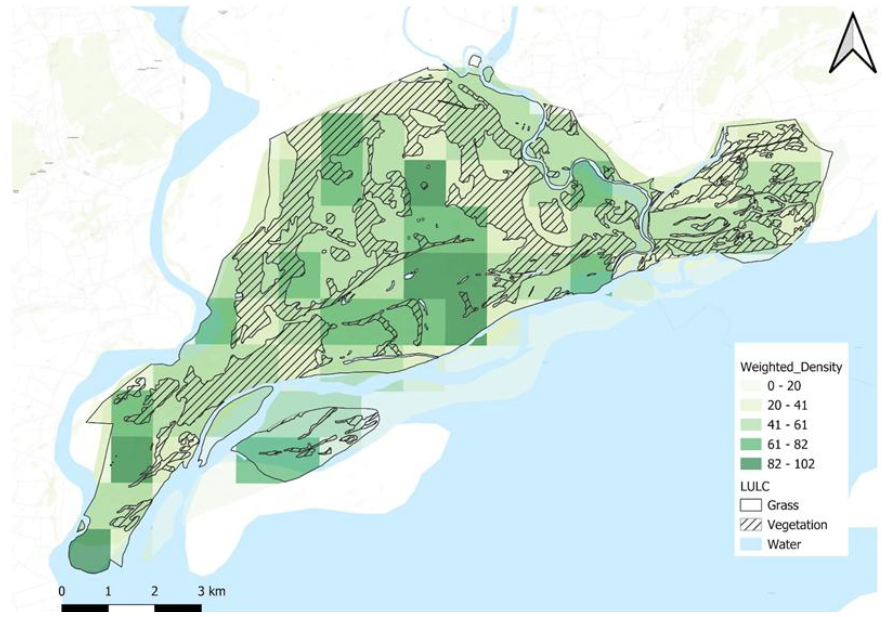
Figure 3. Habitat-specific density of the hog deer Axis porcinus in Orang NP
Discussion
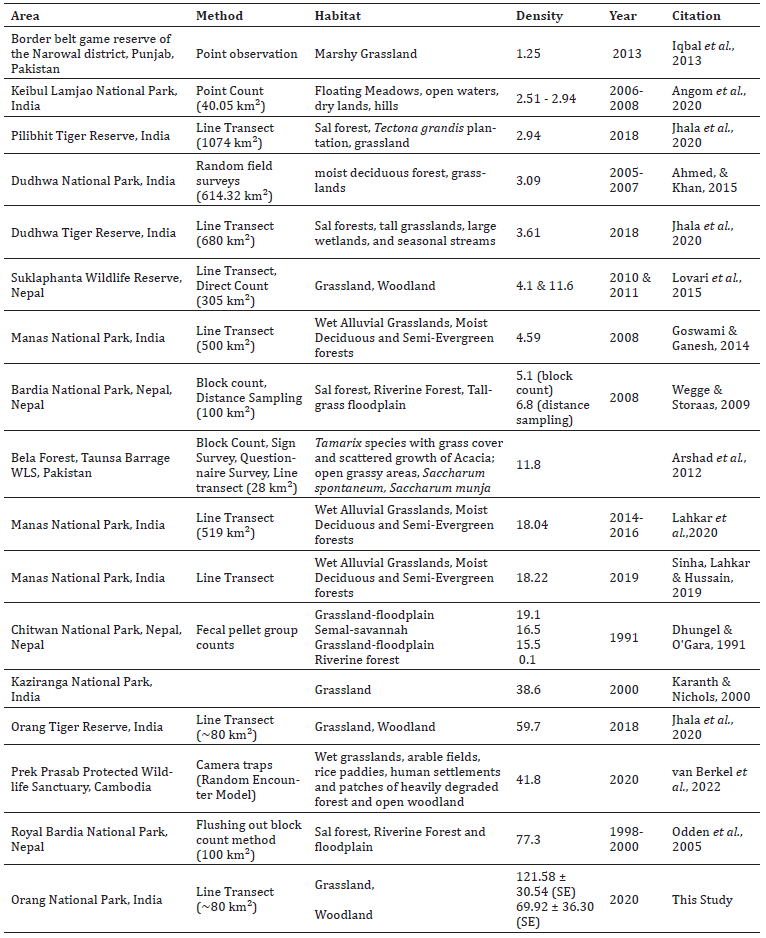
We found that Orang National Park harbored exceptionally high densities of hog deer, with spatial density in grasslands being as high as 121.58 individuals per square kilometer. Given the robust methodology employed, the substantial cumulative area surveyed (approximately 10 square kilometers, accounting for more than 12% of the study area), and the magnitude of the survey effort, our study represents a more comprehensive and in-depth assessment than previous efforts. Compared to hog deer densities in other sites across India (Angom et al., 2020; Lahkar et al., 2020; Sinha et al. 2019; Jhala et al., 2020), Nepal (Odden et al., 2005; Dhungel & O’Gara, 1991), and Cambodia (van Berkel et al., 2022), these estimates are significantly higher (Table 2). The 2018 All India Tiger Estimation (Jhala et al., 2020) estimated ungulate density in Orang National Park and Tiger Reserve by conducting on-foot line transects and reported a similarly high hog deer density of 59.7 individuals/km² in ONP. However, the present estimates from ONP are even higher, nearly double the previous estimates for the area (Jhala et al., 2020). The higher density estimates from this study may partly be due to the more focused nature of this study, improved survey coverage, and higher sampling effort. Further, this study employed line transects over elephant back, which enabled systematic sampling in tall grassland habitats and other areas that are otherwise inaccessible on foot due to the presence of rhinos and elephants.
Such elevated densities are likely attributable to a combination of ecological and management factors unique to the Brahmaputra floodplain ecosystem. Seasonal flooding renews soil nutrients, maintains early-to mid-successional grass structure, and sustains high primary productivity in alluvial grasslands, which supports higher carrying capacity for grazing ungulates (Sharma et al., 2023). The extensive mosaic of tall, moist grasslands interspersed with perennial wetlands reduces dry-season resource bottlenecks for water-dependent herbivores such as hog deer (Angom et al., 2020). Effective protection measures, including intensive anti-poaching patrols and habitat management, have reduced anthropogenic disturbance and poaching pressure, enabling fuller utilization of optimal habitats (Sinha et al., 2019). Furthermore, active management to control invasive plant species such as Mikania micrantha, Chromolaena odorata, and Mimosa diplotricha, which degrade grassland quality in other protected areas of Assam, likely maintains higher forage availability and suitable habitat structure in Orang’s core grasslands (Choudhury et al., 2017; Sengupta et al., 2023). These factors, coupled with the species’ ecological preference for early-successional riverine grasslands with access to water, collectively support the exceptionally high hog deer densities documented in this study (Ding et al., 2022). The high density can also be partly attributed to the hard edges and small size of the Protected Area, leading to a refuge effect and local congregation of the hog deer population.
Hog deer favor tall grasses and floodplain habitats (Bhattarai & Kindlmann, 2013), though the species demonstrates considerable habitat flexibility and can persist in riverine woodlands, cultivated areas, and agricultural croplands within floodplain landscapes (Ding et al., 2022; Shaikh et al., 2025). Our results showed that while hog deer were distributed throughout Orang National Park (including riverine woodlands), their spatial density was substantially higher in grasslands than in woodlands. This pattern is likely due to better forage availability and visibility in grasslands compared to the denser woodland areas (Odden et al., 2005). Currently, grasslands comprise approximately 44–67% of the park’s area, while woodlands account for approximately 19–26% (Sarma et al., 2011). Temporal habitat segregation was evident, with grasslands used more intensively during peak foraging hours (morning and evening). These patterns are consistent with hog deer’s documented preference for floodplain grasslands where densities reach their maximum (Ding et al., 2022; Shaikh et al., 2025). However, continued grassland productivity is essential for maintaining such elevated densities, but woodland encroachment can reduce available grassland area and may shift populations to suboptimal habitats (Bhowmik et al., 2002). Unlike many other protected areas of Northeast India (Lahkar et al., 2020), hog deer in ONP were primarily active during the day, suggesting an absence of significant hunting pressure (Lahkar et al., 2020).
These results are important from a regional conservation perspective as the Orang landscape supports one of the highest tiger densities across the Indian subcontinent (11.34 individuals/100km2; Qureshi et al., 2023), and hog deer is the only medium-sized prey species found in this landscape. Although diet studies specific to ONP are lacking, previous assessments from neighboring regions indicate that hog deer constitute a key prey base for tigers in the Brahmaputra floodplain landscape (Qureshi et al., 2023). ONP forms an important constituent of the protected area network in the Brahmaputra floodplains and is connected to the Kaziranga Tiger Reserve through the Laokhowa & Burhachapori Wildlife Sanctuary (Borah et al., 2010) by the sandbars and river islands on the southern side of the park. These river islands are now protected through recent government notifications that added them to Orang, Kaziranga and Laokhowa–Burhachapori. ONP is expected to serve as a source population for this entire riverine complex, and maintaining high hog deer densities in Orang NP is critical recovery of connected areas. The Laokhowa & Burhachapori WLS is currently undergoing a process of restoration after the removal of illegal encroachments within its boundary. At the same time, maintaining connectivity between these areas is important for ensuring natural dispersal through intervening river islands. However, much of this riverine corridor is currently occupied by illegal encroachments, and poaching, along with restricted movement, which need to be urgently mitigated. We also suggest surveying the densely populated and agricultural areas to the north, northwest, and east of Orang Tiger Reserve to find out if hog deer occur or move through these areas. This information would help in planning better, landscape-level conservation of the species.
Methodological recommendations
In addition to our ecological findings, our study highlights the importance of selecting appropriate survey methodologies for estimating hog deer populations. Our results demonstrate that hog deer exhibit significant diurnal and cathemeral activity patterns, which have implications for population surveys. Based on these findings, we examined existing techniques for estimating hog deer density and provided recommendations for future studies.
Across its range, hog deer populations have been surveyed using a variety of estimation techniques, most prominently the block count and line transect methods (Table 2). However, both methods present challenges. The block count technique requires flushing animals, which can disturb other species and pose safety risks in areas with high densities of rhinos, elephants, and tigers. Additionally, the method’s inability to control animal movement may lead to double-counting and overestimation. Line transects, while more systematic, are also subject to biases if survey timings do not align with peak activity periods of the target species (Buckland et al., 2001).
Our study highlights the necessity of incorporating activity patterns into survey design. In the Eastern Himalayas, historical and ongoing disturbances have led to highly nocturnal activity patterns in many species. Our findings suggest that conducting diurnal line transects in such areas, as done in some previous studies (Lahkar et al., 2020; Sinha et al., 2019), may lead to biased density estimates due to low daytime detectability. We recommend that future studies assess species-specific activity patterns, for instance through continuous monitoring using camera traps, prior to survey design and apply corrections to density estimates where necessary (Rowcliffe et al., 2014).
Line transects in this study were conducted over elephant back as opposed to traditional on-foot surveys. We thus successfully demonstrate the use of elephant back transects for estimation of ungulate population density. This method is likely to be superior to walk- based transects in tall grassland areas inhabited by species such as hog deer (Mathur et al., 2025). We modeled detection function using a hazard rate function, which indicates that detection was very high close to the transects and declined sharply with increasing distance. This may be considered a feature and artifact of the elephant based transects employed in this study. However, more studies over elephant back are required for testing the generality of this pattern.
Table 2. Density estimates of Hog Deer populations from India, Nepal, Cambodia, and Pakistan, arranged in increasing order of reported density. Note the high density in wet grasslands and Orang Tiger Reserve.
Emerging methods such as the Random Encounter Model (van Berkel et al., 2022) and Camera-Trap Distance Sampling (Rowcliffe et al., 2014) offer promising alternatives for estimating hog deer densities without requiring direct detection. However, their effectiveness is currently limited by uncertainties in input parameters, such as average daily travel distances.
Conservation Implications
The high density of hog deer in ONP has important implications for regional conservation, particularly given the park’s role as a critical prey base for one of the world’s highest tiger densities. As the only medium-sized prey species in the study area, the abundance of hog deer is likely a key factor supporting the tiger population (Jhala et al., 2020). ONP is an essential part of the protected area network in the Brahmaputra floodplains and forms a crucial link to the Kaziranga Tiger Reserve through the Laokhowa & Burhachapori Wildlife Sanctuary (Borah et al., 2010). The ongoing restoration of these connected areas offers an opportunity for natural dispersal and population recovery, with ONP serving as a potential source population. However, illegal encroachments and poaching along the riverine corridor currently threaten this connectivity. Effective management and mitigation of these threats are essential for maintaining ecological linkages and ensuring long-term conservation success.
TO DOWNLOAD SUPPLEMENTARY MATERIAL, CLICK HERE.
Acknowledgement
We thank the Assam Forest Department for permission to conduct camera-trapping and line transects in the Orang National Park. We thank Satyajit Das for helping out with field work. Dr Kusum Arunachalam supervised parts of the study and was helpful with her guidance and support. We also want to thank Ankit (Golu Bhaiya) , Ravi Sharma (Baba) and Himanshu Lad for their insightful comments and observations during the study.
CONFLICT OF INTEREST
Gopi GV is an academic editor at the Journal of Wildlife Science. However, he did not participate in the peer review process of this article except as an author. The authors declare that they have no competing interests.
DATA AVAILABILITY
Data is available from the corresponding author on request.
AUTHORS’ CONTRIBUTION
Methodology, Investigation, Data curation, Funding acquisition, Writing-Original draft, Project administration: HB; Conceptualization: HB, VK, GGV; Formal analysis: HB, VK; Software, Validation: VK; Resources: GV; Writing- Review & Editing, Visualization: VK, GGV; Supervision: GGV.
Edited By
Lilly Parker
University of Oklahoma, USA
*CORRESPONDENCE
Varun Kher
✉ varunkher23@gmail.com
✉ varunkher23@wii.gov.in
Himangshu Borah
✉ himangshu.ngn@gmail.com
SPECIAL ISSUE
This paper is published in the Special Issue ‘Master’s Dissertations’. It was M.S. dissertation work of Himangshu Borah.
CITATION
Borah, H., Gopi, G. V., Bendi, S., Kher, V. (2026). Density and spatio-temporal distribution of the endangered hog deer (Axis porcinus) in Orang National Park, India. Journal of Wildlife Science, Online Early Publication, 01-08. https://doi.org/10.63033/JWLS.PXWB5493
COPYRIGHT
© 2026 Borah, Gopi, Bendi, Kher. This is an open-access article, immediately and freely available to read, download, and share. The information contained in this article is distributed under the terms of the Creative Commons Attribution License (CC BY 4.0
 ), allowing for unrestricted use, distribution, and reproduction in any medium, provided the original work is properly cited in accordance with accepted academic practice. Copyright is retained by the author(s).
PUBLISHED BY
Wildlife Institute of India, Dehradun, 248 001 INDIA
PUBLISHER'S NOTE
The Publisher, Journal of Wildlife Science or Editors cannot be held responsible for any errors or consequences arising from the use of the information contained in this article. All claims expressed in this article are solely those of the author(s) and do not necessarily represent those of their affiliated organisations or those of the publisher, the editors and the reviewers. Any product that may be evaluated or used in this article or claim made by its manufacturer is not guaranteed or endorsed by the publisher.
Ahmed, K. & Khan, J. A. (2015). Group size & habitat use of Hog Deer in alluvial floodplains of Dudhwa National Park, Uttar Pradesh, India. Journal of Zoology and Research, 5(1), pp.1-6.
Angom, S., Tuboi, C., Ghazi, M. G. U., Badola, R. & Hussain, S. A. (2020). Demographic and genetic structure of a severely fragmented population of the endangered Hog Deer (Axis porcinus) in the Indo-Burma biodiversity hotspot. PLoS ONE, 15(2), p.e0210382. https://doi.org/10.1371/journal.pone.0210382
Arshad, M., Ullah, I., Chaudhry, M. J. I. & Khan, N. U. H. (2012). Estimating Hog Deer Axis porcinus population in the riverine forest of Taunsa Barrage Wildlife Sanctuary, Punjab, Pakistan. Records: Zoological Survey of Pakistan, 21, pp.25-28.
Banerjee, J. (2015). India: Assam Power Sector Investment Program-Tranche 2.
Barlow, J., França, F., Gardner, T. A., Hicks, C. C., Lennox, G. D., Berenguer, E., Castello, L., Economo, E.P., Ferreira, J., Guénard, B. & Gontijo Leal, C. (2018). The future of hyperdiverse tropical ecosystems. Nature, 559(7715), 517-526. https://doi.org/10.1038/s41586-018-0301-1
Bhattarai, B. P. & Kindlmann, P. (2013). Effect of human disturbance on the prey of tiger in the Chitwan National Park–Implications for park management. Journal of Environmental Management, 131, 343-350. https://doi.org/10.1016/j.jenvman.2013.10.005
Bhowmik, M. K., Chakraborty, T. & Raha, A. K. (2002). The causes of decline of hog deer (Axis porcinus) in India. Zoosprint Journal, 17(11), 901–906. https://doi.org/10.11609/JoTT.ZPJ.17.8.858-60
Biswas, T. & Mathur, V. B. (2000). A Review of the Present Conservation Scenario of hog deer (Axis porcinus) in its Native Range. Indian Forester, 126(10), 1068-1084. https://indianforester.co.in/index.php/indianforester/article/download/3297/3147/3215
Borah, J., Ahmed, M. F. & Sarma, P. K. (2010). Brahmaputra River islands as potential corridors for dispersing tigers: A case study from Assam, India. International Journal of Biodiversity and Conservation, 2(11), pp.350-358. https://academicjournals.org/article/article1380539638_Borah%20et%20al.pdf
Brook, S.M., Nasak, C. & Channa, P. (2015). Indochinese Hog Deer Axis porcinus annamiticus on the brink of extinction. DSG Newsletter ISSN, 23124644
Buckland, S. T., Anderson, D. R., Burnham, K. P., Laake, J. L., Borchers, D. L. & Thomas, L. (2001). Introduction to distance sampling: estimating abundance of biological populations. Oxford University Press. https://doi.org/10.1093/oso/9780198506492.001.0001
Buckland, S. T., Rexstad, E. A., Marques, T. A. & Oedekoven, C. S. (2015). Distance sampling: methods and applications. Springer, New York. pp.263-277. https://doi.org/10.1007/978-3-319-19219-2
Choudhury, M. R., Deb, P. & Singha, H. (2017). Status of invasive plant species in the dry savanna grasslands of Rajiv Gandhi Orang National Park, Assam. International Journal of Ecology and Environmental Sciences, 43(3), 245–250.
Dhungel, S. K. & O'Gara, B. W. (1991). Ecology of the Hog Deer in Royal Chitwan National Park, Nepal. Wildlife Monographs, 119, 3-40.
Ding C., Liu, J., Li, C. & Jiang, Z. (2022). Probable extirpation of the Hog Deer from China: implications for conservation. Oryx, 56(3), 360-366. https://doi.org/10.1017/S0030605321000016
Dudley, N. ed. (2008). Guidelines for applying protected area management categories. Iucn.
Goswami, R. & Ganesh, T. (2014). Carnivore and herbivore densities in the immediate aftermath of ethno-political conflict: the case of Manas National Park, India. Tropical Conservation Science, 7(3), 475-487. https://doi.org/10.1177/194008291400700308
Gupta, S. K., Kumar, A., Angom, S., Singh, B., Ghazi, M. G. U., Tuboi, C. & Hussain, S. A. (2018). Genetic analysis of endangered Hog Deer (Axis porcinus) reveals two distinct lineages from the Indian subcontinent. Scientific Reports, 8(1), 1-12. https://doi.org/10.1038/s41598-018-34482-9
Hill, E., Linacre, A. M., Toop, S., Murphy, N. P. & Strugnell, J. M. (2017). The complete mitochondrial genome of Axis porcinus (Mammalia: Cervidae) from Victoria, Australia, using MiSeq sequencing. Mitochondrial DNA Part B, 2(2), 453-454. https://doi.org/10.1080/23802359.2017.1357451
Hossen, A., Ahsan, M. F. & Kamruzzaman, M. (2017). Deer Population Growth in the Bangabandhu Safari Park in Bangladesh. Journal of the Asiatic Society of Bangladesh, Science, 43(1), 125-127. https://doi.org/10.3329/jasbs.v43i1.46250
Iqbal, M., Prince, A., Khan, M. A., Nayyer, A. Q. & Akhtar, M. (2013). Ecology and population status of Hog Deer from Narowal, Pakistan. International Research Journal of Biological Sciences, 2(7), 19-24.
Jhala, Y. V., Qureshi, Q. & Nayak, A. K. (eds.) (2020). Status of tigers, copredators and prey in India, 2018. National Tiger Conservation Authority, Government of India, New Delhi, and Wildlife Institute of India, Dehradun.
Karanth, K. U. & Nichols, J. D. (2000). Ecological status and conservation of tigers in India. Final Technical Report (February 1995 to January 2000). U.S. Fish and Wildlife Service, Division of International Conservation, Washington, DC. and the Wildlife Conservation Society, New York. OCLC: 45786917. pp. 1-124. https://pubs.usgs.gov/publication/5200239
Lahkar, D., Ahmed, M. F., Begum, R. H., Das, S. K. & Harihar, A. (2020). Responses of a wild ungulate assemblage to anthropogenic influences in Manas National Park, India. Biological Conservation, 243, 108425. https://doi.org/10.1016/j.biocon.2020.108425
Lovari, S., Pokheral, C. P., Jnawali, S. R., Fusani, L. & Ferretti, F. (2015). Coexistence of the tiger and the common leopard in a prey‐rich area: the role of prey partitioning. Journal of Zoology, 295(2), 122-131. https://doi.org/10.1111/jzo.12192
MacKenzie, D. I., Nichols, J. D., Royle, J. A., Pollock, K. H., Bailey, L. & Hines, J. E. (2017). Occupancy estimation and modeling: inferring patterns and dynamics of species occurrence. Elsevier. https://doi.org/10.1016/C2012-0-01164-7
Mathur, V. C., Bora, J. K., Deka, J., Laha, D. R., Gogoi, K., Qureshi, Q. & Kumar, U. (2025). Status of endangered large prey predators following civil unrest in a biodiversity hotspot of India. Scientific Reports, 15(1), 20044. https://doi.org/10.1038/s41598-025-04346-0
Meredith, M., Ridout, M. & Campbell, L. A. (2013). Overlap: estimates of coefficient of overlapping for animal activity patterns. CRAN: Contributed Packages. Version 0.3.4. https://doi.org/10.32614/CRAN.package.overlap
Miller, D. L. (2016). Package ‘Distance’. Versión 0.9.6 https://CRAN.R-project.org/package=Distance
Myers, N., Mittermeier, R. A., Mittermeier, C. G., Da Fonseca, G. A. & Kent, J. (2000). Biodiversity hotspots for conservation priorities. Nature, 403(6772), 853-858. https://doi.org/10.1038/35002501
Odden, M., Wegge, P. & Storaas, T. (2005). Hog deer Axis porcinus need threatened tallgrass floodplains: a study of habitat selection in lowland Nepal. Animal Conservation, 8(1), 99-104. https://doi.org/10.1017/S1367943004001854
Peet, N. B., Watkinson, A. R., Bell, D. J. & Kattel, B. J. (1999). Plant diversity in the threatened sub-tropical grasslands of Nepal. Biological Conservation, 88(2), 193-206. https://doi.org/10.1016/S0006-3207(98)00104-9
Qureshi, Q., Jhala, Y. V., Yadav, S. P. & Mallick, A. (eds.) (2023). Status of tigers, co-predators and prey in India, 2022. National Tiger Conservation Authority, Government of India, New Delhi, and Wildlife Institute of India, Dehradun.
Rexstad, E. (2022). Analysis of stratified survey designs: Revisiting the savanna sparrow point transect data. https://examples.distancesampling.org/Distance-strata/strata-distill.html [Accessed on 10-10-2024]
Rowcliffe, J. M., Carbone, C., Kays, R., Kranstauber, B., Jansen, P. A. (2014). Density Estimation Using Camera Trap Surveys: the Random Encounter Model. In: Meek, P. & Fleming, P. (eds.), Camera Trapping: Wildlife Management and Research. CSIRO Publishing, Melbourne, Australia, pp.317-324. https://doi.org/10.1071/978148630040240.317.324.2014.39
Sarma, P. K., Mipun, B. S., Talukdar, B. K., Kumar, R. & Basumatary, A. K. (2011). Evaluation of Habitat Suitability for Rhino (Rhinoceros unicornis) in Orang National Park Using Geo-Spatial Tools. International Journal of Biodiversity and Conservation, 3(5), 141–153. https://doi.org/10.5402/2011/498258
Sengupta, R. & Dash, S. S. (2023). Ecological impact of alien plant invasion in national parks of an Indo-Burma biodiversity hotspot in India. Journal of Agriculture and Ecology, 15, 109-124. https://doi.org/10.58628/JAE-2315-119
Shaikh, S., Bocherens, H. & Suraprasit, K. (2025). Stable isotope ecology of Quaternary cervid and bovid taxa from the Indian subcontinent. Scientific Reports, 15, 3939. https://doi.org/10.1038/s41598-025-88065-6
Sharma, M., Devi, A., Badola, R., Sharma, R. K. & Hussain, S. A. (2023). Impact of management practices on the tropical riverine grasslands of Brahmaputra floodplains: Implications for conservation. Ecological Indicators, 151, 110265. https://doi.org/10.1016/j.ecolind.2023.110265
Sinha, A., Lahkar, B. P. & Hussain, S. A. (2019). Current population status of the endangered hog deer Axis porcinus (Mammalia: Cetartiodactyla: Cervidae) in the Terai grasslands: a study following political unrest in Manas National Park, India Â. Journal of Threatened Taxa, 11(13), 14655-14662. https://doi.org/10.11609/jott.5037.11.13.14655-14662
Timmins, R., Duckworth , J.W., Samba Kumar, N., Anwarul Islam, M., Sagar Baral, H., Long, B. & Maxwell, A. 2015. Axis porcinus. The IUCN Red List of Threatened Species 2015: e.T41784A22157664. https://dx.doi.org/10.2305/IUCN.UK.2015-4.RLTS.T41784A22157664.en Accessed on 02 October 2026.
van Berkel, T., Emsens, W. J., Eam, S. U., Simoes, S., Puls, S., Rin, N., Kimsan, L. & Jocqué, M. (2022). Population density, habitat use and activity patterns of endangered Hog Deer in Cambodia. Mammal Research, 67, 311-316. https://doi.org/10.1007/s13364-022-00619-5
Vishvanath, N., Nanayakara, R. P. & Herath, H. M. J. C. B. (2014). Current status, distribution and conservation of the Sri Lankan Hog Deer Hyelaphus porcinus (Zimmermann, 1780) (Cetartiodactyla: Cervidae). Journal of Threatened Taxa, 6(12), 6515-6522. https://doi.org/10.11609/JoTT.o3263.6515-22
Wegge, P. & Storaas, T. (2009). Sampling tiger ungulate prey by the distance method: lessons learned in Bardia National Park, Nepal. Animal Conservation, 12(1), 78-84. https://doi.org/10.1111/j.1469-1795.2008.00230.x

Edited By
Lilly Parker
University of Oklahoma, USA
*CORRESPONDENCE
Varun Kher
✉ varunkher23@gmail.com
✉ varunkher23@wii.gov.in
Himangshu Borah
✉ himangshu.ngn@gmail.com
SPECIAL ISSUE
This paper is published in the Special Issue ‘Master’s Dissertations’. It was M.S. dissertation work of Himangshu Borah.
CITATION
Borah, H., Gopi, G. V., Bendi, S., Kher, V. (2026). Density and spatio-temporal distribution of the endangered hog deer (Axis porcinus) in Orang National Park, India. Journal of Wildlife Science, Online Early Publication, 01-08. https://doi.org/10.63033/JWLS.PXWB5493
COPYRIGHT
© 2026 Borah, Gopi, Bendi, Kher. This is an open-access article, immediately and freely available to read, download, and share. The information contained in this article is distributed under the terms of the Creative Commons Attribution License (CC BY 4.0), allowing for unrestricted use, distribution, and reproduction in any medium, provided the original work is properly cited in accordance with accepted academic practice. Copyright is retained by the author(s).
PUBLISHED BY
Wildlife Institute of India, Dehradun, 248 001 INDIA
PUBLISHER'S NOTE
The Publisher, Journal of Wildlife Science or Editors cannot be held responsible for any errors or consequences arising from the use of the information contained in this article. All claims expressed in this article are solely those of the author(s) and do not necessarily represent those of their affiliated organisations or those of the publisher, the editors and the reviewers. Any product that may be evaluated or used in this article or claim made by its manufacturer is not guaranteed or endorsed by the publisher.
Ahmed, K. & Khan, J. A. (2015). Group size & habitat use of Hog Deer in alluvial floodplains of Dudhwa National Park, Uttar Pradesh, India. Journal of Zoology and Research, 5(1), pp.1-6.
Angom, S., Tuboi, C., Ghazi, M. G. U., Badola, R. & Hussain, S. A. (2020). Demographic and genetic structure of a severely fragmented population of the endangered Hog Deer (Axis porcinus) in the Indo-Burma biodiversity hotspot. PLoS ONE, 15(2), p.e0210382. https://doi.org/10.1371/journal.pone.0210382
Arshad, M., Ullah, I., Chaudhry, M. J. I. & Khan, N. U. H. (2012). Estimating Hog Deer Axis porcinus population in the riverine forest of Taunsa Barrage Wildlife Sanctuary, Punjab, Pakistan. Records: Zoological Survey of Pakistan, 21, pp.25-28.
Banerjee, J. (2015). India: Assam Power Sector Investment Program-Tranche 2.
Barlow, J., França, F., Gardner, T. A., Hicks, C. C., Lennox, G. D., Berenguer, E., Castello, L., Economo, E.P., Ferreira, J., Guénard, B. & Gontijo Leal, C. (2018). The future of hyperdiverse tropical ecosystems. Nature, 559(7715), 517-526. https://doi.org/10.1038/s41586-018-0301-1
Bhattarai, B. P. & Kindlmann, P. (2013). Effect of human disturbance on the prey of tiger in the Chitwan National Park–Implications for park management. Journal of Environmental Management, 131, 343-350. https://doi.org/10.1016/j.jenvman.2013.10.005
Bhowmik, M. K., Chakraborty, T. & Raha, A. K. (2002). The causes of decline of hog deer (Axis porcinus) in India. Zoosprint Journal, 17(11), 901–906. https://doi.org/10.11609/JoTT.ZPJ.17.8.858-60
Biswas, T. & Mathur, V. B. (2000). A Review of the Present Conservation Scenario of hog deer (Axis porcinus) in its Native Range. Indian Forester, 126(10), 1068-1084. https://indianforester.co.in/index.php/indianforester/article/download/3297/3147/3215
Borah, J., Ahmed, M. F. & Sarma, P. K. (2010). Brahmaputra River islands as potential corridors for dispersing tigers: A case study from Assam, India. International Journal of Biodiversity and Conservation, 2(11), pp.350-358. https://academicjournals.org/article/article1380539638_Borah%20et%20al.pdf
Brook, S.M., Nasak, C. & Channa, P. (2015). Indochinese Hog Deer Axis porcinus annamiticus on the brink of extinction. DSG Newsletter ISSN, 23124644
Buckland, S. T., Anderson, D. R., Burnham, K. P., Laake, J. L., Borchers, D. L. & Thomas, L. (2001). Introduction to distance sampling: estimating abundance of biological populations. Oxford University Press. https://doi.org/10.1093/oso/9780198506492.001.0001
Buckland, S. T., Rexstad, E. A., Marques, T. A. & Oedekoven, C. S. (2015). Distance sampling: methods and applications. Springer, New York. pp.263-277. https://doi.org/10.1007/978-3-319-19219-2
Choudhury, M. R., Deb, P. & Singha, H. (2017). Status of invasive plant species in the dry savanna grasslands of Rajiv Gandhi Orang National Park, Assam. International Journal of Ecology and Environmental Sciences, 43(3), 245–250.
Dhungel, S. K. & O'Gara, B. W. (1991). Ecology of the Hog Deer in Royal Chitwan National Park, Nepal. Wildlife Monographs, 119, 3-40.
Ding C., Liu, J., Li, C. & Jiang, Z. (2022). Probable extirpation of the Hog Deer from China: implications for conservation. Oryx, 56(3), 360-366. https://doi.org/10.1017/S0030605321000016
Dudley, N. ed. (2008). Guidelines for applying protected area management categories. Iucn.
Goswami, R. & Ganesh, T. (2014). Carnivore and herbivore densities in the immediate aftermath of ethno-political conflict: the case of Manas National Park, India. Tropical Conservation Science, 7(3), 475-487. https://doi.org/10.1177/194008291400700308
Gupta, S. K., Kumar, A., Angom, S., Singh, B., Ghazi, M. G. U., Tuboi, C. & Hussain, S. A. (2018). Genetic analysis of endangered Hog Deer (Axis porcinus) reveals two distinct lineages from the Indian subcontinent. Scientific Reports, 8(1), 1-12. https://doi.org/10.1038/s41598-018-34482-9
Hill, E., Linacre, A. M., Toop, S., Murphy, N. P. & Strugnell, J. M. (2017). The complete mitochondrial genome of Axis porcinus (Mammalia: Cervidae) from Victoria, Australia, using MiSeq sequencing. Mitochondrial DNA Part B, 2(2), 453-454. https://doi.org/10.1080/23802359.2017.1357451
Hossen, A., Ahsan, M. F. & Kamruzzaman, M. (2017). Deer Population Growth in the Bangabandhu Safari Park in Bangladesh. Journal of the Asiatic Society of Bangladesh, Science, 43(1), 125-127. https://doi.org/10.3329/jasbs.v43i1.46250
Iqbal, M., Prince, A., Khan, M. A., Nayyer, A. Q. & Akhtar, M. (2013). Ecology and population status of Hog Deer from Narowal, Pakistan. International Research Journal of Biological Sciences, 2(7), 19-24.
Jhala, Y. V., Qureshi, Q. & Nayak, A. K. (eds.) (2020). Status of tigers, copredators and prey in India, 2018. National Tiger Conservation Authority, Government of India, New Delhi, and Wildlife Institute of India, Dehradun.
Karanth, K. U. & Nichols, J. D. (2000). Ecological status and conservation of tigers in India. Final Technical Report (February 1995 to January 2000). U.S. Fish and Wildlife Service, Division of International Conservation, Washington, DC. and the Wildlife Conservation Society, New York. OCLC: 45786917. pp. 1-124. https://pubs.usgs.gov/publication/5200239
Lahkar, D., Ahmed, M. F., Begum, R. H., Das, S. K. & Harihar, A. (2020). Responses of a wild ungulate assemblage to anthropogenic influences in Manas National Park, India. Biological Conservation, 243, 108425. https://doi.org/10.1016/j.biocon.2020.108425
Lovari, S., Pokheral, C. P., Jnawali, S. R., Fusani, L. & Ferretti, F. (2015). Coexistence of the tiger and the common leopard in a prey‐rich area: the role of prey partitioning. Journal of Zoology, 295(2), 122-131. https://doi.org/10.1111/jzo.12192
MacKenzie, D. I., Nichols, J. D., Royle, J. A., Pollock, K. H., Bailey, L. & Hines, J. E. (2017). Occupancy estimation and modeling: inferring patterns and dynamics of species occurrence. Elsevier. https://doi.org/10.1016/C2012-0-01164-7
Mathur, V. C., Bora, J. K., Deka, J., Laha, D. R., Gogoi, K., Qureshi, Q. & Kumar, U. (2025). Status of endangered large prey predators following civil unrest in a biodiversity hotspot of India. Scientific Reports, 15(1), 20044. https://doi.org/10.1038/s41598-025-04346-0
Meredith, M., Ridout, M. & Campbell, L. A. (2013). Overlap: estimates of coefficient of overlapping for animal activity patterns. CRAN: Contributed Packages. Version 0.3.4. https://doi.org/10.32614/CRAN.package.overlap
Miller, D. L. (2016). Package ‘Distance’. Versión 0.9.6 https://CRAN.R-project.org/package=Distance
Myers, N., Mittermeier, R. A., Mittermeier, C. G., Da Fonseca, G. A. & Kent, J. (2000). Biodiversity hotspots for conservation priorities. Nature, 403(6772), 853-858. https://doi.org/10.1038/35002501
Odden, M., Wegge, P. & Storaas, T. (2005). Hog deer Axis porcinus need threatened tallgrass floodplains: a study of habitat selection in lowland Nepal. Animal Conservation, 8(1), 99-104. https://doi.org/10.1017/S1367943004001854
Peet, N. B., Watkinson, A. R., Bell, D. J. & Kattel, B. J. (1999). Plant diversity in the threatened sub-tropical grasslands of Nepal. Biological Conservation, 88(2), 193-206. https://doi.org/10.1016/S0006-3207(98)00104-9
Qureshi, Q., Jhala, Y. V., Yadav, S. P. & Mallick, A. (eds.) (2023). Status of tigers, co-predators and prey in India, 2022. National Tiger Conservation Authority, Government of India, New Delhi, and Wildlife Institute of India, Dehradun.
Rexstad, E. (2022). Analysis of stratified survey designs: Revisiting the savanna sparrow point transect data. https://examples.distancesampling.org/Distance-strata/strata-distill.html [Accessed on 10-10-2024]
Rowcliffe, J. M., Carbone, C., Kays, R., Kranstauber, B., Jansen, P. A. (2014). Density Estimation Using Camera Trap Surveys: the Random Encounter Model. In: Meek, P. & Fleming, P. (eds.), Camera Trapping: Wildlife Management and Research. CSIRO Publishing, Melbourne, Australia, pp.317-324. https://doi.org/10.1071/978148630040240.317.324.2014.39
Sarma, P. K., Mipun, B. S., Talukdar, B. K., Kumar, R. & Basumatary, A. K. (2011). Evaluation of Habitat Suitability for Rhino (Rhinoceros unicornis) in Orang National Park Using Geo-Spatial Tools. International Journal of Biodiversity and Conservation, 3(5), 141–153. https://doi.org/10.5402/2011/498258
Sengupta, R. & Dash, S. S. (2023). Ecological impact of alien plant invasion in national parks of an Indo-Burma biodiversity hotspot in India. Journal of Agriculture and Ecology, 15, 109-124. https://doi.org/10.58628/JAE-2315-119
Shaikh, S., Bocherens, H. & Suraprasit, K. (2025). Stable isotope ecology of Quaternary cervid and bovid taxa from the Indian subcontinent. Scientific Reports, 15, 3939. https://doi.org/10.1038/s41598-025-88065-6
Sharma, M., Devi, A., Badola, R., Sharma, R. K. & Hussain, S. A. (2023). Impact of management practices on the tropical riverine grasslands of Brahmaputra floodplains: Implications for conservation. Ecological Indicators, 151, 110265. https://doi.org/10.1016/j.ecolind.2023.110265
Sinha, A., Lahkar, B. P. & Hussain, S. A. (2019). Current population status of the endangered hog deer Axis porcinus (Mammalia: Cetartiodactyla: Cervidae) in the Terai grasslands: a study following political unrest in Manas National Park, India Â. Journal of Threatened Taxa, 11(13), 14655-14662. https://doi.org/10.11609/jott.5037.11.13.14655-14662
Timmins, R., Duckworth , J.W., Samba Kumar, N., Anwarul Islam, M., Sagar Baral, H., Long, B. & Maxwell, A. 2015. Axis porcinus. The IUCN Red List of Threatened Species 2015: e.T41784A22157664. https://dx.doi.org/10.2305/IUCN.UK.2015-4.RLTS.T41784A22157664.en Accessed on 02 October 2026.
van Berkel, T., Emsens, W. J., Eam, S. U., Simoes, S., Puls, S., Rin, N., Kimsan, L. & Jocqué, M. (2022). Population density, habitat use and activity patterns of endangered Hog Deer in Cambodia. Mammal Research, 67, 311-316. https://doi.org/10.1007/s13364-022-00619-5
Vishvanath, N., Nanayakara, R. P. & Herath, H. M. J. C. B. (2014). Current status, distribution and conservation of the Sri Lankan Hog Deer Hyelaphus porcinus (Zimmermann, 1780) (Cetartiodactyla: Cervidae). Journal of Threatened Taxa, 6(12), 6515-6522. https://doi.org/10.11609/JoTT.o3263.6515-22
Wegge, P. & Storaas, T. (2009). Sampling tiger ungulate prey by the distance method: lessons learned in Bardia National Park, Nepal. Animal Conservation, 12(1), 78-84. https://doi.org/10.1111/j.1469-1795.2008.00230.x


