TYPE: Research Article
Kruti Chhaya1 , Gurudas Nulkar2,18, Parth Bapat3, Hrushikesh Barve2,4, Nupur Bhave5, Anup Bokkasa5, Vaidehi Dandekar2, Sachin Desai6, Ketaki Ghate7,23, Revati Gindi8, Amruta Joglekar9, Atul Joshi10, Poorva Joshi11,24, Satish Kamat12, Manasi Karandikar7,18, Chaitrali Khod13, Mandar Kulkarni14, Himanshu Lad1, Akshay Mandavkar15, Pratiksha Mestry16, Yash Mishrikotkar9, Prateek More17, Sayali Nerurkar18, Madhura Niphadkar19, Ankur Patwardhan16, Pooja Pawar1, Girish Punjabi19, Pratik Purohit8, Medhavi Rajwade9, Manali Rane20, Virashree Raorane21, Nikit Surve22, Sanjay Thakur19, Aparna Watve11*, Rohit Naniwadekar1*
1Nature Conservation Foundation, Mysuru, Karnataka, India, 570017
2Centre for Sustainable Development, Pune, Maharashtra, India, 411004
3Konkan Science Forum, Ratnagiri, Maharashtra, India
4HRIDAY Energy Network Forum, Pune, Maharashtra, India, 411038
5The Habitats Trust, New Delhi, India, 110019
6Syamantak Trust, Sindhudurg, Maharashtra, India, 416605
7Oikos for Ecological Services, Pune, Maharashtra, India, 411038
8Vanam Ecologics, Pune, Maharashtra, India, 411009
9Ecovrat Envirosolutions, Pune, Maharashtra, India, 411046
10FLAME University, Pune, Maharashtra, India, 412115
11IUCN SSC Western Ghats Plants Specialist Group, Pune, Maharashtra, India
12People's Empowering Movement, Ratnagiri, Maharashtra, India
13IUCN Youth Professional Task Force, Pune, Maharashtra, India
14Individual Consultant, Pune, Maharashtra, India
15Mumbai Tarun Bharat, Mumbai, Maharashtra, India, 400705
16Research and Action in Natural Wealth Administration (RANWA), Pune, Maharashtra, India
17Sahyadri Sankalp Society, Ratnagiri, Maharashtra, India
18Ecological Society, Pune, Maharashtra, India, 411016
19Wildlife Conservation Trust, Mumbai, Maharashtra, India, 400001
20Bombay Environmental Action Group, Mumbai, Maharashtra, India, 400008
21Independent Researcher, Sindhudurg, Maharashtra, India
22Wildlife Conservation Society - India, Bengaluru, Karnataka, India, 560097
23Adhiwas Foundation, Pune, Maharashtra, India, 411038
24IUCN Sustainable Use and Livelihoods Specialist Group, Maharashtra, India

Introduction
The Western Ghats–Sri Lanka Biodiversity Hotspot is recognised as one of the world’s highest conservation priority biodiversity hotspots due to its high endemism and the threats faced by its biodiversity and ecosystems (Myers et al., 2000; Mittermeier et al., 2011). More than 33,500 km2 of forest was lost between 1920 and 2013 in the Western Ghats (Reddy et al., 2016). Expanding coffee, tea, rubber, cashew, and mango plantations, along with other forms of agriculture and forest degradation, are the primary drivers of this forest loss (Reddy et al., 2016). While significant scientific information exists from the central and southern Western Ghats, the northern Western Ghats have received relatively little research and conservation attention despite being geologically and biogeographically distinct from the central and southern Western Ghats and facing high threat levels (Srivathsa et al., 2023).
The northern Western Ghats lie between 14°N (north of Kali River, Karnataka) and 21°N (south of the Tapi River, Gujarat) (Subramanyam & Nayar, 1974). Their unique geography becomes apparent as one moves west towards the coast from the Sahyadri mountains. This geography is a consequence of Deccan volcanic activity around 60 million years ago, followed by weathering, which resulted in distinctive lateritic plateaus and relatively steep escarpments of the Sahyadris (Figure 1). Within the northern Western Ghats, the Konkan region of Maharashtra is a distinct physiographic region, spanning a width of 40 to 50 km between the coastline to the west and the escarpment of the Western Ghats to the east.
Large lateritic plateaus, deeply entrenched river channels, and piedmont plains at the foot of the Sahyadri escarpment are significant land features, particularly in the Ratnagiri and Sindhudurg districts (Diddee et al., 2002). Past geological events have significantly shaped the biogeography of the region (Joshi & Karanth, 2013). Unlike forested ecosystems, the lateritic plateaus are exposed to the sun for nearly five to six months a year and are lashed by heavy monsoon rainfall. This extreme climate has fostered a diverse array of herbaceous plants and herpetofauna adapted to these harsh environments. A significant proportion of this diversity is endemic to the region. Seventeen percent of the total herbaceous plant species on low-level lateritic plateaus are endemic to the region (Kulkarni et al., 2023). Dipcadi concanensis and Iphigenia ratnagirica, classified as Endangered by the IUCN Red List, have large populations on the lateritic plateaus in Ratnagiri and Sindhudurg (Mirgal, 2022; Patil & Watve, 2022). Species such as the white-striped viper gecko (Hemidactylus albofasciatus) (Figure 1), classified as Vulnerable by the IUCN, are restricted to select lateritic plateaus in the Ratnagiri district (Srinivasulu & Srinivasulu, 2013; Jithin et al., 2023; Amberkar & Mungikar, 2024). The low-elevation forests of the Konkan region harbour significant populations of threatened fauna, including hornbills (Biswas et al., 2026 ; Pawar & Sadekar, 2023), tiger (Panthera tigris), gaur (Bos gaurus), elephant (Elephas maximus), and other wildlife (Punjabi & Rao, 2017; Rege et al., 2020; Kumara et al., 2023) (Figure 1). Moreover, the natural geographic ranges of several endemic species of the Western Ghats, for example, the Western Ghats king cobra (Ophiophagus kaalinga), the southern flying lizard (Draco dussumieri), hump-nosed pit viper (Hypnale hypnale), Malabar woodshrike (Tephrodornis sylvicola), and grey-headed bulbul (Microtarsus priocephalus), extend into the Konkan region of Maharashtra, underscoring its biogeographic relevance.
While agroforestry plantations are prevalent across the northern, central, and southern Western Ghats, numerous studies have compared biodiversity responses across agroforestry plantations and forests in the central and southern Western Ghats (Daniels et al., 1990; Raman & Sukumar, 2002; Anand et al., 2008; Ranganathan et al., 2010; Sidhu et al., 2010; Karanth et al., 2016; Raman et al., 2021). But there are very few peer-reviewed publications from the Konkan region of the northern Western Ghats (Jithin & Naniwadekar, 2025; Jithin et al., 2025; Lad et al., 2025). There are very few Protected Areas between 18.5°N and 15.6°N in the Konkan region of Maharashtra; the majority of the Protected Areas within these latitudes (Sahyadri Tiger Reserve, Radhanagari and Tamhini Wildlife Sanctuaries, and a series of Conservation Reserves) are mostly restricted to the crest of the Western Ghats (locally called “Desh”). Among other land-use changes, the lateritic plateaus and foothill forests under private ownership in Konkan are being converted into monoculture plantations of mango, cashew, and rubber at an alarming rate. Impacts of these plantations on biodiversity are understudied. Despite the Konkan region’s unique biogeography and biodiversity value and the threats it faces, it has not been identified as a critical area of conservation importance (Srivathsa et al., 2023), which may partly reflect the relatively poor representation of the ecological literature from the area (Gadgil et al., 2011).
Given this background, we deemed it critical to assess the existing knowledge of anthropogenic impacts on biodiversity and identify critical knowledge gaps to prioritise future research and conservation efforts in the Konkan region. Our objectives were to 1) review the existing literature on biodiversity and conservation in the Konkan region, 2) identify key anthropogenic threats to biodiversity, and 3) assess temporal change in select anthropogenic threats at a regional scale using data available in the public domain. While the first objective encompassed the entire Konkan region in Maharashtra, objectives 2 and 3 focused exclusively on the Ratnagiri and Sindhudurg districts of Maharashtra, as these areas continue to harbour significant natural habitat and biodiversity but lack extensive Protected Area coverage (Figure 2). Moreover, the districts around Mumbai (Thane, Palghar, and Raigad) have experienced land-use change and industrialisation for more than four decades, while Ratnagiri and Sindhudurg have experienced rapid land-use change in the last two decades (Rege & Lee, 2022). While the first objective relied on synthesising insights from published literature, the second objective sought information from experts from the region and their field experiences to identify key threats, and the third objective involved analysing publicly available information related to certain threats.
Methods
Study Area
The Konkan (or Kokan) region of Maharashtra, India, is a 40– 50 km wide coastal strip bounded by the northern Western Ghats to the east and the Arabian Sea to the west. Covering an area of 30,728 km2, it has a population of 28.6 million as per the 2011 Census (Office of the Registrar General & Census Commissioner, 2013). Administratively, the region includes the districts of Mumbai, Thane, Palghar, Raigad, Ratnagiri, and Sindhudurg (Figure 2). Physiographically, Konkan is divided into north, middle, and south sections, each distinguished by unique physical, geological, environmental, and cultural features (Karlekar & Thakurdesai, 2017). The Ratnagiri and Sindhudurg districts form the southern Konkan. The region experiences a seasonal climate. Summers (March–early June) are hot and humid, with temperatures reaching 33 ℃, while winters (November–February) are relatively mild, with minimum temperatures around 18 ℃. The annual average rainfall in the region is 3,225 mm, primarily due to the south-west monsoon from June to September (Maharashtra Pollution Control Board, 2007). The 2012 Maharashtra Human Development Report (Planning Department, 2012) ranked Sindhudurg as ‘very high’ and Ratnagiri as ‘high’ on the Human Development Index (HDI), with both districts performing well in education and health
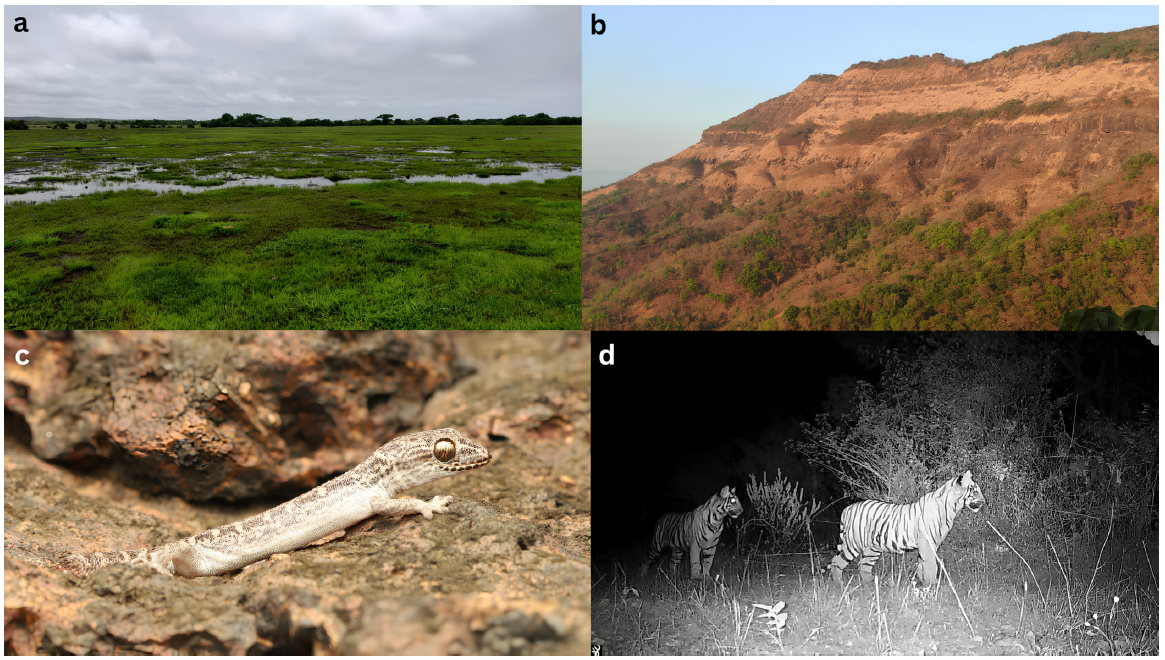
Figure 1. Lateritic plateau (a) and steep escarpments of the Sahyadris (b). White- striped Viper Gecko, Hemidactylus albofasciatus, found only at select plateaus in Ratnagiri (c) and tiger cubs image captured through camera traps (d). Photos: Aparna Watve, Rohit Naniwadekar, WCT/Maharashtra Forest Department.
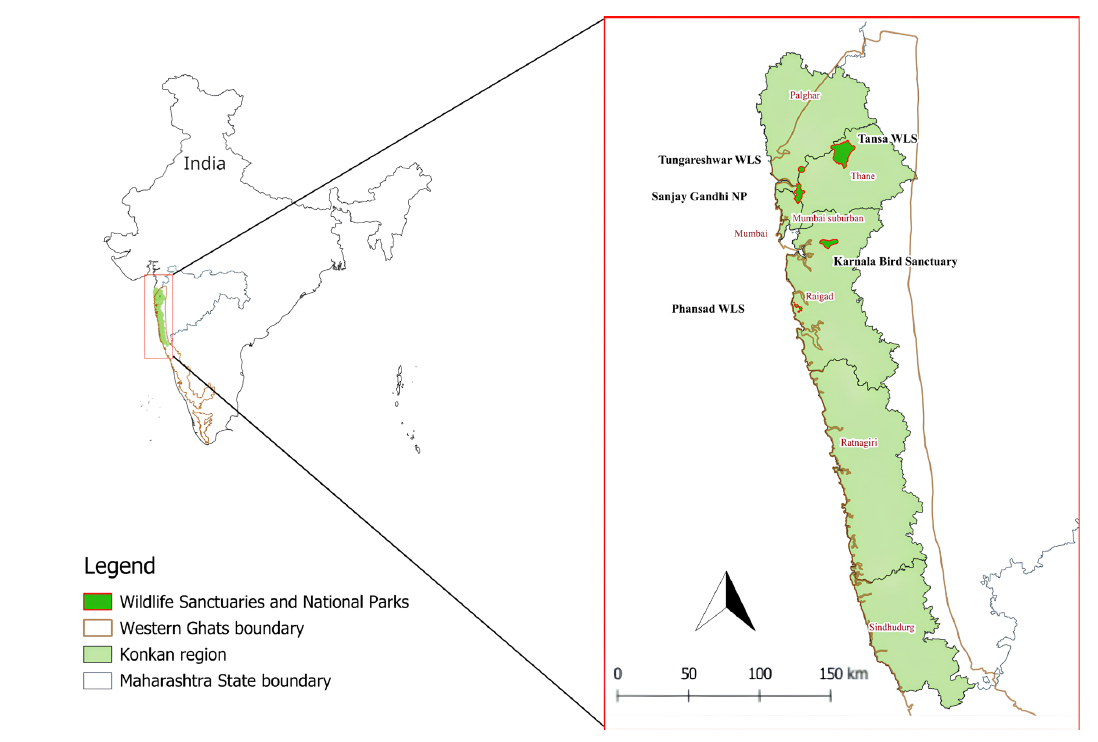
Figure 2. Indicative boundaries of the Wildlife Sanctuaries and National Parks in the Konkan region of Maharashtra. Basemaps were obtained from Survey of India website (Survey of India, n.d.), and India Biodiversity Portal (India Biodiversity Portal, n.d.). NP: National Park, WLS: Wildlife Sanctuary.
indicators. Additionally, the 2021–22 Directorate of Economics and Statistics (DES) report (Directorate of Economics and Statistics, 2023) highlights good road connectivity to the villages across Sindhudurg and Ratnagiri.
Literature Review
We conducted a literature review focusing on the districts of Palghar, Thane, Mumbai, Raigad, Ratnagiri, and Sindhudurg in the Konkan region of Maharashtra. Using a combination of taxa, threat, region, and habitat-related keywords, we searched Google Scholar for ecological and conservation science literature on plants and vertebrates from terrestrial ecosystems. We systematically scanned Google Scholar results pages until no further relevant literature was found. The keywords used for the review are listed in Table S1. Since we focused on ecological or conservation science studies, we excluded literature limited to species checklists or natural history observations. We collated all the literature we could find on Google Scholar (as we did not have access to Web of Science) up to 7 July 2024, with the oldest publication dating back to 1981.
The collected literature was classified into peer-reviewed publications, reports, preprints, theses, book chapters, and conference papers. We recorded the district(s) where each study was conducted and noted whether the first author’s affiliation was a non-governmental organisation (not-for-profit organisation), a college or university, or a research institute. We classified research institutes separately, as, unlike colleges and universities, the primary mandate of a research institute is research, not teaching. The focal taxa were categorised as plants, amphibians, reptiles, birds, and/or mammals, and we identified whether studies were conducted inside and/or outside Protected Areas. Additionally, we classified the literature based on relevant threat categories that emerged from the expert interactions and focus group discussions.
Focus group discussions for identifying threats to biodiversity in Ratnagiri and Sindhudurg
To complement the findings from our systematic literature review, we conducted a day-long, in-person meeting with key informants at the Gokhale Institute of Politics and Economics, Pune, India, on 13 July 2024. This meeting aimed to review studied threats and identify threats that may not have been studied in existing published literature. We invited academics, conservationists, activists, journalists, and lawyers involved in nature conservation in the Konkan region. Given their involvement in research and conservation within the area, they were well-positioned to provide broader insights into the nature of existing threats. The focus of the discussion was on the Ratnagiri and Sindhudurg districts, which, from a biodiversity perspective, still contain large forest and natural lateritic plateau habitats that are unprotected and outside the network of Protected Areas in the Konkan region.
During the meeting, participants were divided into four groups to list the threats to terrestrial biodiversity in the Ratnagiri and Sindhudurg districts of the Konkan region. Each group then discussed 1) whether these threats have increased or decreased over the past 20 years, 2) whether they are localised to specific sites or widespread across Ratnagiri and Sindhudurg districts, and 3) whether there is existing knowledge of their impacts on biodiversity in the region. The exercise was conducted as a facilitated focus group discussion. For each of the themes, participants engaged in discussions in smaller groups. The findings of each group were synthesised, and threats were prioritised based on their geographic extent, perceived trends over time, and the availability of existing knowledge on their impacts. For instance, threats that were widespread perceived as increasing, and had limited background knowledge were ranked as higher priority for future research and conservation action. For some threats, we also triangulated participants’ perceptions with existing data from different sources, as outlined in the next section.
Determining temporal change in select threat categories
We determined temporal changes between 2009 and 2023 in threat categories that emerged as priorities in the focus group discussions and for which temporal data were available publicly. We extracted information from published data available on government websites and peer-reviewed publications on the following themes: 1) road length, 2) number of mines (bauxite, iron ore), 3) extent of land under specific agroforestry plantations (e.g., cashew, mango), and 4) primary forest loss in the Ratnagiri and Sindhudurg districts.
We obtained data on the total road length (including national and state highways, district roads, and village roads) in the Ratnagiri and Sindhudurg districts, as well as the number of bauxite mines in Ratnagiri from the Infrastructure Statistics of Maharashtra State reports, published by the Directorate of Economics and Statistics (Directorate of Economics and Statistics, 2009–2023). However, we found no information on bauxite mines for Sindhudurg. Similarly, we retrieved data on the number of iron ore mines in Sindhudurg, but no corresponding information was available for Ratnagiri. Data on the area under mango and cashew cultivation in Ratnagiri and Sindhudurg were sourced from District Social and Economic Reviews (Directorate of Economics and Statistics, 2010–2023a, 2010–2023b) and Area Production Estimate Reports of the Horticulture Area Production Information System (HAPIS) (Ministry of Agriculture and Farmers Welfare, 2013–2023). Additionally, we used data from Global Forest Watch (University of Maryland & World Resources Institute, 2024) to estimate primary forest loss in these districts from 2009 to 2023. The details of data sources for the threats mentioned above are provided in Table S2. We then calculated the percentage change in these activities for each district over time.
Results
Literature Review
We identified 138 publications authored by 95 unique first authors affiliated with 61 unique organisations (Table S3). While 39% of these studies were conducted in a single district, 34% spanned multiple districts, and the remaining studies were not site-specific. At least 35.5% of the studies were conducted entirely or partly in Sindhudurg district, 31.8% in Ratnagiri, 17.3% in Raigad, 13.7% in Thane, 10.9% in Mumbai and 5% in Palghar. The first authors were primarily affiliated with non-governmental organisations (40%), colleges or universities (38%), and research institutes (18%). The number of publications has increased over time (Figure 3). Of the 138 publications, 71% (98) were peer-reviewed scientific articles published in 58 different scientific journals, 13% (18) were reports, 6% (8) were preprints, and 4% (5) were doctoral theses. The rest were master’s theses, book chapters and conference papers. Most of the studies focused on plants (35%), followed by mammals (22%), birds (17%), amphibians (12%), and reptiles (7%). Over 55% of the studies were conducted outside Protected Areas, approximately 14% in Protected Areas, and the remainder both inside and outside Protected Areas.
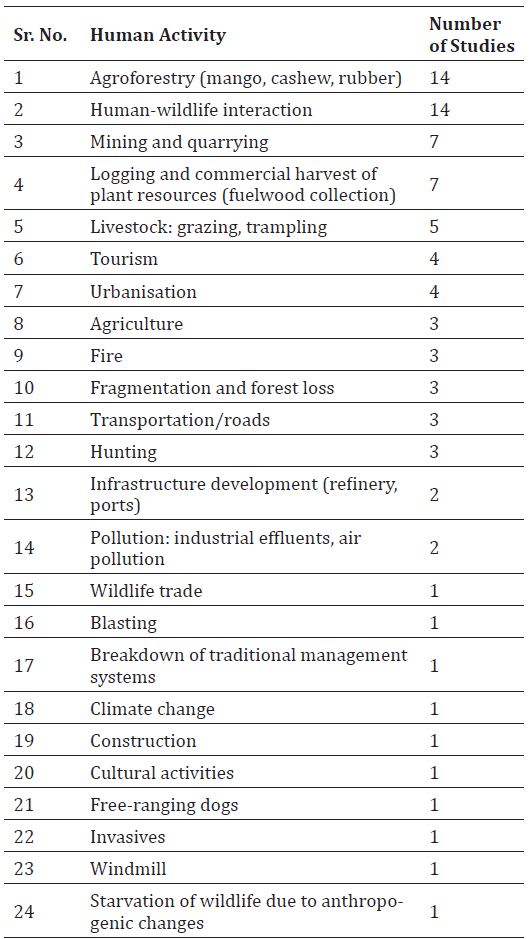
Of the 138 studies, we classified 87 studies as ‘conservation science’ studies, which evaluated the effects of human activities on biodiversity, and 51 as ‘ecological’ studies, which primarily aimed to investigate the ecology of wildlife species or communities. We categorised the conservation science studies into 24 categories (Table 1). The most common topics were the impacts of agroforestry (n = 14) and human-wildlife interactions (n = 14), while the effects of climate change were addressed by only one study. Table 1 summarises the number
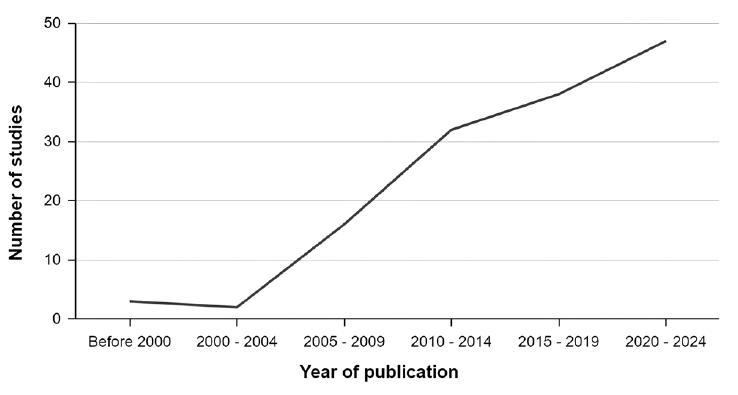
Figure 3. Based on Google Scholar search results, the number of ecological and conservation science studies from the Konkan region published over time. Over the last two decades, a consistent increase in the number of studies has been seen. Table S3 includes details of all studies represented in the figure.
of studies investigating the impacts of various anthropogenic activities across these categories.
Focus group discussion outputs
Forty-four participants from 27 institutions attended the stakeholder meeting and were divided into four groups (Figure 4). They included two academicians, 38 conservation scientists and/or practitioners, one media representative, two environmental law professionals, and one corporate sustainability professional. We categorised the main threats into those that primarily cause drastic changes in land use, pollute the environment, or impact biodiversity and ecosystem function (Table 2). Discussions highlighted human activities with limited information on their biodiversity impacts (e.g., illegal wildlife trade, harvest of medicinal plants or wild vegetables) (Table 2). They also revealed a lack of regional-level information on several potential threats, some of which may be critical for determining sustainability thresholds. Many potential threats are widespread in the region and appear to be increasing over time.
Determining rates of increase in certain human activities
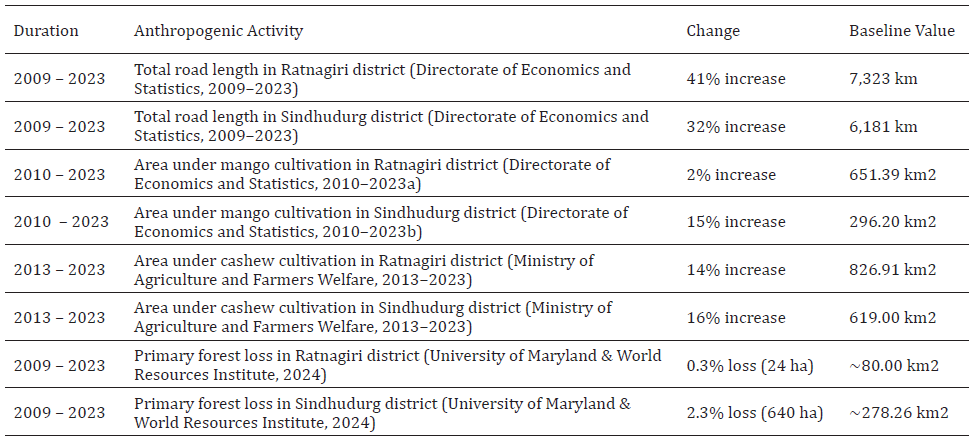
By collating information from government records and other sources on regional (e.g., road expansion, agroforestry plantations) and local (e.g., mining) threats, we found that the road network in Ratnagiri and Sindhudurg districts has increased by more than 30% since 2009 (Table 3). Since 2013, the area under cashew cultivation has grown by more than 14% in the two districts (Table 3). At the site level, the number of bauxite mines in Ratnagiri district rose from three in 2009 to eight in 2023, while iron ore mines in Sindhudurg increased from three to nine between 2009 and 2023 (Directorate of Economics and Statistics, 2009–2023). Concurrently, up to 2.3% of primary forests were lost during a similar period since 2009 (Table 3).
Discussion
In this study, we integrated information from three approaches (literature review, focus group discussions, and data gleaned from public sources) to identify and prioritise human activities threatening biodiversity in the Konkan region of Maharashtra. While the number of ecological and conservation science studies is steadily increasing, they do not fully address the research and action needs. Addressing these knowledge gaps could improve the evidence available for conservation planning and threat mitigation. We found that herpetofauna, which exhibit high diversity and endemism in the Western Ghats, are relatively under-represented in the published literature. Interestingly, not-for-profit organisations play a
Table 1. The number of studies investigating the impacts of different human activities on biodiversity in the Konkan region of Maharashtra, identified through the literature review (1981–2024). A study may mention more than one human activity. A single study maybe counted under more than one human activity. Please refer to Table S3 for relevant studies categorised under different sections.
pivotal role in knowledge generation. Published information is mostly available as scientific papers and preprints. In contrast, reports are relatively less accessible, underscoring the need to publish them on open-access platforms (e.g., Zenodo). The group discussions revealed more than 30 regional and local-level factors across various themes, including land-use change, pollution, policy, and community engagement and awareness issues. Unfortunately, actionable information for many of these factors remains lacking. Consistent with observations from focus group discussion participants, secondary sources provided evidence of increasing regional and local-level threats to biodiversity in the Ratnagiri and Sindhudurg districts, such as expanding road networks, agroforestry plantations, and mining activities. Additionally, secondary sources revealed evidence of forest cover reduction, particularly in the Sindhudurg district of Maharashtra.
Identifying knowledge gaps
While the number of studies assessing the impacts of various human activities on biodiversity is increasing over time, our
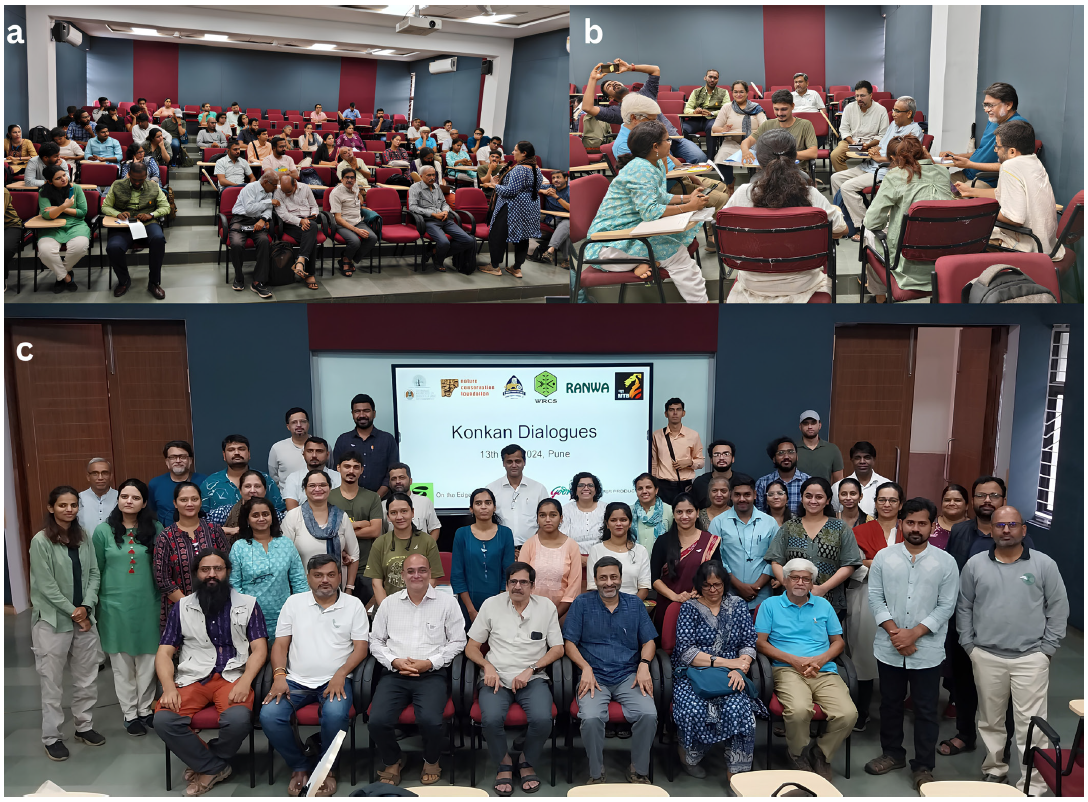
Figure 4. Dr. Aparna Watve addressing the group (a), participants engaged in focus group discussions (b) and group photo of participants (c) of the meeting held on 13 July 2024 in Gokhale Institute of Politics and Economics, Pune. Photos: Rohit Naniwadekar, Abhijeet Patil
Table 2. Summary of threats to biodiversity in the Ratnagiri and Sindhudurg districts of Maharashtra as identified by 44 key informants during the in-person meeting at the Gokhale Institute of Politics and Economics, Pune, on 13 July 2024. The table categorises each threat based on its geographic scale (local, regional or both), temporal trend (increasing, decreasing, stable, or mixed), and whether its impacts on biodiversity have been studied in the region. For ease of organisation, the activities have been grouped into six categories as shown in the last column. “Do not know” indicates that participants could not assess the threat.
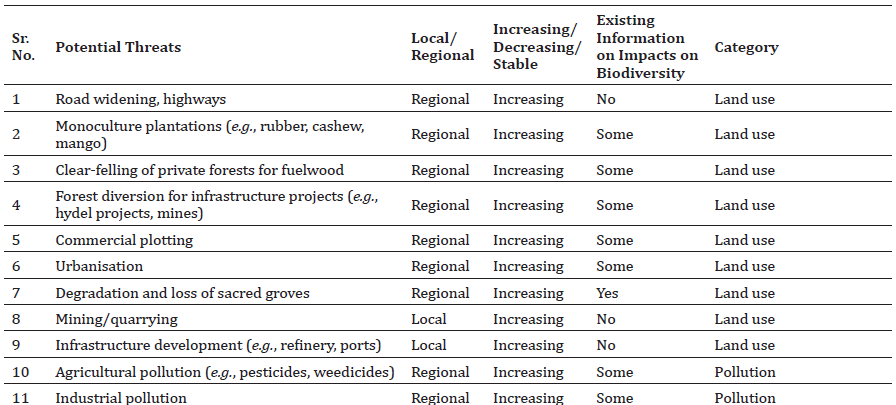
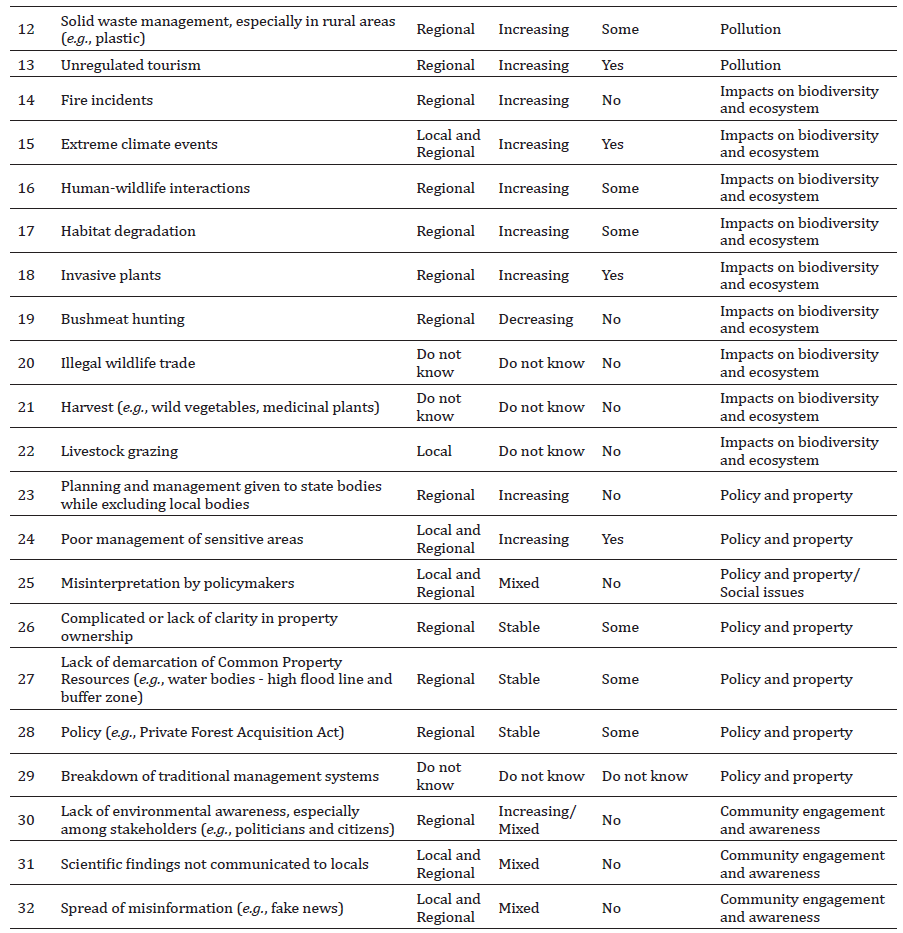
focus group discussions revealed pervasive threats for which little regional information is available. These include activities such as infrastructure development, fires, illegal wildlife trade, and bushmeat hunting, among others. These activities can significantly impact biodiversity and ecosystem function (Evans et al., 2020; Bashyal et al., 2021; Feng et al., 2021; Spencer et al., 2023). However, detailed regional-level data on the intensity of these impacts and their geographic extent are still needed to inform future conservation planning in the region.
The impacts of agroforestry on biodiversity, which were identified to be rapidly spreading in the landscape, are relatively well studied in the region. There is information on the responses of multiple taxa, including mammals (Rege et al., 2020), birds (Munje & Kumar, 2022; Biswas et al., 2026 ; Madhu et al., 2025), and reptiles (Lad et al., 2025; Gosavi et al., 2026). However, the role of remnant forest patches and native trees in agroforestry plantations in influencing biodiversity and critical ecosystem functions, such as pollination, which may benefit agroforestry plantations, needs to be better understood. This information will be essential for shaping agroforestry and biodiversity conservation policies in this human-dominated landscape. It is essential to explore how the ongoing expansion of monoculture plantations can be made more biodiversity-friendly through land-sharing or land-sparing approaches (Finch et al., 2019; Birch et al., 2024). Additionally, studies elsewhere have shown adjacent forest patches can enhance pollination services and improve crop yields in cashew systems (Freitas et al., 2014), there is a pressing need for ecological restoration of degraded government- and privately-owned forests and sacred groves. Given the scarcity of primary forest remnants that can serve as a source of seeds and the historical disturbances that have altered forest structure and plant composition (Kulkarni et al., 2013; Biswas et al., 2025), active restoration efforts may be necessary to support biodiversity recovery. Given the extensive network of sacred groves in the region, active restoration of sacred groves in
Table 3. Percent change and baseline value for regional-level human activities (e.g., roads, agroforestry) in the Ratnagiri and Sindhudurg districts of Maharashtra over the assessment periods. Details of corresponding data sources for each of these activities are given in Table S2.
partnerships with local community institutions and champions offers opportunities to restore degraded forest patches in a culturally sensitive manner.
Studies focusing on the impacts of climate change on biodiversity and ecosystem function for the Konkan region were extremely under-represented in the literature. The northern Western Ghats is biogeographically distinct from the central and southern Western Ghats due to climatic instability in the past and greater present-day climatic seasonality (Joshi & Karanth, 2013). The region features unique habitats, such as lateritic plateaus, where the high diversity and endemism of herbaceous plants (Watve, 2013; Kulkarni et al., 2023) and other unique biodiversity are strongly linked to climate (Jithin & Naniwadekar, 2025). Similarly, the evergreen forests of the northern Western Ghats experience greater rainfall seasonality compared to those in the southern Western Ghats, which may increase their sensitivity to climate variability (Page & Shanker, 2018, 2020). The region is experiencing extreme climate events (e.g., excessive rainfall) and is predicted to be highly vulnerable to climate change (Chaturvedi et al., 2011). Therefore, long-term studies documenting the impacts of climate change on biodiversity and ecosystem function are critical.
Climate change has been documented to impact traditional livelihoods in the region (ACWADAM, 2022). Similarly, the livelihoods of people are also affected by negative human-wildlife interactions, such as crop depredation and loss of human life, which likely result in negative perceptions towards wildlife in the region, an aspect that requires greater attention. This can have cascading impacts on biodiversity persistence in the region. While biodiversity can impact socio-ecological outcomes for people, the reverse is also true. There is also a need for socio-ecological studies that examine the links between market forces (e.g., large-scale fuelwood harvest through clear-felling) and habitat degradation or modification, along with their cascading effects on biodiversity. Understanding these connections could facilitate the development of more permanent and effective solutions to biodiversity threats. Similarly, the drivers behind societal transformations and the consequent breakdown of biodiversity-friendly traditional systems (e.g., degradation of sacred groves) need to be determined to explore possibilities for reviving such systems. The need for additional socio-ecological studies has been identified as a knowledge gap through the focus group discussions and the literature review.
Emerging threats
Linear intrusions
The focus group discussions identified linear intrusions, particularly highways, as a significant threat to biodiversity in the region. Publicly available data also confirmed this, showing a more than 30% increase in the road network in the region since 2009. While there is significant information on the impacts of roads and highways on biodiversity globally, our literature review revealed a lack of such data specific to the Konkan region. This underscores the need for additional studies on the effects of existing roads in the region on habitat fragmentation, wildlife mortality, and animal movement in the area, especially since the area harbours threatened species such as gaur (Bos gaurus), Sambar (Rusa unicolor), wild dog (Cuon alpinus), leopard (Panthera pardus) and tiger (Panthera tigris). Such information will be crucial for guiding the future development of linear intrusions in the region. Linear intrusions, particularly roads, are known to increase habitat fragmentation, edge effects, and wildlife mortality, while impeding animal movement, with effects pervading up to 17 km from major roads (Jayadevan et al., 2020; Nayak et al., 2020) (Figure 5). In the Konkan region, linear intrusions are already causing either channelled or restricted movement of large mammals (Jayadevan et al., 2020; Nayak et al., 2020). Multiple forest areas in the Konkan region have been categorised as large, unfragmented patches (Jayadevan et al., 2020; Nayak et al., 2020), which must be protected from further fragmentation due to the expanding road network, given their importance for biodiversity, local communities, and ecosystem function (e.g., as a source of freshwater, natural resources, and preventing natural disasters like landslides). Studies recommend avoiding further fragmentation of forest patches in the Western Ghats by aligning linear infrastructure along existing features and prioritising the north–south axis over the east–west axis (Nayak et al., 2020). However, proposed plans to widen existing highways and build new expressways, such as the six-lane Shaktipeeth highway connecting Nagpur and Goa (ET Online, 2025) or the Konkan Greenfield expressways, will likely exacerbate habitat fragmentation.
Human-wildlife interactions
Another challenge identified during the focus group discussions was human-wildlife interactions. While human-elephant interactions in Sindhudurg are documented in the literature
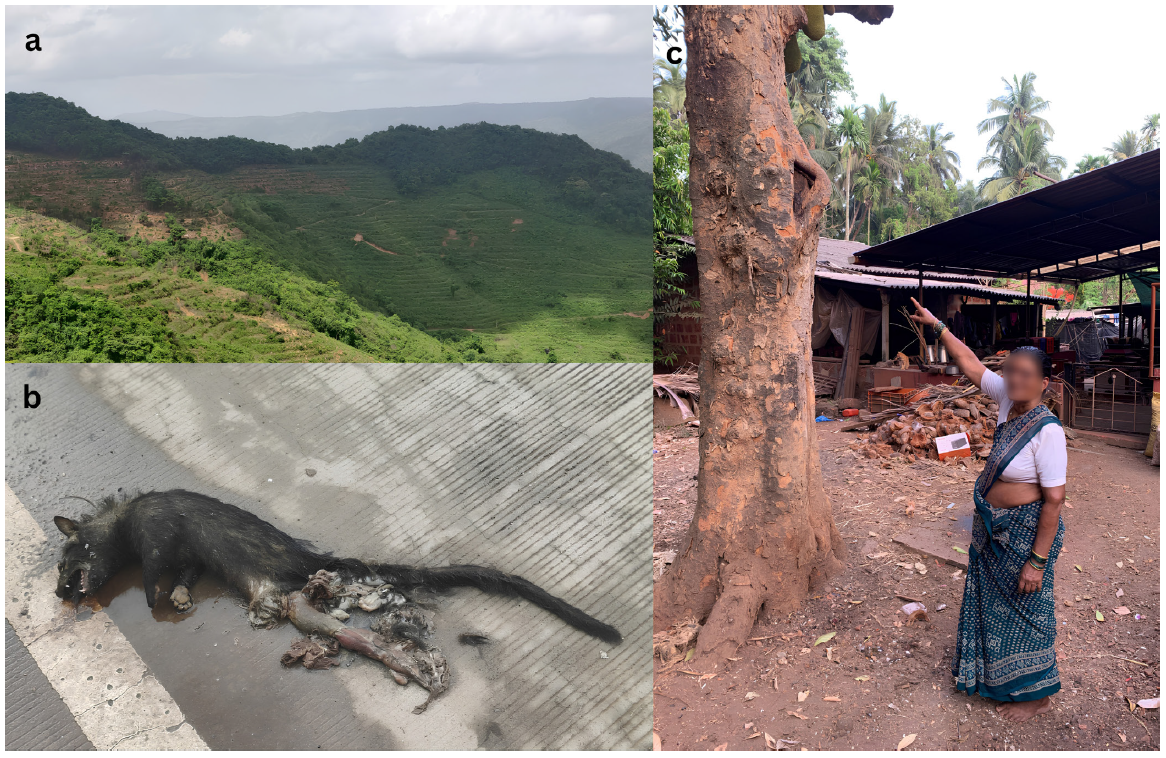
Figure 5. Privately-owned forests cleared, terraced and converted to cashew plantations at Terwan-Medhe in Sindhudurg (a), Asian Palm Civet, Paradoxurus hermaphroditus, roadkill on Mumbai-Goa highway near Zarap, Sindhudurg (b) and a hornbill nest cavity in a human-dominated landscape (c) (Photos: Rohit Naniwadekar, Prateek More).
(Mehta & Kulkarni, 2013; Patil & Patil, 2019), no published studies were found on human-gaur interactions in the Konkan region, although some information exists from near Radhanagari Wildlife Sanctuary (Joshi, 2008). Given the extensive cover of mango orchards, coconuts and areca nut plantations in the region, primates and squirrels, especially the Indian giant squirrel (Ratufa indica), often come into conflict with humans due to crop damage. However, the intensity and extent of their impact on landowners are poorly understood. Similarly, impacts of these orchards on primates and squirrels are poorly understood, although an unpublished study indicates reduced densities of langurs and squirrels in monoculture plantations compared to forests (Naniwadekar, R., unpubl. data, 2022). Elephant movement and range extension from Karnataka to Maharashtra and Goa were first recorded in 2002 (Mehta & Kulkarni, 2013). Studies have reported an increase in crop raiding incidents by elephants in Sindhudurg from 2002 to 2015 (Mehta & Kulkarni, 2013; Patil & Patil, 2019). In 2015, 33% of the villages in Sindhudurg were affected by crop raiding by elephants (Patil & Patil, 2019). Given the expansion of agroforests and the reduction in forest cover in the region, these interactions are likely to intensify. There is a need for enhanced community engagement and capacity building for Forest Department staff to manage the increasing interactions between humans and large mammals. This would support biodiversity persistence in these human-dominated landscapes while ensuring the safety of the citizens and preventing negative perceptions of large mammals.
While interactions with particular species result in adverse outcomes for people and/or biodiversity, the region also witnesses positive or neutral interactions between humans and biodiversity. Examples include the nesting of hornbills in human-dominated landscapes (Figure 5), the persistence of endangered tree species as individual trees in villages or within sacred groves (Blicharska et al., 2013), and the preservation of aquatic ecosystems within sacred spaces (Aparna Watve, pers. obs.). Such positive interactions need to be celebrated, documented, and revived. These can serve as examples for biodiversity and ecosystem conservation in other parts of the landscape.
Other threats
The Konkan region of the Western Ghats receives over 3,000 mm of annual rainfall concentrated within the five-month monsoon period. Historically, this rainfall has supported moist-deciduous, semi-evergreen to evergreen forests (Biswas et al., 2025). However, chronic anthropogenic disturbances, such as repeated clear-felling and fires, have significantly altered plant composition. As a result, the landscape is dominated by species resilient to disturbance, such as Terminalia elliptica and T. paniculata, which coppice easily and withstand fire. Fires are particularly widespread in the Ratnagiri district, where lopped tree vegetation is left to dry and then burned in fields, leading to uncontrolled fires that spread into adjacent forest patches (pers. obs. of multiple authors). These recurring fires, coupled with tree cover loss, have likely degraded soil properties (Verma & Jayakumar, 2018), negatively impacting forest recovery. However, these impacts remain poorly studied and warrant urgent research attention and intervention. Additionally, the threats posed by rapid urbanisation and industrialisation, particularly downstream effects on local habitats due to industrial waste and pollution, in various towns in the region need to be thoroughly assessed to understand their ecological consequences. This may require conducting multi-taxa biodiversity assessments across the region to identify critical conservation areas that can guide future development activities.
Making information easily accessible
Interestingly, 77% of the literature we identified consisted of peer-reviewed publications or preprints, which generally have digital object identifiers (DOIs). We are reasonably confident that additional reports have been submitted to funding agencies or government departments. These reports likely contain vital information on biodiversity and conservation issues in the region, but are not readily available to citizens, environmentalists, funding agencies, or other scientists. Such information could help prevent duplication of effort, serve as evidence in court, and provide a baseline for future studies. These should be made publicly available on open-access platforms, such as Zenodo.
Role of non-governmental organisations in generating knowledge
While the role of environmental non-governmental organisations (NGOs) in environmental politics and discourse is recognised, their contribution to primary data generation is often under-appreciated (Partelow et al., 2020; Rigolon & Gibson, 2021). We found that NGOs play a significant role in generating knowledge about regional biodiversity. Given the common perception that NGOs primarily lead action-oriented projects, this finding underscores their crucial role in knowledge generation.
The under-representation of academic institutions in leading research efforts may be due to the Konkan region receiving less attention from academic institutions, as well as the likely perception that the northern Western Ghats are less ‘charismatic’ compared to the southern or central Western Ghats, a possibility raised during the focus group discussions. Unlike research institutions, colleges and universities have teaching as a major component of their mandate. Consequently, faculty may have less time available for research activities, particularly long-term field-based studies. While research institutions are mandated to conduct research, the primary focal areas of colleges, universities, and NGOs are teaching and/or conservation action. Such institutes could benefit from targeted capacity-building efforts in ecological methods and tools, further empowering them to conduct high-quality research. Higher education institutions have been advised to incorporate research as a key result area. However, its implementation has been weak (Gadgil, 2012).
Based on this study, we recommend the following: 1) conservation researchers can use the information in Table 2 to identify priority thematic areas for further research. These include topics of regional relevance with little existing information, such as linear intrusions, fires, and illegal wildlife trade, among others; 2) A horizon-scanning exercise to identify the most critical conservation questions for the region should be conducted to provide more specific guidance for future research; 3) Reports submitted to funding and government agencies should be made publicly available to enhance accessibility for relevant stakeholders and potentially indexed in a regional repository accessible to everyone; 4) conducting multi-taxa biodiversity assessments across the region to identify critical conservation areas which can be spared from anthropogenic disturbances; 5) identifying the primary socio-economic drivers of biodiversity loss in the region; and 6) considering the rapid growth of infrastructure, plantations, and tourism in Ratnagiri and Sindhudurg districts, developing necessary policy guardrails to optimise biodiversity conservation and management in the region. The policy should be based on relevant findings from existing and future research, as well as consultations with regional stakeholders. This synthesis focused on terrestrial ecosystems, including forest and open ecosystems. However, the Konkan region also supports other ecologically important and threatened ecosystems like mangroves and marine ecosystems that face significant conservation challenges. Similar synthesis and prioritisation exercises are urgently required for other ecosystems as well.
TO DOWNLOAD SUPPLEMENTARY MATERIAL, CLICK HERE
Acknowledgement
We thank On the Edge Conservation, Godrej Consumer Products Limited and Gokhale Institute of Politics and Economics for their support. We thank Amaan Deshpande, Nikhil Atak, Pooja Sathe and Soomrit Chattopadhyay for their support during the workshop and Jithin Vijayan for his valuable inputs. We thank Anand Osuri, Kulbhushansingh Suryawanshi and Suri Venkatachalam for their helpful suggestions.
CONFLICT OF INTEREST
The author declares no competing interests
DATA AVAILABILITY
Most details are available in the supplementary file, for any additional data please request the corresponding author.
AUTHORS’ CONTRIBUTION
Kruti Chhaya-Conceptualisation, Project administration, Data curation, Formal analysis, Writing – original draft
Gurudas Nulkar-Conceptualisation, Data curation, Resources, Writing – review & editing
Parth Bapat-Data curation, Writing – review & editing
Hrushikesh Barve-Data curation, Writing – review & editing
Nupur Bhave-Data curation, Writing – review & editing
Anup Bokkasa-Data curation, Writing – review & editing
Vaidehi Dandekar-Data curation, Writing – review & editing
Sachin Desai-Data curation, Writing – review & editing
Ketaki Ghate-Data curation, Writing – review & editing
Revati Gindi-Data curation, Writing – review & editing
Amruta Joglekar-Data curation, Writing – review & editing
Atul Joshi-Data curation, Writing – review & editing
Poorva Joshi -Data curation, Writing – review & editing
Satish Kamat-Data curation, Writing – review & editing
Manasi Karandikar-Data curation, Writing – review & editing
Chaitrali Khod-Data curation, Writing – review & editing
Mandar Kulkarni-Data curation, Writing – review & editing
Himanshu Lad-Data curation, Writing – review & editing
Akshay Mandavkar-Data curation, Writing – review & editing
Pratiksha Mestry-Data curation, Writing – review & editing
Yash Mishrikotkar-Data curation, Writing – review & editing
Prateek More-Data curation, Writing – review & editing
Sayali Nerurkar-Data curation, Writing – review & editing
Madhura Niphadkar-Data curation, Writing – review & editing
Ankur Patwardhan-Data curation, Writing – review & editing
Pooja Pawar-Data curation, Writing – review & editing
Girish Punjabi-Writing – review & editing
Pratik Purohit-Data curation, Writing – review & editing
Medhavi Rajwade-Data curation, Writing – review & editing
Manali Rane -Data curation, Writing – review & editing
Virashree Raorane-Data curation, Writing – review & editing
Nikit Surve-Data curation, Writing – review & editing
Sanjay Thakur-Data curation, Writing – review & editing
Aparna Watve -Conceptualisation, Data curation, Formal analysis, Funding acquisition, Writing – original draft, Writing – review & editing
Rohit Naniwadekar -Conceptualisation, Project administration, Data curation, Formal analysis, Funding acquisition, Resources, Writing – original draft, Writing – review & editing
Edited By
Mewa Singh
Bangalore University, Bengaluru, India.
*CORRESPONDENCE
Aparna Watve
✉ aparnawatve1@gmail.com
Rohit Naniwadekar
✉ rohit@ncf-india.org
CITATION
Chhaya, K., Nulkar, G., Bapat, P., Barve, H., Bhave, N., Bokkasa, A., Dandekar, V., Desai, S., Ghate, K., Gindi, R., Joglekar, A., Joshi, A., Joshi, P., Kamat, S., Karandikar, M., Khod, C., Kulkarni, M., Lad, H., Mandavkar, A., Mestry, P., Mishrikotkar, Y., More, P., Nerurkar, S., Niphadkar, M., Patwardhan, A., Pawar, P., Punjabi, G., Purohit, P., Rajwade, M., Rane, M., Raorane, V., Surve, N., Thakur, S., Watve, A., Naniwadekar, R. (2026). Understudied and underprotected: biodiversity and conservation challenges in the Konkan region of Maharashtra. Journal of Wildlife Science, Online Early Publication, 01-13. https://doi.org/10.63033/JWLS.HCKA4276
COPYRIGHT
© 2026 Chhaya, Nulkar, Bapat, Barve, Bhave, Bokkasa, Dandekar, Desai, Ghate, Gindi, Joglekar, Joshi, Joshi, Kamat, Karandikar, Khod, Kulkarni, Lad, Mandavkar, Mestry, Mishrikotkar, More, Nerurkar, Niphadkar, Patwardhan, Pawar, Punjabi, Purohit, Rajwade, Rane, Raorane, Surve, Thakur, Watve, Naniwadekar. This is an open-access article, immediately and freely available to read, download, and share. The information contained in this article is distributed under the terms of the Creative Commons Attribution License (CC BY 4.0
 ), allowing for unrestricted use, distribution, and reproduction in any medium, provided the original work is properly cited in accordance with accepted academic practice. Copyright is retained by the author(s).
PUBLISHED BY
Wildlife Institute of India, Dehradun, 248 001 INDIA
PUBLISHER'S NOTE
The Publisher, Journal of Wildlife Science or Editors cannot be held responsible for any errors or consequences arising from the use of the information contained in this article. All claims expressed in this article are solely those of the author(s) and do not necessarily represent those of their affiliated organisations or those of the publisher, the editors and the reviewers. Any product that may be evaluated or used in this article or claim made by its manufacturer is not guaranteed or endorsed by the publisher.
ACWADAM (2022). Landslides of Western Maharashtra: Rapid appraisal for developing improved preparedness and early warning systems for landslides in Western Maharashtra and Konkan Regions, Maharashtra State. Technical Report No. ACWA/Hydro/2022/ H120. https://doi.org/10.13140/RG.2.2.28967.42404/1
Amberkar, P. & Mungikar, R. (2024). More the merrier? Influence of mango orchards on the composition of the reptile communities of the lateritic plateaus, Maharashtra, India. Biotropica, 56(6), e13388. https://doi.org/10.1111/btp.13388
Anand, M. O., Krishnaswamy, J. & Das, A. (2008). Proximity to forests drives bird conservation value of coffee plantations: Implications for certification. Ecological Applications, 18(7), 1754–1763. https://doi.org/10.1890/07-1545.1
Bashyal, A., Shrestha, N., Dhakal, A., Khanal, S. & Shrestha, S. (2021). Illegal trade in pangolins in Nepal: Extent and network. Global Ecology and Conservation, 32, e01940. https://doi.org/10.1016/j.gecco.2021.e01940
Birch, B. D. J., Mills, S. C., Socolar, J. B., Martínez‐Revelo, D. E., Haugaasen, T. & Edwards, D. P. (2024). Land sparing outperforms land sharing for Amazonian bird communities regardless of surrounding landscape context. Journal of Applied Ecology, 61(5), 940–950. https://doi.org/10.1111/1365-2664.14596
Biswas, N., Biniwale, S., Sadekar, V., Taneja, Y. V., Suryawanshi, K., Osuri, A., & Naniwadekar, R. (2026). Securing lowland forests is critical for bird conservation in the Western Ghats biodiversity hotspot. Oryx, 1-11. https://doi.org/10.1017/S0030605325102184
Biswas, N., Sadekar, V., Biniwale, S., Taneja, Y., Osuri, A. M., Page, N., Suryawanshi, K. & Naniwadekar, R. (2025). Chronic disturbance and climate water deficit shift tree communities from tropical evergreen to deciduous in the Western Ghats, India. Journal Of Vegetation Science, 36(6), e70080. https://doi.org/10.1111/jvs.70080
Blicharska, M., Mikusiński, G., Godbole, A. & Sarnaik, J. (2013). Safeguarding biodiversity and ecosystem services of sacred groves – experiences from northern Western Ghats. International Journal of Biodiversity Science, Ecosystem Services & Management, 9(4), 339– 346. https://doi.org/10.1080/21513732.2013.835350
Chaturvedi, R. K., Gopalakrishnan, R., Jayaraman, M., Bala, G., Joshi, N. V., Sukumar, R. & Ravindranath, N. H. (2011). Impact of climate change on Indian forests: A dynamic vegetation modeling approach. Mitigation and Adaptation Strategies for Global Change, 16, 119–142. https://doi.org/10.1007/s11027-010-9257-7
Daniels, R. J. R., Hegde, M. & Gadgil, M. (1990). Birds of the man-made ecosystems: the plantations. Proceedings: Animal Sciences, 99(1), 79–89. https://doi.org/10.1007/BF03186376
Diddee, J., Jog, S. R., Kale, V. S. & Datye, V. S. (2002). Geography of Maharashtra. Rawat Publications, Jaipur & New Delhi, India.
Directorate of Economics and Statistics (2009–2023). Infrastructure Statistics of Maharashtra (multiple reports). Planning Department, Government of Maharashtra, Mumbai, India. https://mahades.maharashtra.gov.in/publications.do?pubId=ISMS
Directorate of Economics and Statistics (2010–2023a). District Social and Economic Review: Ratnagiri (multiple reports). Planning Department, Government of Maharashtra, Mumbai, India. https://mahades.maharashtra.gov.in/publications.do?pubId=DSA
Directorate of Economics and Statistics (2010–2023b). District Social and Economic Review: Sindhudurg (multiple reports). Planning Department, Government of Maharashtra, Mumbai, India. https://mahades.maharashtra.gov.in/publications.do?pubId=DSA
Directorate of Economics and Statistics (2023). Infrastructure Statistics of Maharashtra 2021–22 and 2022–23. Planning Department, Government of Maharashtra, Mumbai, India. https://mahades.maharashtra.gov.in/publications.do?pubId=ISMS
ET Online (2025). Shaktipeeth Expressway: Route, districts covered, travel time, cost – Here’s all about India’s longest Nagpur– Goa highway. The Economic Times, 17 January. https://economictimes.indiatimes.com/news/economy/infrastructure/shaktipeeth-expressway-route-districts-covered-travel-time-cost-heres-all-about-indias-longest-nagpur-goa-highway/articleshow/117318214.cms?from=mdr (Accessed on 17 March 2025 )
Evans, T. S., Myat, T. W., Aung, P., Oo, Z. M., Maw, M. T., Toe, A. T., Aung, T. H., Hom, N. S., Shein, K. T. et al. (2020). Bushmeat hunting and trade in Myanmar’s central teak forests: Threats to biodiversity and human livelihoods. Global Ecology and Conservation, 22, e00889. https://doi.org/10.1016/j.gecco.2019.e00889
Feng, X., Merow, C., Liu, Z., Park, D. S., Roehrdanz, P. R., Maitner, B., Newman, E. A., Boyle, B. L., Lien, A. et al. (2021). How deregulation, drought and increasing fire impact Amazonian biodiversity. Nature, 597(7877), 516–521. https://doi.org/10.1038/s41586-021- 03876-7
Finch, T., Gillings, S., Green, R. E., Massimino, D., Peach, W. J. & Balmford, A. (2019). Bird conservation and the land sharing–sparing continuum in farmland-dominated landscapes of lowland England. Conservation Biology, 33(5), 1045–1055. https://doi.org/10.1111/cobi.13316
Freitas, B. M., Pacheco Filho, A. J., Andrade, P. B., Lemos, C. Q., Rocha, E. E. M., Pereira, N. O., Bezerra, A. D. M., Nogueira, D. S., Alencar, R. L. et al. (2014). Forest remnants enhance wild pollinator visits to cashew flowers and mitigate pollination deficit in NE Brazil. Journal of Pollination Ecology, 12, 22–30. https://doi.org/10.26786/1920-7603(2014)10
Gadgil, M. (2012). Parisara: Developing a collaborative, free, public domain knowledge resource on Indian environment. Journal of Education for Sustainable Development, 6(2), 269–275. https://doi.org/10.1177/0973408212475258
Gadgil, M., Krishnan, B. J., Ganeshaiah, K. N., Vijayan, V. S., Borges, R., Sukumar, R., Noronha, L., Nayak, V. S., Subramaniam, D. K. et al. (2011). Report of the Western Ghats Ecology Expert Panel. Submitted to the Ministry of Environment and Forests, Government of India. (Part 1). https://www.cppr.in/wp-content/uploads/2013/03/Gadgil-report.pdf
Gosavi, N., Lad, H., Jithin, V. & Naniwadekar, R. (2026). Effects of tree plantations on population and roosting ecology of an endemic agamid lizard in Western Ghats biodiversity hotspot. Journal of Zoology, 328(1), 67–75. https://doi.org/10.1111/jzo.70070
India Biodiversity Portal (n.d.). https://indiabiodiversity.org/ (Accessed on 26 March 2025)
Jayadevan, A., Nayak, R., Karanth, K. K., Krishnaswamy, J., DeFries, R., Karanth, K. U. & Vaidyanathan, S. (2020). Navigating paved paradise: Evaluating landscape permeability to movement for large mammals in two conservation priority landscapes in India. Biological Conservation, 247, 108613. https://doi.org/10.1016/j.biocon.2020.108613
Jithin, V. & Naniwadekar, R. (2025). Effects of abiotic and biotic factors on tadpole occurrence and abundance in seasonal rock pools of rock outcrops, northern Western Ghats. Aquatic Ecology, 59, 797–803. https://doi.org/10.1007/s10452-025-10195-w
Jithin, V., Rane, M., Watve, A., Giri, V. B. & Naniwadekar, R. (2023). Between a rock and a hard place: Comparing rock-dwelling animal prevalence across abandoned paddy, orchards and rock outcrops in a biodiversity hotspot. Global Ecology and Conservation, 46, e02582. https://doi.org/10.1016/j.gecco.2023.e02582
Jithin, V., Rane, M., Watve, A. & Naniwadekar, R. (2025). Orchards and paddy differentially impact rock outcrop amphibians: Insights from community- and species-level responses. Ecological Applications, 35(1), e3058. https://doi.org/10.1002/eap.3058
Joshi, A. A. (2008). Spatio-temporal patterns of human–wildlife conflicts at different scales in the north Western Ghats biodiversity hotspot, India. Final report, The Rufford Small Grants Foundation, UK. https://media.rufford.org/media/project_re-ports/27.01.08%20Detailed%20Final%20Report.pdf
Joshi, J. & Karanth, P. (2013). Did southern Western Ghats of peninsular India serve as refugia for its endemic biota during the Cretaceous volcanism? Ecology and Evolution, 3(10), 3275–3282. https://doi.org/10.1002/ece3.603
Karanth, K. K., Sankararaman, V., Dalvi, S., Srivathsa, A., Parameshwaran, R., Sharma, S., Robbins, P. & Chhatre, A. (2016). Producing diversity: Agroforests sustain avian richness and abundance in India’s Western Ghats. Frontiers in Ecology and Evolution, 4, 111. https://doi.org/10.3389/fevo.2016.00111
Karlekar, S. N. & Thakurdesai, S. C. (2017). Geomorphological field guide book on Konkan and Goa coasts (Edited by Amal Kar). Indian Institute of Geomorphologists, Allahabad, Uttar Pradesh, India. https://indiageomorph.org/uploads/docs/IGI%209th%20ICG%20Field%20Guide_Konkan%20&%20Goa_Karlekar%20&%20Thakurdesai%202017.pdf
Kulkarni, A., Shigwan, B. K., Vijayan, S., Watve, A., Karthick, B. & Datar, M. N. (2023). Indian rock outcrops: review of flowering plant diversity, adaptations, floristic composition and endemism. Tropical Ecology, 64(3), 408–424. https://doi.org/10.1007/s42965-022-00283-5
Kulkarni, J., Mehta, P. & Kamble, C. (2013). Status, Distribution and Dynamics of Private and Community Forests in Sahyadri–Konkan Corridor of Maharashtra Western Ghats. Technical report submitted to CEPF-ATREE, Wildlife Research and Conservation Society, Pune, India. https://indiabiodiversity.org/biodiv/content/projects/project-3222640e-6fc9-4f59-897f-ef0ad20fa300/94.pdf
Kumara, H. N., Mahato, S., Singh, M., Molur, S. & Velankar, A. D. (2023). Mammalian diversity, distribution, and potential key conservation areas in the Western Ghats. Current Science, 124(1), 38–49. https://doi.org/10.18520/cs/v124/i1/38-49
Lad, H., Gosavi, N., Jithin, V. & Naniwadekar, R. (2025). Effects of land‐use change and elevation on endemic shrub frogs in a biodiversity hotspot. Animal Conservation, 28(3), 389–400. https://doi.org/10.1111/acv.12991
Madhu, N., Sadekar, V., Biswas, N., Jayapal, R., Rege, A. & Naniwadekar, R. (2025). Native trees within plantations and surrounding forest cover are essential for bird conservation in cashew-dominated landscapes within a biodiversity hotspot. Forest Ecology and Management, 593, 122878. https://doi.org/10.1016/j.foreco.2025.122878
Maharashtra Pollution Control Board (2007). State of Environment Report for Maharashtra 2007. Environment Department, Government of Maharashtra, Mumbai, India. https://mpcb.gov.in/en/focus-area/reports-documents/state-of-environment-report
Mehta, P. & Kulkarni, J. (2013). Past, Present and Future of Wild Elephants in Maharashtra, India. Gajah, 39, 3–11. https://www.asesg.org/PDFfiles/2013/Gajah%2039/39-03-Mehta.pdf
Ministry of Agriculture and Farmers Welfare (2013–2023). Final advance estimates of area under cashew cultivation. Horticulture Area Production Information System (HAPIS), Government of India, New Delhi, India. http://aps.dac.gov.in/Public/Report.aspx (Accessed on 20 September 2024)
Mirgal, A. 2022. Dipcadi concanense. The IUCN Red List of Threatened Species 2022: e.T177963589A177969107. https://dx.doi.org/10.2305/IUCN.UK.2022-2.RLTS.T177963589A177969107.en Accessed on 03 November 2026.
Mittermeier, R. A., Turner, W. R., Larsen, F. W., Brooks, T. M. & Gascon, C. (2011). Global biodiversity conservation: The critical role of hotspots. In: Zachos, F. E. & Habel, J. C. (eds.), Biodiversity hotspots. Springer, Berlin & Heidelberg, Germany. pp.3–22. https://doi.org/10.1007/978-3-642-20992-5_1
Munje, A. & Kumar, A. (2022). Bird community structure in a mixed forest-production landscape in the northern Western Ghats, India. bioRxiv preprint. https://doi.org/10.1101/2022.04.04.486917
Myers, N., Mittermeier, R. A., Mittermeier, C. G., da Fonseca, G. A. B. & Kent, J. (2000). Biodiversity hotspots for conservation priorities. Nature, 403(6772), 853–858. https://doi.org/10.1038/35002501
Nayak, R., Karanth, K. K., Dutta, T., DeFries, R., Karanth, K. U. & Vaidyanathan, S. (2020). Bits and pieces: Forest fragmentation by linear intrusions in India. Land Use Policy, 99, 104619. https://doi.org/10.1016/j.landusepol.2020.104619
Office of the Registrar General & Census Commissioner, India. Primary Census Abstract. Table Basic Population Figures of India/ State/District/Sub-District/Village – 2011. https://censusindia.gov.in/nada/index.php/catalog/42558
Page, N. V., & Shanker, K. (2018). Environment and dispersal influence changes in species composition at different scales in woody plants of the Western Ghats, India. Journal of vegetation science, 29(1), 74-83. https://doi.org/10.1111/jvs.12586
Page, N. V., & Shanker, K. (2020). Climatic stability drives latitudinal trends in range size and richness of woody plants in the Western Ghats, India. PloS one, 15(7), e0235733. https://doi.org/10.1371/journal.pone.0235733
Partelow, S., Winkler, K. J. & Thaler, G. M. (2020). Environmental non-governmental organizations and global environmental discourse. PLOS ONE, 15(5), e0232945. https://doi.org/10.1371/journal.pone.0232945
Patil, A. & Watve, A. 2022. Iphigenia ratnagirica. The IUCN Red List of Threatened Species 2022: e.T191675230A191678437. https://dx.doi.org/10.2305/IUCN.U K.2022-1.RLTS.T191675230A191678437.en Accessed on 04 November 2026.
Patil, M. D. & Patil, V. K. (2019). Trends and patterns of elephant crop raiding in Sindhudurg District, Maharashtra, India. Gajah, 50, 17–22. https://www.asesg.org/PDFfiles/2019/50-17-Patil.pdf
Pawar, P. & Sadekar, V. (2023). The foothills of the northern Western Ghats serve as a potential stronghold for threatened hornbill species. Indian BIRDS, 18(5), 146–149. https://indianbirds.in/pdfs/IB_18_5_Pawar_Sadekar_HornbillsWesternGhats.pdf
Planning Department (2012). Maharashtra Human Development Report 2012. Government of Maharashtra, Sage Publications India Pvt. Ltd., New Delhi, India. https://mahasdb.maharashtra.gov.in/docs/pdf/mhdr_2012.pdf
Punjabi, G. A. & Rao, M. K. (2017). Large herbivore populations outside protected areas in the human-dominated Western Ghats, India. Mammalian Biology, 87, 27–35. https://doi.org/10.1016/j.mambio.2017.05.004
Raman, T. R. S., Gonsalves, C., Jeganathan, P. & Mudappa, D. (2021). Native shade trees aid bird conservation in tea plantations in southern India. Current Science, 121(2), 294–305. https://doi.org/10.18520/cs/v121/i2/294-305
Raman, T. R. S. & Sukumar, R. (2002). Responses of tropical rainforest birds to abandoned plantations, edges and logged forest in the Western Ghats, India. Animal Conservation, 5(3), 201–216. https://doi.org/10.1017/S1367943002002251
Ranganathan, J., Krishnaswamy, J. & Anand, M. O. (2010). Landscape-level effects on avifauna within tropical agriculture in the Western Ghats: Insights for management and conservation. Biological Conservation, 143(12), 2909–2917. https://doi.org/10.1016/j. biocon.2010.04.018
Reddy, C. S., Jha, C. S. & Dadhwal, V. K. (2016). Assessment and monitoring of long-term forest cover changes (1920–2013) in Western Ghats biodiversity hotspot. Journal of Earth System Science, 125(1), 103–114. https://doi.org/10.1007/s12040-015-0645-y
Rege, A. & Lee, J. S. H. (2022). State-led agricultural subsidies drive monoculture cultivar cashew expansion in northern Western Ghats, India. PLOS ONE, 17(6), e0269092. https://doi.org/10.1371/journal.pone.0269092
Rege, A., Punjabi, G. A., Jathanna, D. & Kumar, A. (2020). Mammals make use of cashew plantations in a mixed forest–cashew landscape. Frontiers in Environmental Science, 8, 556942. https://doi.org/10.3389/fenvs.2020.556942
Rigolon, A. & Gibson, S. (2021). The role of non-governmental organizations in achieving environmental justice for green and blue spaces. Landscape and Urban Planning, 205, 103970. https://doi.org/10.1016/j.landurbplan.2020.103970
Sidhu, S., Raman, T. R. S. & Goodale, E. (2010). Effects of plantations and home-gardens on tropical forest bird communities and mixed-species bird flocks in the Southern Western Ghats. Journal of the Bombay Natural History Society, 107(2), 91–108.
Spencer, K. L., Deere, N. J., Aini, M., Avriandy, R., Campbell-Smith, G., Cheyne, S. M., Gaveau, D. L., Humle, T., Hutabarat, J. et al. (2023). Implications of large-scale infrastructure development for biodiversity in Indonesian Borneo. Science of The Total Environment, 866, 161075. https://doi.org/10.1016/j.scitotenv.2022.161075
Srinivasulu, C. & Srinivasulu, B. 2013. Hemidactylus albofasciatus. The IUCN Red List of Threatened Species 2013: e. T194104A2299155. https://dx.doi.org/10.2305/IUCN.UK.2013-1. RLTS.T194104A2299155.en Accessed on 02 November 2026.
Srivathsa, A., Vasudev, D., Nair, T., Chakrabarti, S., Chanchani, P., DeFries, R., Deomurari, A., Dutta, S., Ghose, D. et al. (2023). Prioritizing India’s landscapes for biodiversity, ecosystem services and human well-being. Nature Sustainability, 6(5), 568–577. https://doi.org/10.1038/s41893-023-01063-2
Subramanyam, K. & Nayar, M. P. (1974). Vegetation and phytogeography of the Western Ghats. In: Mani, M. S. (ed.), Ecology and biogeography in India. Monographiae Biologicae, vol. 23. Springer, Dordrecht, Netherlands. pp.178–196. https://doi.org/10.1007/978-94-010- 2331-3_7
Survey of India (n.d.). Department of Science and Technology. https://www.surveyofindia.gov.in/ (Accessed on 26 March 2025)
University of Maryland & World Resources Institute (2024). Global primary forest loss, Global Forest Watch. https://www.globalforestwatch.org (Accessed on 7 September 2024)
Verma, S. & Jayakumar, S. (2018). Effect of recurrent fires on soil nutrient dynamics in a tropical dry deciduous forest of Western Ghats, India. Journal of Sustainable Forestry, 37(7), 678–690. https://doi.org/10.1080/10549811.2018.1453842
Watve, A. (2013). Status review of Rocky plateaus in the northern Western Ghats and Konkan region of Maharashtra, India with recommendations for conservation and management. Journal of Threatened Taxa, 5(5), 3935–3962. https://doi.org/10.11609/JoTT.o3372.3935-62

Edited By
Mewa Singh
Bangalore University, Bengaluru, India.
*CORRESPONDENCE
Aparna Watve
✉ aparnawatve1@gmail.com
Rohit Naniwadekar
✉ rohit@ncf-india.org
CITATION
Chhaya, K., Nulkar, G., Bapat, P., Barve, H., Bhave, N., Bokkasa, A., Dandekar, V., Desai, S., Ghate, K., Gindi, R., Joglekar, A., Joshi, A., Joshi, P., Kamat, S., Karandikar, M., Khod, C., Kulkarni, M., Lad, H., Mandavkar, A., Mestry, P., Mishrikotkar, Y., More, P., Nerurkar, S., Niphadkar, M., Patwardhan, A., Pawar, P., Punjabi, G., Purohit, P., Rajwade, M., Rane, M., Raorane, V., Surve, N., Thakur, S., Watve, A., Naniwadekar, R. (2026). Understudied and underprotected: biodiversity and conservation challenges in the Konkan region of Maharashtra. Journal of Wildlife Science, Online Early Publication, 01-13. https://doi.org/10.63033/JWLS.HCKA4276
COPYRIGHT
© 2026 Chhaya, Nulkar, Bapat, Barve, Bhave, Bokkasa, Dandekar, Desai, Ghate, Gindi, Joglekar, Joshi, Joshi, Kamat, Karandikar, Khod, Kulkarni, Lad, Mandavkar, Mestry, Mishrikotkar, More, Nerurkar, Niphadkar, Patwardhan, Pawar, Punjabi, Purohit, Rajwade, Rane, Raorane, Surve, Thakur, Watve, Naniwadekar. This is an open-access article, immediately and freely available to read, download, and share. The information contained in this article is distributed under the terms of the Creative Commons Attribution License (CC BY 4.0), allowing for unrestricted use, distribution, and reproduction in any medium, provided the original work is properly cited in accordance with accepted academic practice. Copyright is retained by the author(s).
PUBLISHED BY
Wildlife Institute of India, Dehradun, 248 001 INDIA
PUBLISHER'S NOTE
The Publisher, Journal of Wildlife Science or Editors cannot be held responsible for any errors or consequences arising from the use of the information contained in this article. All claims expressed in this article are solely those of the author(s) and do not necessarily represent those of their affiliated organisations or those of the publisher, the editors and the reviewers. Any product that may be evaluated or used in this article or claim made by its manufacturer is not guaranteed or endorsed by the publisher.
ACWADAM (2022). Landslides of Western Maharashtra: Rapid appraisal for developing improved preparedness and early warning systems for landslides in Western Maharashtra and Konkan Regions, Maharashtra State. Technical Report No. ACWA/Hydro/2022/ H120. https://doi.org/10.13140/RG.2.2.28967.42404/1
Amberkar, P. & Mungikar, R. (2024). More the merrier? Influence of mango orchards on the composition of the reptile communities of the lateritic plateaus, Maharashtra, India. Biotropica, 56(6), e13388. https://doi.org/10.1111/btp.13388
Anand, M. O., Krishnaswamy, J. & Das, A. (2008). Proximity to forests drives bird conservation value of coffee plantations: Implications for certification. Ecological Applications, 18(7), 1754–1763. https://doi.org/10.1890/07-1545.1
Bashyal, A., Shrestha, N., Dhakal, A., Khanal, S. & Shrestha, S. (2021). Illegal trade in pangolins in Nepal: Extent and network. Global Ecology and Conservation, 32, e01940. https://doi.org/10.1016/j.gecco.2021.e01940
Birch, B. D. J., Mills, S. C., Socolar, J. B., Martínez‐Revelo, D. E., Haugaasen, T. & Edwards, D. P. (2024). Land sparing outperforms land sharing for Amazonian bird communities regardless of surrounding landscape context. Journal of Applied Ecology, 61(5), 940–950. https://doi.org/10.1111/1365-2664.14596
Biswas, N., Biniwale, S., Sadekar, V., Taneja, Y. V., Suryawanshi, K., Osuri, A., & Naniwadekar, R. (2026). Securing lowland forests is critical for bird conservation in the Western Ghats biodiversity hotspot. Oryx, 1-11. https://doi.org/10.1017/S0030605325102184
Biswas, N., Sadekar, V., Biniwale, S., Taneja, Y., Osuri, A. M., Page, N., Suryawanshi, K. & Naniwadekar, R. (2025). Chronic disturbance and climate water deficit shift tree communities from tropical evergreen to deciduous in the Western Ghats, India. Journal Of Vegetation Science, 36(6), e70080. https://doi.org/10.1111/jvs.70080
Blicharska, M., Mikusiński, G., Godbole, A. & Sarnaik, J. (2013). Safeguarding biodiversity and ecosystem services of sacred groves – experiences from northern Western Ghats. International Journal of Biodiversity Science, Ecosystem Services & Management, 9(4), 339– 346. https://doi.org/10.1080/21513732.2013.835350
Chaturvedi, R. K., Gopalakrishnan, R., Jayaraman, M., Bala, G., Joshi, N. V., Sukumar, R. & Ravindranath, N. H. (2011). Impact of climate change on Indian forests: A dynamic vegetation modeling approach. Mitigation and Adaptation Strategies for Global Change, 16, 119–142. https://doi.org/10.1007/s11027-010-9257-7
Daniels, R. J. R., Hegde, M. & Gadgil, M. (1990). Birds of the man-made ecosystems: the plantations. Proceedings: Animal Sciences, 99(1), 79–89. https://doi.org/10.1007/BF03186376
Diddee, J., Jog, S. R., Kale, V. S. & Datye, V. S. (2002). Geography of Maharashtra. Rawat Publications, Jaipur & New Delhi, India.
Directorate of Economics and Statistics (2009–2023). Infrastructure Statistics of Maharashtra (multiple reports). Planning Department, Government of Maharashtra, Mumbai, India. https://mahades.maharashtra.gov.in/publications.do?pubId=ISMS
Directorate of Economics and Statistics (2010–2023a). District Social and Economic Review: Ratnagiri (multiple reports). Planning Department, Government of Maharashtra, Mumbai, India. https://mahades.maharashtra.gov.in/publications.do?pubId=DSA
Directorate of Economics and Statistics (2010–2023b). District Social and Economic Review: Sindhudurg (multiple reports). Planning Department, Government of Maharashtra, Mumbai, India. https://mahades.maharashtra.gov.in/publications.do?pubId=DSA
Directorate of Economics and Statistics (2023). Infrastructure Statistics of Maharashtra 2021–22 and 2022–23. Planning Department, Government of Maharashtra, Mumbai, India. https://mahades.maharashtra.gov.in/publications.do?pubId=ISMS
ET Online (2025). Shaktipeeth Expressway: Route, districts covered, travel time, cost – Here’s all about India’s longest Nagpur– Goa highway. The Economic Times, 17 January. https://economictimes.indiatimes.com/news/economy/infrastructure/shaktipeeth-expressway-route-districts-covered-travel-time-cost-heres-all-about-indias-longest-nagpur-goa-highway/articleshow/117318214.cms?from=mdr (Accessed on 17 March 2025 )
Evans, T. S., Myat, T. W., Aung, P., Oo, Z. M., Maw, M. T., Toe, A. T., Aung, T. H., Hom, N. S., Shein, K. T. et al. (2020). Bushmeat hunting and trade in Myanmar’s central teak forests: Threats to biodiversity and human livelihoods. Global Ecology and Conservation, 22, e00889. https://doi.org/10.1016/j.gecco.2019.e00889
Feng, X., Merow, C., Liu, Z., Park, D. S., Roehrdanz, P. R., Maitner, B., Newman, E. A., Boyle, B. L., Lien, A. et al. (2021). How deregulation, drought and increasing fire impact Amazonian biodiversity. Nature, 597(7877), 516–521. https://doi.org/10.1038/s41586-021- 03876-7
Finch, T., Gillings, S., Green, R. E., Massimino, D., Peach, W. J. & Balmford, A. (2019). Bird conservation and the land sharing–sparing continuum in farmland-dominated landscapes of lowland England. Conservation Biology, 33(5), 1045–1055. https://doi.org/10.1111/cobi.13316
Freitas, B. M., Pacheco Filho, A. J., Andrade, P. B., Lemos, C. Q., Rocha, E. E. M., Pereira, N. O., Bezerra, A. D. M., Nogueira, D. S., Alencar, R. L. et al. (2014). Forest remnants enhance wild pollinator visits to cashew flowers and mitigate pollination deficit in NE Brazil. Journal of Pollination Ecology, 12, 22–30. https://doi.org/10.26786/1920-7603(2014)10
Gadgil, M. (2012). Parisara: Developing a collaborative, free, public domain knowledge resource on Indian environment. Journal of Education for Sustainable Development, 6(2), 269–275. https://doi.org/10.1177/0973408212475258
Gadgil, M., Krishnan, B. J., Ganeshaiah, K. N., Vijayan, V. S., Borges, R., Sukumar, R., Noronha, L., Nayak, V. S., Subramaniam, D. K. et al. (2011). Report of the Western Ghats Ecology Expert Panel. Submitted to the Ministry of Environment and Forests, Government of India. (Part 1). https://www.cppr.in/wp-content/uploads/2013/03/Gadgil-report.pdf
Gosavi, N., Lad, H., Jithin, V. & Naniwadekar, R. (2026). Effects of tree plantations on population and roosting ecology of an endemic agamid lizard in Western Ghats biodiversity hotspot. Journal of Zoology, 328(1), 67–75. https://doi.org/10.1111/jzo.70070
India Biodiversity Portal (n.d.). https://indiabiodiversity.org/ (Accessed on 26 March 2025)
Jayadevan, A., Nayak, R., Karanth, K. K., Krishnaswamy, J., DeFries, R., Karanth, K. U. & Vaidyanathan, S. (2020). Navigating paved paradise: Evaluating landscape permeability to movement for large mammals in two conservation priority landscapes in India. Biological Conservation, 247, 108613. https://doi.org/10.1016/j.biocon.2020.108613
Jithin, V. & Naniwadekar, R. (2025). Effects of abiotic and biotic factors on tadpole occurrence and abundance in seasonal rock pools of rock outcrops, northern Western Ghats. Aquatic Ecology, 59, 797–803. https://doi.org/10.1007/s10452-025-10195-w
Jithin, V., Rane, M., Watve, A., Giri, V. B. & Naniwadekar, R. (2023). Between a rock and a hard place: Comparing rock-dwelling animal prevalence across abandoned paddy, orchards and rock outcrops in a biodiversity hotspot. Global Ecology and Conservation, 46, e02582. https://doi.org/10.1016/j.gecco.2023.e02582
Jithin, V., Rane, M., Watve, A. & Naniwadekar, R. (2025). Orchards and paddy differentially impact rock outcrop amphibians: Insights from community- and species-level responses. Ecological Applications, 35(1), e3058. https://doi.org/10.1002/eap.3058
Joshi, A. A. (2008). Spatio-temporal patterns of human–wildlife conflicts at different scales in the north Western Ghats biodiversity hotspot, India. Final report, The Rufford Small Grants Foundation, UK. https://media.rufford.org/media/project_re-ports/27.01.08%20Detailed%20Final%20Report.pdf
Joshi, J. & Karanth, P. (2013). Did southern Western Ghats of peninsular India serve as refugia for its endemic biota during the Cretaceous volcanism? Ecology and Evolution, 3(10), 3275–3282. https://doi.org/10.1002/ece3.603
Karanth, K. K., Sankararaman, V., Dalvi, S., Srivathsa, A., Parameshwaran, R., Sharma, S., Robbins, P. & Chhatre, A. (2016). Producing diversity: Agroforests sustain avian richness and abundance in India’s Western Ghats. Frontiers in Ecology and Evolution, 4, 111. https://doi.org/10.3389/fevo.2016.00111
Karlekar, S. N. & Thakurdesai, S. C. (2017). Geomorphological field guide book on Konkan and Goa coasts (Edited by Amal Kar). Indian Institute of Geomorphologists, Allahabad, Uttar Pradesh, India. https://indiageomorph.org/uploads/docs/IGI%209th%20ICG%20Field%20Guide_Konkan%20&%20Goa_Karlekar%20&%20Thakurdesai%202017.pdf
Kulkarni, A., Shigwan, B. K., Vijayan, S., Watve, A., Karthick, B. & Datar, M. N. (2023). Indian rock outcrops: review of flowering plant diversity, adaptations, floristic composition and endemism. Tropical Ecology, 64(3), 408–424. https://doi.org/10.1007/s42965-022-00283-5
Kulkarni, J., Mehta, P. & Kamble, C. (2013). Status, Distribution and Dynamics of Private and Community Forests in Sahyadri–Konkan Corridor of Maharashtra Western Ghats. Technical report submitted to CEPF-ATREE, Wildlife Research and Conservation Society, Pune, India. https://indiabiodiversity.org/biodiv/content/projects/project-3222640e-6fc9-4f59-897f-ef0ad20fa300/94.pdf
Kumara, H. N., Mahato, S., Singh, M., Molur, S. & Velankar, A. D. (2023). Mammalian diversity, distribution, and potential key conservation areas in the Western Ghats. Current Science, 124(1), 38–49. https://doi.org/10.18520/cs/v124/i1/38-49
Lad, H., Gosavi, N., Jithin, V. & Naniwadekar, R. (2025). Effects of land‐use change and elevation on endemic shrub frogs in a biodiversity hotspot. Animal Conservation, 28(3), 389–400. https://doi.org/10.1111/acv.12991
Madhu, N., Sadekar, V., Biswas, N., Jayapal, R., Rege, A. & Naniwadekar, R. (2025). Native trees within plantations and surrounding forest cover are essential for bird conservation in cashew-dominated landscapes within a biodiversity hotspot. Forest Ecology and Management, 593, 122878. https://doi.org/10.1016/j.foreco.2025.122878
Maharashtra Pollution Control Board (2007). State of Environment Report for Maharashtra 2007. Environment Department, Government of Maharashtra, Mumbai, India. https://mpcb.gov.in/en/focus-area/reports-documents/state-of-environment-report
Mehta, P. & Kulkarni, J. (2013). Past, Present and Future of Wild Elephants in Maharashtra, India. Gajah, 39, 3–11. https://www.asesg.org/PDFfiles/2013/Gajah%2039/39-03-Mehta.pdf
Ministry of Agriculture and Farmers Welfare (2013–2023). Final advance estimates of area under cashew cultivation. Horticulture Area Production Information System (HAPIS), Government of India, New Delhi, India. http://aps.dac.gov.in/Public/Report.aspx (Accessed on 20 September 2024)
Mirgal, A. 2022. Dipcadi concanense. The IUCN Red List of Threatened Species 2022: e.T177963589A177969107. https://dx.doi.org/10.2305/IUCN.UK.2022-2.RLTS.T177963589A177969107.en Accessed on 03 November 2026.
Mittermeier, R. A., Turner, W. R., Larsen, F. W., Brooks, T. M. & Gascon, C. (2011). Global biodiversity conservation: The critical role of hotspots. In: Zachos, F. E. & Habel, J. C. (eds.), Biodiversity hotspots. Springer, Berlin & Heidelberg, Germany. pp.3–22. https://doi.org/10.1007/978-3-642-20992-5_1
Munje, A. & Kumar, A. (2022). Bird community structure in a mixed forest-production landscape in the northern Western Ghats, India. bioRxiv preprint. https://doi.org/10.1101/2022.04.04.486917
Myers, N., Mittermeier, R. A., Mittermeier, C. G., da Fonseca, G. A. B. & Kent, J. (2000). Biodiversity hotspots for conservation priorities. Nature, 403(6772), 853–858. https://doi.org/10.1038/35002501
Nayak, R., Karanth, K. K., Dutta, T., DeFries, R., Karanth, K. U. & Vaidyanathan, S. (2020). Bits and pieces: Forest fragmentation by linear intrusions in India. Land Use Policy, 99, 104619. https://doi.org/10.1016/j.landusepol.2020.104619
Office of the Registrar General & Census Commissioner, India. Primary Census Abstract. Table Basic Population Figures of India/ State/District/Sub-District/Village – 2011. https://censusindia.gov.in/nada/index.php/catalog/42558
Page, N. V., & Shanker, K. (2018). Environment and dispersal influence changes in species composition at different scales in woody plants of the Western Ghats, India. Journal of vegetation science, 29(1), 74-83. https://doi.org/10.1111/jvs.12586
Page, N. V., & Shanker, K. (2020). Climatic stability drives latitudinal trends in range size and richness of woody plants in the Western Ghats, India. PloS one, 15(7), e0235733. https://doi.org/10.1371/journal.pone.0235733
Partelow, S., Winkler, K. J. & Thaler, G. M. (2020). Environmental non-governmental organizations and global environmental discourse. PLOS ONE, 15(5), e0232945. https://doi.org/10.1371/journal.pone.0232945
Patil, A. & Watve, A. 2022. Iphigenia ratnagirica. The IUCN Red List of Threatened Species 2022: e.T191675230A191678437. https://dx.doi.org/10.2305/IUCN.U K.2022-1.RLTS.T191675230A191678437.en Accessed on 04 November 2026.
Patil, M. D. & Patil, V. K. (2019). Trends and patterns of elephant crop raiding in Sindhudurg District, Maharashtra, India. Gajah, 50, 17–22. https://www.asesg.org/PDFfiles/2019/50-17-Patil.pdf
Pawar, P. & Sadekar, V. (2023). The foothills of the northern Western Ghats serve as a potential stronghold for threatened hornbill species. Indian BIRDS, 18(5), 146–149. https://indianbirds.in/pdfs/IB_18_5_Pawar_Sadekar_HornbillsWesternGhats.pdf
Planning Department (2012). Maharashtra Human Development Report 2012. Government of Maharashtra, Sage Publications India Pvt. Ltd., New Delhi, India. https://mahasdb.maharashtra.gov.in/docs/pdf/mhdr_2012.pdf
Punjabi, G. A. & Rao, M. K. (2017). Large herbivore populations outside protected areas in the human-dominated Western Ghats, India. Mammalian Biology, 87, 27–35. https://doi.org/10.1016/j.mambio.2017.05.004
Raman, T. R. S., Gonsalves, C., Jeganathan, P. & Mudappa, D. (2021). Native shade trees aid bird conservation in tea plantations in southern India. Current Science, 121(2), 294–305. https://doi.org/10.18520/cs/v121/i2/294-305
Raman, T. R. S. & Sukumar, R. (2002). Responses of tropical rainforest birds to abandoned plantations, edges and logged forest in the Western Ghats, India. Animal Conservation, 5(3), 201–216. https://doi.org/10.1017/S1367943002002251
Ranganathan, J., Krishnaswamy, J. & Anand, M. O. (2010). Landscape-level effects on avifauna within tropical agriculture in the Western Ghats: Insights for management and conservation. Biological Conservation, 143(12), 2909–2917. https://doi.org/10.1016/j. biocon.2010.04.018
Reddy, C. S., Jha, C. S. & Dadhwal, V. K. (2016). Assessment and monitoring of long-term forest cover changes (1920–2013) in Western Ghats biodiversity hotspot. Journal of Earth System Science, 125(1), 103–114. https://doi.org/10.1007/s12040-015-0645-y
Rege, A. & Lee, J. S. H. (2022). State-led agricultural subsidies drive monoculture cultivar cashew expansion in northern Western Ghats, India. PLOS ONE, 17(6), e0269092. https://doi.org/10.1371/journal.pone.0269092
Rege, A., Punjabi, G. A., Jathanna, D. & Kumar, A. (2020). Mammals make use of cashew plantations in a mixed forest–cashew landscape. Frontiers in Environmental Science, 8, 556942. https://doi.org/10.3389/fenvs.2020.556942
Rigolon, A. & Gibson, S. (2021). The role of non-governmental organizations in achieving environmental justice for green and blue spaces. Landscape and Urban Planning, 205, 103970. https://doi.org/10.1016/j.landurbplan.2020.103970
Sidhu, S., Raman, T. R. S. & Goodale, E. (2010). Effects of plantations and home-gardens on tropical forest bird communities and mixed-species bird flocks in the Southern Western Ghats. Journal of the Bombay Natural History Society, 107(2), 91–108.
Spencer, K. L., Deere, N. J., Aini, M., Avriandy, R., Campbell-Smith, G., Cheyne, S. M., Gaveau, D. L., Humle, T., Hutabarat, J. et al. (2023). Implications of large-scale infrastructure development for biodiversity in Indonesian Borneo. Science of The Total Environment, 866, 161075. https://doi.org/10.1016/j.scitotenv.2022.161075
Srinivasulu, C. & Srinivasulu, B. 2013. Hemidactylus albofasciatus. The IUCN Red List of Threatened Species 2013: e. T194104A2299155. https://dx.doi.org/10.2305/IUCN.UK.2013-1. RLTS.T194104A2299155.en Accessed on 02 November 2026.
Srivathsa, A., Vasudev, D., Nair, T., Chakrabarti, S., Chanchani, P., DeFries, R., Deomurari, A., Dutta, S., Ghose, D. et al. (2023). Prioritizing India’s landscapes for biodiversity, ecosystem services and human well-being. Nature Sustainability, 6(5), 568–577. https://doi.org/10.1038/s41893-023-01063-2
Subramanyam, K. & Nayar, M. P. (1974). Vegetation and phytogeography of the Western Ghats. In: Mani, M. S. (ed.), Ecology and biogeography in India. Monographiae Biologicae, vol. 23. Springer, Dordrecht, Netherlands. pp.178–196. https://doi.org/10.1007/978-94-010- 2331-3_7
Survey of India (n.d.). Department of Science and Technology. https://www.surveyofindia.gov.in/ (Accessed on 26 March 2025)
University of Maryland & World Resources Institute (2024). Global primary forest loss, Global Forest Watch. https://www.globalforestwatch.org (Accessed on 7 September 2024)
Verma, S. & Jayakumar, S. (2018). Effect of recurrent fires on soil nutrient dynamics in a tropical dry deciduous forest of Western Ghats, India. Journal of Sustainable Forestry, 37(7), 678–690. https://doi.org/10.1080/10549811.2018.1453842
Watve, A. (2013). Status review of Rocky plateaus in the northern Western Ghats and Konkan region of Maharashtra, India with recommendations for conservation and management. Journal of Threatened Taxa, 5(5), 3935–3962. https://doi.org/10.11609/JoTT.o3372.3935-62


