TYPE: Research Article
Dhanusha Kawalkar¹ , Shirish S Manchi¹*, Avimanyu J Mukherjee¹, Rima Sadhukhan¹, Pooja R Patil¹
¹Sálim Ali Centre for Ornithology and Natural History (South India Centre of Wildlife Institute of India), Anaikatty (P.O), Coimbatore - 641 108, Tamil Nadu, India.

Introduction
Bats are among the most gregarious mammals, with diverse species roosting communally (Kelm et al., 2021). The diurnal roosts of bats, such as tree cavities, rock crevices, abandoned buildings and caves, serve as resting places that shelter them from predation and extreme weather conditions (Kunz et al., 2003). The communal roosts provide numerous benefits, including transfer of information, such as, food sources, roost sites, and other resources (Gager, 2019), interspecific social bonding, fitness benefits (Ancillotto et al., 2015), and active predator deterrence (Knörnschild & Tschapka, 2012). These communal roosts are termed positive associations in cases where species pairs (or larger sets) occur at the same sites more often than expected by chance. On the other hand, negative associations or segregations or mutual exclusions occur when species tend to avoid one another (they are found at the same sites less often than expected by chance). Both these associations are collectively referred to as ‘deviating’, in the sense that they do not conform to random expectations (Pitta et al., 2012). Several mixed-species roosts of bats are documented, deriving benefits from aggregation (Rodríguez-Durán, 1998; Korad, 2014; Barros & Bernard, 2023). Not many bat species, especially from the Rhinolophidae family, co-occur with their congenerics (Jiang et al., 2008) and members of another genus, such as Hipposideridae (Struebig et al., 2009). While ecologists have long focused on the coexistence of sympatric species (Jiang et al., 2008), detailed information is lacking on species-specific roost selection, particularly among species in tropical communities (Kelm et al., 2021). Islands in the tropics represent some of the most vulnerable ecosystems (Jones et al., 2009). Given the natural fragility of these habitats, island biodiversity has been severely impacted both historically and presently by anthropogenic disturbances. According to Jones et al. (2009), bats form a major component of island biodiversity and are often the only native island mammals, playing critical roles in the terrestrial ecosystem for seed dispersal, pollination and also in the subterranean cave ecosystems for energy input (in the form of guano, and prey base). Despite the apparent importance of bats to island ecosystem functioning, little is known about the global distribution and status of island bat populations (IUCN, 2025).
The Andaman and Nicobar Islands (A&N Is) are rich in biodiversity, with 32 endemic mammal species and subspecies (Department of Environment & Forests, Andaman & Nicobar Administration 2026). Aul et al. (2014) documented 25 bat species across 13 genera in the A&N Is. Recently, Srinivasulu et al. (2017) reported a similar number of species along with the newly identified species Nicobar leaf-nosed bat (Hipposideros ater, Douangboubpha et al., 2011) and Guillen’s tube-nosed bat (Murina guilleni; Soisook et al., 2013). Many of these species are cave-dwelling, occupying a vital ecological niche within island ecosystems.
Additionally, the island flying fox (Pteropus hypomelanus) is widespread across the Andaman and Nicobar Islands, and several other regions of South-east Asia (Indonesia, Malaysia, Thailand, Vietnam); the Andaman Horseshoe Bat (Rhinolophus cognatus), and Homfray’s Horseshoe Bat (Rhinolophus andamanensis) are endemic to the Andaman Islands. The Nicobar flying fox (Pteropus faunulus) and Nicobar leaf-nosed bat (Hipposideros nicobarule) are endemic to the Nicobar Islands (Chaturvedi, 1979; Menon, 2023). Given the high endemism and ecological sensitivity of island systems, cave-dwelling bats are crucial for the overall health of both island and cave ecosystems (Tanalgo et al., 2022).
The only Rhinolophid bats known from the Andaman Islands are the endemic Rhinolophus andamanensis and Rhinolophus cognatus. R. cognatus is an Endangered species (IUCN, 2016) and is known to occur at a few locations in the Andaman Islands (Bates & Harrison, 1997; Aul, 2014). Based on surveys by Srinivasulu et al. (2017), their population ranges between 50 -200 individuals and is currently declining (Aul & Chakravarty, 2016). The R. andamanensis was misidentified as intermediate horseshoe bat (R. affinis) because of the morphological similarities. However, recently Srinivasulu et al. (2019), based on its taxonomic distinctiveness, recognised R. andamanensis as a separate species.
In the islands, R. andamanensis occurs with R. cognatus, diadem leaf-nosed bat (Hipposideros diadema masoni), Andersen’s leaf-nosed bat (H. gentilis), grand roundleaf bat (H. grandis), and Horsfield’s bat (Myotis horsfieldii). While the distribution of these species across the islands is documented to some extent (Aul et al., 2014; Srinivasulu et al., 2017), no studies have focused on identifying species-specific colony sites. Since R. cognatus, being an endemic and Endangered, is a priority species as part of the ongoing efforts to understand and conserve the lesser-known, overlooked subterranean cave habitats. Hence, we attempted to understand the occurrence of bats in the caves of the North and Middle Andaman Islands, with special emphasis on the endemic species. As both the Rhinolophidae members are endemic and only broad distribution information is available (Srinivasulu et al., 2019), the present document is focused on discussing the initial findings regarding earlier unknown cave-wise occurrence of these species in our study area. The findings also contribute to identifying caves for conservation prioritisation.
Materials and methods
We conducted this rapid survey at three sites: Baratang Island, Chalis-Ek on North Andaman Island, and Interview Island in the North and Middle Andaman Islands district of the A&N Is (06° 45′ 9” N; 13° 41′ 9” N; 92° 12′ 9” E; 93° 57′ 9” E; Fig. 1). Baratang Island (12° 05′ N, 92° 45′ E), which has more than 175 caves within 0.77 km² between Wraffter’s Creek (also mentioned as Rafter’s Creek) and Naya Dera, possesses the largest known cave complex of the A&N Is. (Sankaran, 2001; Manchi & Sankaran, 2014; Mane et al., 2019). Chalis-Ek, in North Andaman, as the vernacular name suggests, is believed to have 41 caves; however, only 30 caves have been explored on this limestone hillock (Manchi & Sankaran, 2009). Interview Island, the only identified simple carbonate island in the Andaman and Nicobar Islands (Kawalkar & Manchi, 2020), comprises 34 known caves (Manchi & Sankaran, 2014). Most caves at all three sites are protected between January and June to conserve the edible-nest swiftlet (Aerodramus fuciphagus).
The study was conducted from 22nd February 2025 to 4th March 2025 in randomly selected caves (n=13) accessible at all three sites (Baratang Island = 5, Interview Island = 4, and Chalis-Ek = 4). We used passive acoustic recorders (AudioMoth; ver. 1.10) to detect the presence of various bat species in the study caves, sampling one site at a time. Based on the known acoustics characters of R. cognatus and R. andamanensis (Srinivasulu et al., 2017), we configured the Audiomoth with a sample rate of 250kHz and medium gain. The calls were recorded from 1800 hours to 0600 hours, with a 5min sleep and a 10min recording cycle to maintain a balance between data resolution, battery life and storage efficiency. The use of this duty cycle allowed for adequate temporal coverage of bat activity patterns without requiring excessive battery use or data redundancy. It was also chosen for optimal conditions, such as high humidity and temperature in caves, where frequent battery replacements are impossible. Once the bat calls were recorded, we used Kaleidoscope (5.6.8) to cluster the data. Raven Pro (Ver. 1.6) was used to analyse calls, extract the robust parameters (Frequency of Maximum Energy, FMAXE Srinivasulu et al., 2025), prepare spectrogram (Fig. 2) required for scientific documentation and evidence generation. Some calls were subjected to Doppler shift compensation. Following Srinivasulu et al. (2017), only the pulses with a good signal-to-noise ratio were selected for identification. We used the joint probability (Zohuri et al., 2022) test to calculate the independent probabilities of occurrence for R. cognatus and R. andamanensis, as well as their co-occurrence at the cave level. The following formulae 1&2 were used to estimate the probability of occurrence for both Species A (R. andamanensis) and B (R. cognatus);
(Number of caves occupied by only species A) / (Total caves surveyed) (Formula 1)
(Number of caves occupied by only species B) / (Total caves surveyed) (Formula 2)
Probability of occurrence of both P(A) and P(B) together;
P(A∩B) = (Number of caves occupied by both species) / (Total caves surveyed) (Formula 3)
Probability of occurrence of both P(A) and P(B) independently, then,
P(A)×P(B) (Formula 4)
We used the chi-square test to confirm the results of the probability test. All the analyses were conducted using R ver. 4.6.0 in R Studio ver. 2024 12.1
Results
We encountered at least one Rhinolophidae species in all 13 randomly surveyed caves (Table 1). The FMAXE and call duration were measured from high-quality calls and used as key acoustic features for species identification. For R. cognatus, FMAXE ranges between 85.26 to 92.35 kHz, with a mean of 89.43±1.71 kHz, and call duration varied from 40.66 to 59.06 ms (Mean±SD: 50.86±6.45 ms). For R. andamanensis, FMAXE varied from 56.64 to 58.74 kHz, with a mean of 57.70±0.56 kHz, and call duration varied from 35.24 to 50.40 ms (Mean±SD 43.46±5.16 ms).
Of these, five caves were exclusively occupied by R. andamanensis (Fig. 3a), and two were occupied by R. cognatus (Fig. 3b). Both species were encountered sharing six caves. We conducted the Joint Probability Test to further understand the relative occurrence of these two endemic species.
Following the formulas 1-4, the probabilities of occurrence of the species:
P(A)= (5 )/(13 ) = 0.38,
P(B)= (2 )/(13 ) = 0.15,
P(A∩B) = 6/13 = 0.46
P(A)×P(B)=0.38×0.15=0.057
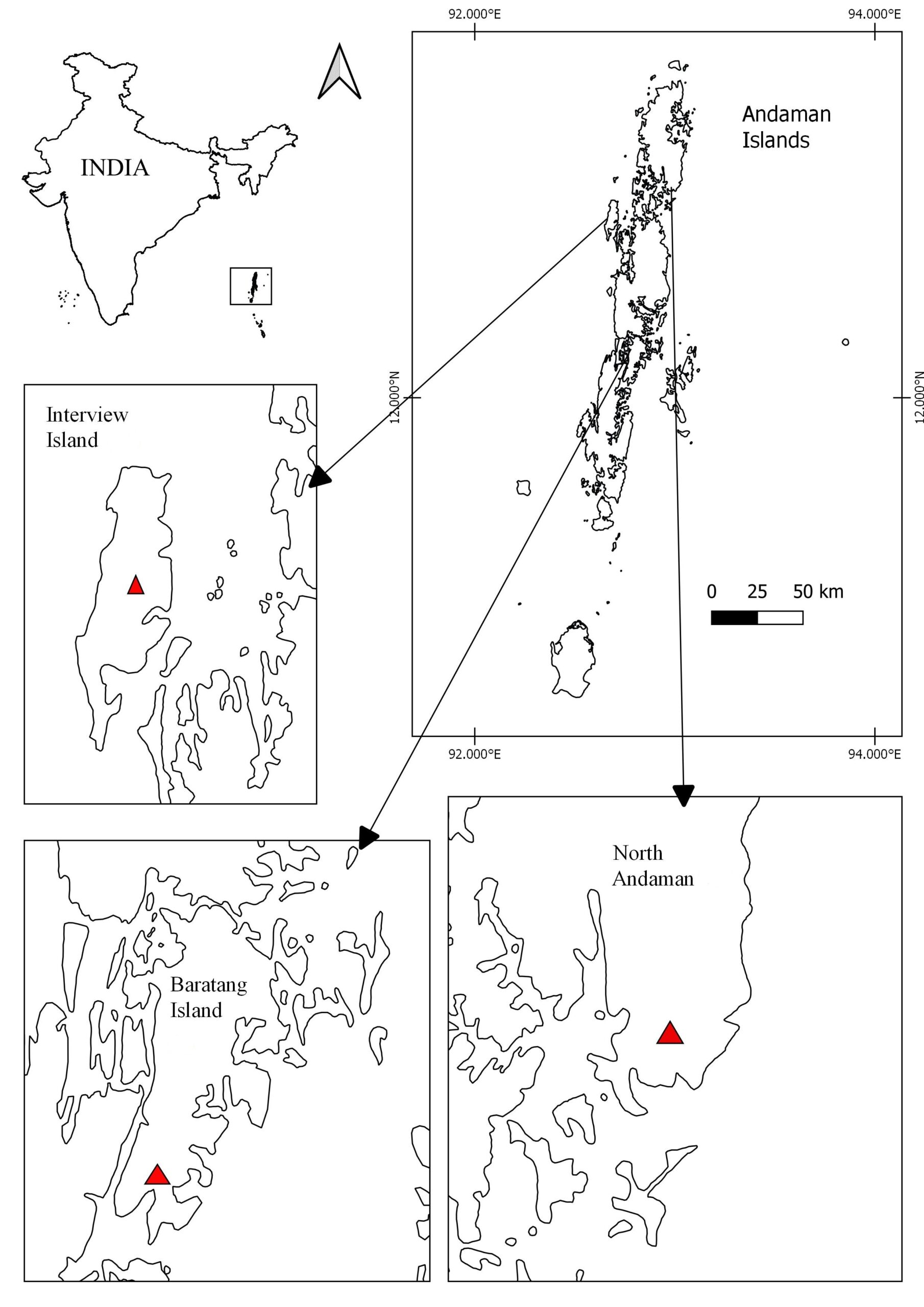
Figure 1. The geographical location of the Chalis-Ek, Interview and Baratang Islands
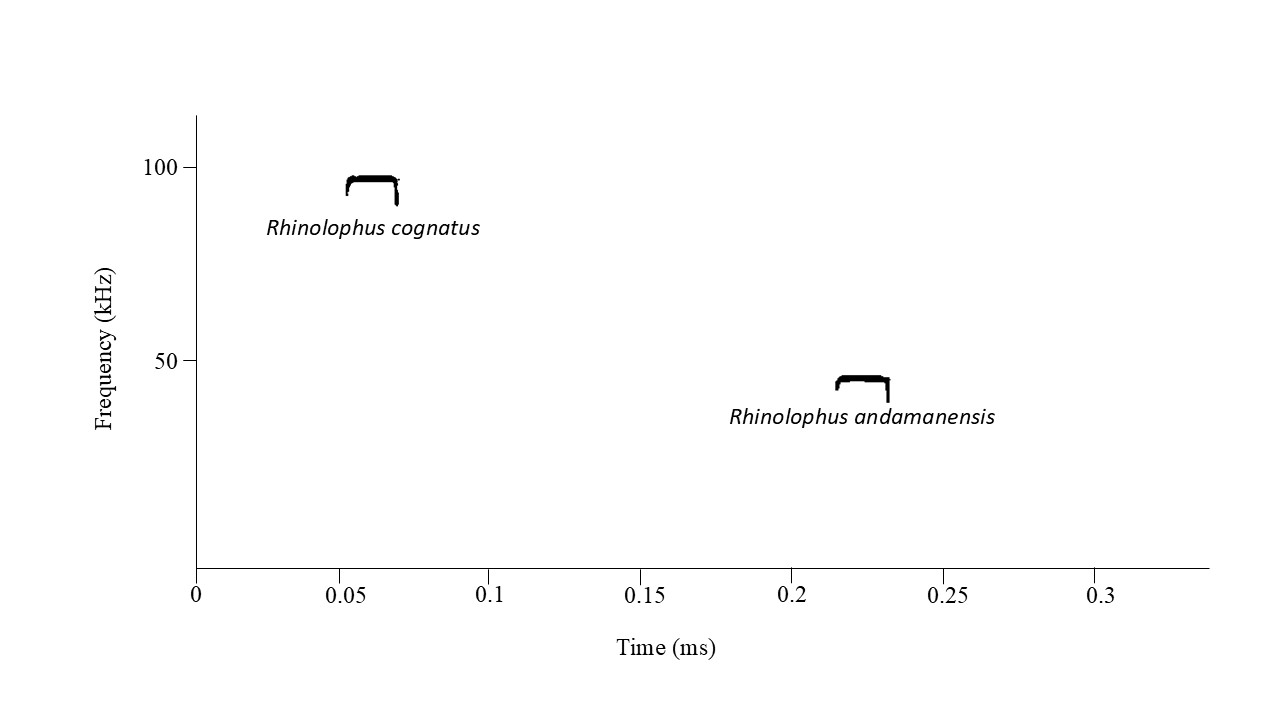 Figure 2. Spectrograms of (A) R. andamanensis (FMAXE range: 56.64 – 58.74 kHz, call duration- 35.24 – 50.40 ms) and (B) R. cognatus used for the identification of the species (FMAXE range: 85.26 – 92.35 kHz, call duration: 40.66 – 59.06 ms)
Table 1. Presence-absence data of Homfray’s Horseshoe Bat (Rhinolophus andamanensis) and Andaman Horseshoe Bat (Rhinolophus cognatus) in different sampling locations in Andaman & Nicobar Islands.; the presence is denoted by ✔ and the absence is denoted by 🗶 , and the Cave IDs are given by the initials of the island names and number of the cave that is being sampled. (IN- Interview Island; CE- Chalis EK; BT- Baratang Island)
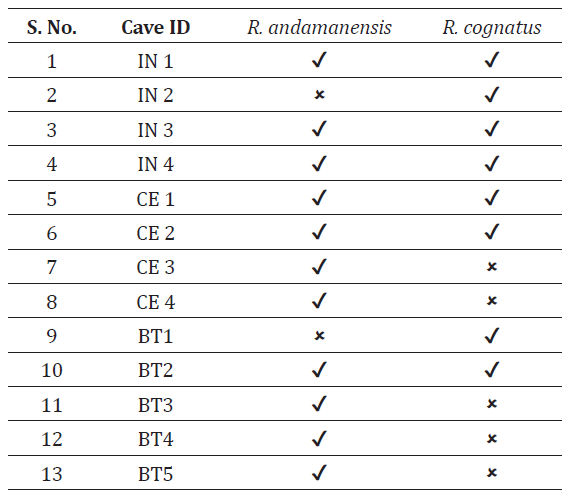
The output of the Joint Probability Test, P(A∩B) > P(A)xP(B), depicts that the congeneric species A (R. andamanensis) and species B (R. cognatus) do occur in the same caves. The Chi-square test, conducted to ratify the finding, further confirmed that the occurrence of these sympatric species is independent of each other and their occurrence in the same cave is by chance (p>0.05).
Following the estimate of Aul (2003) that R. cognatus colonies do not grow more than 50 individuals, we estimate the eight caves identified with the colonies can hold a maximum of 400 individuals (50×8=400) in the study caves.
Discussion
Globally, 28% of caves exhibit high bat diversity and are significantly threatened (Tanalgo et al., 2022). Of the 16 cave-dwelling bats known from the Andaman Islands (Srinivasulu et al. 2017), the R. cognatus is listed in the Endangered category of the IUCN Red List due to its limited population with a declining trend (Aul & Chakravarty, 2016). The species is also among the seven most nationally important bat species listed in Schedule-I of Indian Wild Life (Protection) Amendment Act, 2022. The roosting sites of this endemic and Endangered species and threats to this endemic species are unknown. The species is known to occur with the another endemic congeneric R. andamanensis which is considered relatively common compared to other cave-dwelling bat species in the Andaman Islands (Aul et al., 2014). During the present study, of the 13, eight caves were identified harbouring populations of R. cognatus. Of these six caves, sheltering populations of R. cognatus were also occupied by R. andamanensis. The data further unveiled that the probability of occurrence of these congeneric Rhinolophus species (R. cognatus and R. andamanensis) is 46% and is mutually exclusive. This segregation indicates the randomness of their occurrence in the same cave.
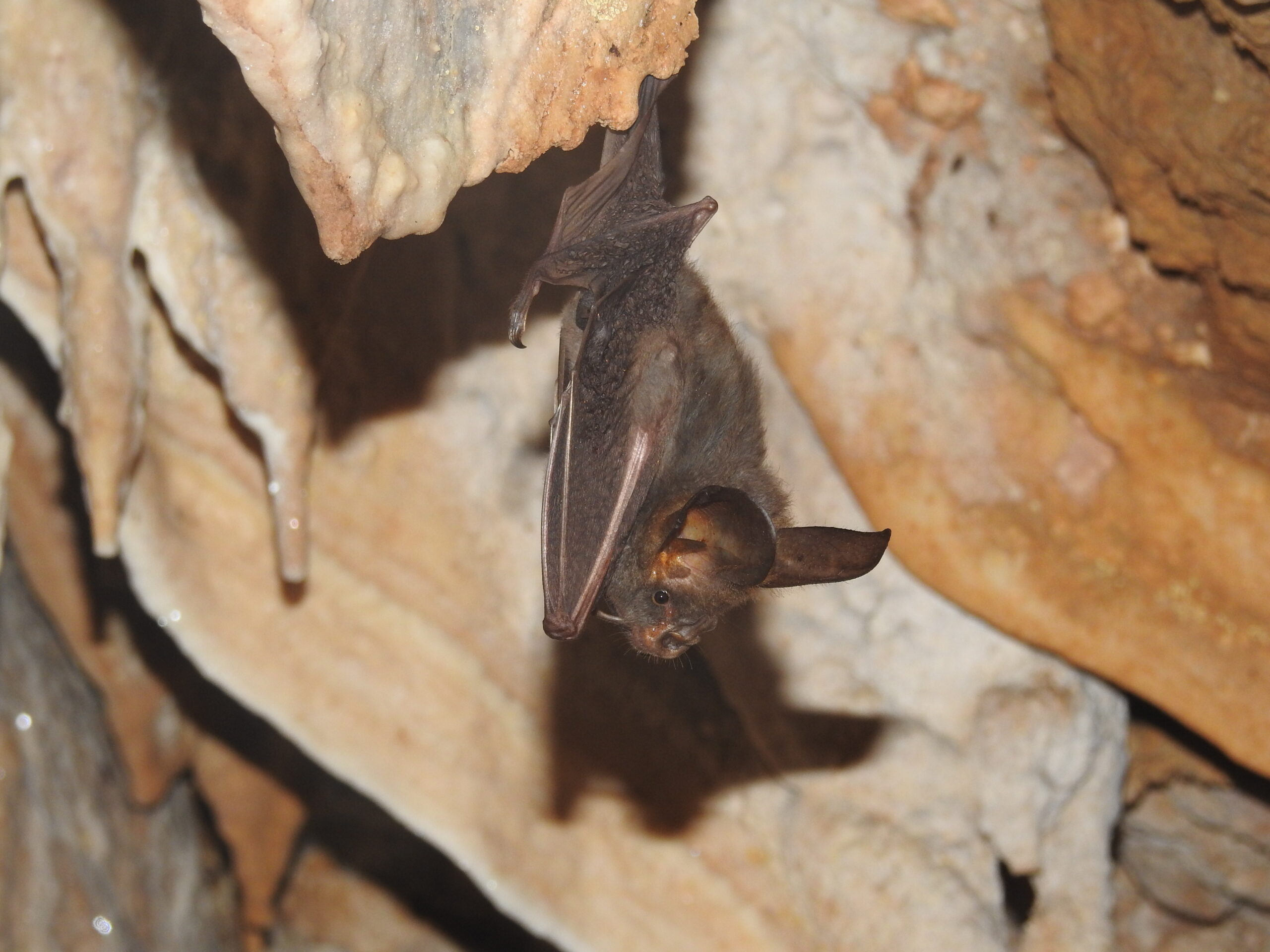
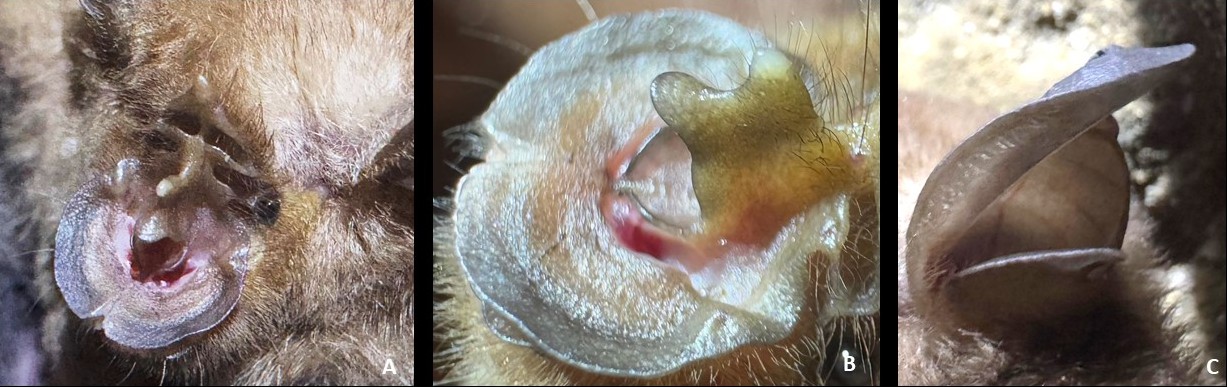
Figure 3. Photographic documentation of the (a) Homfray’s Horseshoe Bat (R. andamanensis) in the Interview Island, (b) Andaman Horseshoe Bat (R. cognatus). The individual was found in one of the caves of the Baratang Island during the study. The photographs display distinct morphological characters. A Horse-shoe shaped nose leaf structure with three mental grooves and a pointed lancet, B Bifid structure of sella, C Pinna with a prominent antitragus in the front
Since, R. andamanensis is common in the islands, its presence can be attributed to its generalist characteristics (Furey et al., 2020), such as roosting in available caves or caverns (Rodríguez-Durán, 2009). Species within genera often share similar roosting behaviours (Rodríguez-Durán, 2009), which may explain the co-occurrence of R. andamanensis and R. cognatus in six caves. This pattern is comparable to the concept known as “paradox of the plankton” (Hutchinson, 1978), which proposes that ecologically similar species can coexist within homogeneous environments due to temporal variation and subtle niche differentiation. In cave systems, such coexistence may be facilitated by differences in call frequencies, morphology, and roosting microhabitat, allowing both species to occupy the same caves with minimal competition.
Salsamendi et al. (2012) documented that congeneric species coexist in the same roost, a pattern also observed in R. pearsoni and R. affinis by Jiang et al. (2008). In various studies (Jiang et al. 2008; Ashrafi et al., 2011; Salsamendi et al., 2012), it has been observed that bat species co-occur when there is low or no dietary overlap or niche separation. Detailed studies on R. andamanensis and R. cognatus can enhance our understanding of their trophic ecology and foraging habits.
According to Scheffer & Van Nes (2006), various mechanisms such as predation, population dynamics, environmental variability, and disturbances help prevent competitive exclusion. Therefore, thorough investigations of both species, their habitat selection, and their interactions can aid in understanding the dynamics of co-occurrence or co-existence of the congeneric R. cognatus and R. andamanensis. As there have been no species-focused attempts to estimate population sizes and habitat requirements for R. cognatus, discussing the selection of caves or habitats by R. cognatus is currently challenging.
During 2013-14, R. Chakravarty (pers. obs.) did not encounter the R. cognatus around the previously known roosting locations in North Andaman, Interview Island, and Little Andaman (Aul, 2003). Furthermore, R. Chakravarty stated that this may be attributed to seasonality. Based on these observations, Aul & Chakravarty (2016) concluded that there is a declining trend in the species’ subpopulations. Unlike Aul & Chakravarty (2016), the present study detected the R. cognatus populations in all four caves surveyed on Interview Island and in two out of four caves surveyed on North Andaman Island (i.e., Chalis-Ek). These variations in population detection may be attributed to the limited survey efforts during previous studies. Considering the variations in the population detection and estimation, there is a dire need to conduct a thorough survey of the population status and distribution across the Andaman Islands to devise conservation plans for this endangered and island-endemic species.
Srinivasulu et al. (2017) estimated the presence of R. cognatus population to be 50-200 individuals. Aul (2003) studied population of R. cognatus in the Andaman Islands by mist-netting at cave openings. R. cognatus colonies generally do not exceed 50 individuals. Taking this estimation into consideration, we estimated that the population of R. cognatus in our study caves could not be more than 400 individuals. However, as the roosting caves of the endemic R. cognatus and R. andamanensis are known, further detailed surveys can provide clarity on the population status of these species in the study sites.
Island-dwelling bats are increasingly threatened by various stochastic events, periods of limited resource availability and increasing anthropogenic activities (Pedersen et al., 2009, Willig et al., 2009). According to Conenna et al. (2017), basic knowledge about ecological features and taxonomy is mostly lacking for Island Endemic Bats (IEBs), which in turn affects the establishment of conservation priorities (Wiles & Brooke, 2009). As Aul & Chakravarty (2016) mentioned, this is true for the R. cognatus. Aul (2003) suspected the disturbance from the illegal harvesting of the cave-dwelling edible-nest swiftlet’s nest as the only known threat. Presently, the illegal harvesting of edible nests from more than 200 caves at all three study sites has been completely stopped since the year 2000 by protecting these caves as part of the ongoing edible-nest swiftlet conservation program (Manchi & Sankaran, 2014; Manchi et al., 2022). Hence, we can conclude that the only known threat to the R. cognatus from the illegal harvesting of the cave-dwelling edible-nest swiftlet’s nest does not exist anymore. Nevertheless, the ecological or other anthropogenic threats to the species were never identified and need to be documented and managed before the species faces any further negative change in its population status. Recognising the urgency recently, the species was included in the Schedule-I (the highest priority species list) of the Wild Life (Protection) Amendment Act, 2022. On the contrary, recently, a cave on Baratang Island was converted into a show cave, with significant modifications inside. This is a growing threat to species like R. cognatus and many other known and unknown cave-dwelling animals in the islands. Hence, the conservation efforts for the endemic and endangered R. cognatus and the island’s cave habitats are critical.
Globally, subterranean habitats are overlooked (Wynne et al., 2021), and the situation in India is even worse, with limited published materials on the conservation prioritization (Biswas, 2022; Saikia et al., 2023; Kawalkar et al., 2024; Kawalkar & Manchi, 2025). This indicates that we still lack significant knowledge regarding this least-explored priority habitat and the fauna living in it. The present study is the first focused survey to identify the colonies of the endemic Rhinolophidae species, including the endangered R. cognatus, in the Andaman Islands. This study is part of ongoing efforts to conserve subterranean habitats in the Andaman Islands; we will continue to identify more colonies of the species and the potential threats to it. Furthermore, it is recommended that science-based conservation efforts be strategised and initiated for the species throughout its distribution range across the Andaman Islands.
Acknowledgement
We thank the Habitats Trust for funding the ongoing “Conserving the Overlooked Subterranean Cave Habitat: A Sustainability Approach” project, under which the present study was conducted. We are equally grateful to the Department of Environment and Forests, Andaman and Nicobar Islands, for the permissions and support. The study would have been impossible without the field assistance of Justin Sumit Kumar, Santial Toppo, and all the swiftlet protectors.
CONFLICT OF INTEREST
The authors declare that they have no competing interests.
DATA AVAILABILITY
Data is available from the corresponding author on request.
AUTHOR CONTRIBUTIONS
DK- Conceptualization, Methodology, Formal analysis, Validation, Writing – original draft, review & editing; MSS- Conceptualization, Methodology, Funding acquisition, Project administration, Resources, Investigation, Validation, Writing – original draft, review & editing; AM- Data curation, Formal analysis, Visualization, Software, Writing – original draft, review & editing; RS- Data curation, PP- Data curation.
Edited By
Abhijit Das
Wildlife Institute of India, Dehradun, India.
*CORRESPONDENCE
Shirish S Manchi
✉ ediblenest@gmail.com
CITATION
Kawalkar, D., Manchi, S. S., Mukherjee, A. J., Sadhukhan, R., Patil, P. R. (2026). Occurrence of the lesser-known endemic Rhinolophidae species in the caves of the Andaman Islands, India: insights from a rapid survey. Journal of Wildlife Science, 3(2), 46-52. https://doi.org/10.63033/JWLS.PJQJ6487
FUNDING
The Habitats Trust (Conservation grant 2023).
COPYRIGHT
© 2026 Kawalkar, Manchi, Mukherjee, Sadhukhan, Patil. This is an open-access article, immediately and freely available to read, download, and share. The information contained in this article is distributed under the terms of the Creative Commons Attribution License (CC BY 4.0
 ), allowing for unrestricted use, distribution, and reproduction in any medium, provided the original work is properly cited in accordance with accepted academic practice. Copyright is retained by the author(s).
PUBLISHED BY
Wildlife Institute of India, Dehradun, 248 001 INDIA
PUBLISHER'S NOTE
The Publisher, Journal of Wildlife Science or Editors cannot be held responsible for any errors or consequences arising from the use of the information contained in this article. All claims expressed in this article are solely those of the author(s) and do not necessarily represent those of their affiliated organisations or those of the publisher, the editors and the reviewers. Any product that may be evaluated or used in this article or claim made by its manufacturer is not guaranteed or endorsed by the publisher.
Ancillotto, L., Allegrini, C., Serangeli, T., Jones, G. & Russo, D. (2015). Sociality across species: spatial proximity of newborn bats promotes heterospecific social bonding. Behavioral Ecology, 26(1), 293–299. https://doi.org/10.1093/beheco/aru193
Ashrafi, S., Beck, A., Rutishauser, M., Arlettaz, R. & Bontadina, F. (2011). Trophic niche partitioning of cryptic species of long-eared bats in Switzerland: implications for conservation. European Journal of Wildlife Research, 57, 843–849. https://doi.org/10.1007/s10344-010-0493-3
Aul, B. (2003). The status and distribution of bats in Andaman and Little Andaman Islands. Andaman and Nicobar Islands Environmental Team Technical Report. Madras Crocodile Bank Trust, Mamallapuram, India.
Aul, B. & Chakravarty, R. (2016). Rhinolophus cognatus. IUCN Red List of Threatened Species 2016: e.T19533A21981807. https://dx.doi.org/10.2305/IUCN.UK.2016-2.RLTS.T19533A21981807.en
Aul, B., Bates, P. J. J., Harrison, D. L. & Marimuthu, G. (2014). Diversity, distribution and status of bats on the Andaman and Nicobar Islands, India. Oryx, 48(2), 204–212. https://doi.org/10.1017/S0030605312000646
Barros, J. S. & Bernard, E. (2023). Species richness, occurrence and rarity of bats in Brazilian caves. Austral Ecology, 48(8), 2144–2170. https://doi.org/10.1111/aec.13453
Bates, P. J. J. & Harrison, D. L. (1997). Bats of the Indian Subcontinent. Harrison Zoological Museum Publication, Sevenoaks, Kent.
Biswas, J. (2022). Cave Science: Insights from the Indian Subcontinent. National Cave Research and Protection Organization, India. ISBN: 978-81-939423-0-7.
Chaturvedi, Y. (1979). Mammals of the Andamans and Nicobars: Their Zoogeography and Faunal Affinity. Records of the Zoological Survey of India, 77, 127–139. https://doi.org/10.26515/rzsi/v77/i1-4/1979/161849
Conenna, I., Rocha, R., Russo, D. & Cabeza, M. (2017). Insular bats and research effort: a review of global patterns and priorities. Mammal Review, 47(3), 169–182. https://doi.org/10.1111/mam.12090
Department of Environment & Forests, Andaman & Nicobar Administration (2026). Mammals. https://forest.and.nic.in/WebPages/mammals.html (Accessed on 20 June 2026)
Douangboubpha, B., Bumrungsri, S., Soisook, P., Murray, S.W., Puechmaille, S.J., Satasook, C., Bu, S.S.H., Harrison, D.L. & Bates, P.J.J. (2010). A taxonomic review of Hipposideros halophyllus, with Additional Information on H. ater and H. cineraceus (Chiroptera: Hipposideridae) from Thailand and Myanmar. Acta Chiropterologica, 12(1), 29-50. https://doi.org/10.3161/150811010X504572
Furey, N., Walston, J., Kingston, T. & Hutson, A. M. (2020). Rhinolophus affinis. The IUCN Red List of Threatened Species 2020: e.T19522A21982358. https://doi.org/10.2305/IUCN.UK.2020-3.RLTS.T19522A21982358.en (Accessed on 12 August 2025).
Gager, Y. (2019). Information transfer about food as a reason for sociality in bats. Mammal Review, 49(2), 113–120. https://doi.org/10.1111/mam.12146
Hutchinson, G. E. (1978). An introduction to population ecology (Vol. 260). Yale University Press, New Haven.
IUCN. (2025). The IUCN Red List of Threatened Species. Version 2025-2. https://www.iucnredlist.org (Accessed on 13 April 2025).
Jiang, T., Feng, J., Sun, K. & Wang, J. (2008). Coexistence of two sympatric and morphologically similar bat species Rhinolophus affinis and Rhinolophus pearsoni. Progress in Natural Science, 18(5), 523–532. https://doi.org/10.1016/j.pnsc.2007.12.005
Jones, K. E., Mickleburgh, S. P., Sechrest, W., Walsh, A. L., Fleming, T. H. & Racey, P. A. (2009). Global overview of the conservation of island bats: importance, challenges and opportunities. In: Fleming, T. H. & Racey, P. A. (eds.), Island Bats: Evolution, Ecology and Conservation, 496–530. University of Chicago Press, Chicago, Illinois, USA.
Kawalkar, D. & Manchi, S. (2020). Coastal caves on the Interview Island of Andaman Islands, India. Carbonates and Evaporites, 35(4), 111. https://doi.org/10.1007/s13146-020-00626-5
Kawalkar, D., Manchi, S., Parab, R. & Lad, P. (2024). First report of a freshwater turtle species as a permanent resident of a cave. The Herpetological Bulletin, 167, 34–36. https://doi.org/10.33256/hb167.3436
Kawalkar, D. & Manchi, S. (2025). Habitat selection theory and cave-dwelling birds: The corollary. Raffles Bulletin of Zoology, 73, 220–232. https://doi.org/10.26107/RBZ-2025-0016
Kelm, D. H., Toelch, U. & Jones, M. M. (2021). Mixed-species groups in bats: non-random roost associations and roost selection in neotropical understory bats. Frontiers in Zoology, 18, 1–12. https://doi.org/10.1186/s12983-021-00418-2
Knörnschild, M. & Tschapka, M. (2012). Predator mobbing behaviour in the greater spear-nosed bat, Phyllostomus hastatus. Chiroptera Neotropical, 18(2), 1132–1135.
Korad, V. S. (2014). Studies on diversity, distribution, and conservation of the bat fauna in Maharashtra State, India. Taprobanica: The Journal of Asian Biodiversity, 6(1), 1–13. https://doi.org/10.4038/tapro.v6i1.7155
Kunz, T. H., Lumsden, L. F. & Fenton, M. B. (2003). Ecology of cavity and foliage roosting bats. In: Kunz, T. H. & Fenton, M. B. (eds.), Bat Ecology. University of Chicago Press, Chicago, Illinois, USA. pp.3–89.
Manchi, S. & Sankaran, R. (2009). Predators of swiftlets and their nests in the Andaman Islands. Indian Birds, 5, 118–120.
Manchi, S. & Sankaran, R. (2014). Protection of the white-nest swiftlet Aerodramus fuciphagus in the Andaman Islands, India: an assessment. Oryx, 48(2), 213–217. https://doi.org/10.1017/S0030605311000603
Manchi, S., Kawalkar, D., Gurjarpadhye, P., Dhamorikar, A. & Jena, S. K. (2022). In-situ and ex-situ conservation of endemic Andaman Edible-nest Swiftlet in the Andaman and Nicobar Islands. Sálim Ali Centre for Ornithology and Natural History, Coimbatore, India. p.104.
Mane, A. M., Prabakaran, N. & Manchi, S. S. (2019). Floral diversity, composition, and recruitment on the karstland of Baratang Island, India. Ecological Complexity, 37, 47–54. https://doi.org/10.1016/j.ecocom.2018.11.002
Menon, V. (2023). Indian Mammals: A Field Guide. Hachette India.
Pederson, S. C., Kwiecinski, G. G., Larsen, P. L., Morton, M. N., Adams, R. A., Genoways, H. H. & Swier, V. J. (2009). Bats of Montserrat: population fluctuation in response to hurricanes and volcanoes, 1978–2005. In: Fleming, T. H. & Racey, P. A. (eds.), Island Bats: Evolution, Ecology and Conservation. University of Chicago Press, Chicago, Illinois, USA. pp.302–340.
Pitta, E., Giokas, S. & Sfenthourakis, S. (2012). Significant pairwise co-occurrence patterns are not the rule in the majority of biotic communities. Diversity, 4(2), 179–193. https://doi.org/10.3390/d4020179
Rodríguez-Durán, A. (1998). Non-random aggregations and distribution of cave-dwelling bats in Puerto Rico. Journal of Mammalogy, 79(1), 141–146. https://doi.org/10.2307/1382848
Rodríguez-Durán, A. (2009). Bat assemblages in the West Indies: the role of caves. In: Fleming, T. H. & Racey, P. A. (eds.), Island Bats: Ecology, Evolution and Conservation. University of Chicago Press, Chicago, Illinois, USA. pp.265–280.
Salsamendi, E., Garin, I., Arostegui, I., Goiti, U. & Aihartza, J. (2012). What mechanism of niche segregation allows the coexistence of sympatric sibling rhinolophid bats? Frontiers in Zoology, 9, 30. https://doi.org/10.1186/1742-9994-9-30
Sankaran, R. (2001). The status and conservation of the Edible-nest Swiftlet Collocalia fuciphaga in the Andaman and Nicobar Islands. Biological Conservation, 97, 283–294. https://doi.org/10.1016/S0006-3207(00)00124-5
Saikia, U., Daly, B. K., Manuel, R. (2023) Caves as priority area for conservation of the lesser known mammalian fauna of Meghalaya, North-eastern India. Current Science, 124 (9), 1021-1022. https://www.currentscience.ac.in/Volumes/124/09/1021.pdf
Scheffer, M. & van Nes, E. H. (2006). Self-organized similarity: the evolutionary emergence of groups of similar species. Proceedings of the National Academy of Sciences, 103(16), 6230–6235. https://doi.org/10.1073/pnas.0508024103
Soisook, P., Karapan, S., Satasook, C. & Bates, P. J. J. (2013). A new species of Murina (Mammalia: Chiroptera: Vespertilionidae) from peninsular Thailand. Zootaxa, 3746, 567–579. http://dx.doi.org/10.11646/zootaxa.3746.4.4
Srinivasulu, C., Srinivasulu, A., Srinivasulu, B., Gopi, A., Dar, T. H., Bates, P. J., Rossiter, S. J. & Jones, G. (2017). Recent surveys of bats from the Andaman Islands, India: diversity, distribution, and echolocation characteristics. Acta Chiropterologica, 19(2), 419–437. https://doi.org/10.3161/15081109ACC2017.19.2.018
Srinivasulu, C., Srinivasulu, A., Srinivasulu, B. & Jones, G. (2019). Integrated approaches to identifying cryptic bat species in areas of high endemism: the case of Rhinolophus andamanensis in the Andaman Islands. PLoS One, 14(10), e0213562. https://doi.org/10.1371/journal.pone.0213562
Srinivasulu, A., Srinivasulu, C., Srinivasulu, B., Senapathi, D. & González-Suárez, M. (2025). Bat echolocation in South Asia. Journal of Threatened Taxa, 17(11): 27897–27931. https://doi.org/10.11609/jott.9550.17.11.27897-27931
Struebig, M. J., Kingston, T., Zubaid, A., Le Comber, S. C., Mohd-Adnan, A., Turner, A., Kelly, J., Bożek, M. & Rossiter, S. J. (2009). Conservation importance of limestone karst outcrops for Palaeotropical bats in a fragmented landscape. Biological Conservation, 142(10), 2089–2096. https://doi.org/10.1016/j.biocon.2009.04.005
Tanalgo, K. C., Oliveira, H. F. & Hughes, A. C. (2022). Mapping global conservation priorities and habitat vulnerabilities for cave-dwelling bats in a changing world. Science of the Total Environment, 843, 156909. https://doi.org/10.1016/j.scitotenv.2022.156909
Wiles, G. J. & Brooke, A. P. (2009). Conservation threats to bats in the tropical islands and insular Southeast Asia. In: Fleming, T. H. & Racey, P. A. (eds.), Island Bats: Ecology, Evolution and Conservation, pp.405–459. University of Chicago Press, Chicago, Illinois, USA. pp.405–459.
Willig, M. R., Lyons, S. K., Stevens, R. D., Kunz, T. & Parsons, S. (2009). Spatial methods for the macroecological study of bats. In: Kunz, T. H. & Parsons, S. (eds.), Ecological and Behavioral Methods for the Study of Bats (2nd ed.). Johns Hopkins University Press, Baltimore, MD.
Wynne, J. J., Howarth, F. G., Mammola, S., Ferreira, R. L., Cardoso, P., Di Lorenzo, T., Galassi, D. M. P., Medellin, R. A., Miller, B. W. et al. (2021). A conservation roadmap for the subterranean biome. Conservation Letters, 14(5), e12834. https://doi.org/10.1111/conl.12834
Zohuri, B., Mossavar-Rahmani, F. & Behgounia, F. (2022). Predictive analytics. In: Zohuri, B. (ed.), Knowledge is Power in Four Dimensions: Models to Forecast Future Paradigm, pp. 573–637. Academic Press. pp. 573–637. ISBN: 978-0-323-95112-8, https://doi.org/10.1016/C2021-0-02583-9

Edited By
Abhijit Das
Wildlife Institute of India, Dehradun, India.
*CORRESPONDENCE
Shirish S Manchi
✉ ediblenest@gmail.com
CITATION
Kawalkar, D., Manchi, S. S., Mukherjee, A. J., Sadhukhan, R., Patil, P. R. (2026). Occurrence of the lesser-known endemic Rhinolophidae species in the caves of the Andaman Islands, India: insights from a rapid survey. Journal of Wildlife Science, 3(2), 46-52. https://doi.org/10.63033/JWLS.PJQJ6487
FUNDING
The Habitats Trust (Conservation grant 2023).
COPYRIGHT
© 2026 Kawalkar, Manchi, Mukherjee, Sadhukhan, Patil. This is an open-access article, immediately and freely available to read, download, and share. The information contained in this article is distributed under the terms of the Creative Commons Attribution License (CC BY 4.0), allowing for unrestricted use, distribution, and reproduction in any medium, provided the original work is properly cited in accordance with accepted academic practice. Copyright is retained by the author(s).
PUBLISHED BY
Wildlife Institute of India, Dehradun, 248 001 INDIA
PUBLISHER'S NOTE
The Publisher, Journal of Wildlife Science or Editors cannot be held responsible for any errors or consequences arising from the use of the information contained in this article. All claims expressed in this article are solely those of the author(s) and do not necessarily represent those of their affiliated organisations or those of the publisher, the editors and the reviewers. Any product that may be evaluated or used in this article or claim made by its manufacturer is not guaranteed or endorsed by the publisher.
Ancillotto, L., Allegrini, C., Serangeli, T., Jones, G. & Russo, D. (2015). Sociality across species: spatial proximity of newborn bats promotes heterospecific social bonding. Behavioral Ecology, 26(1), 293–299. https://doi.org/10.1093/beheco/aru193
Ashrafi, S., Beck, A., Rutishauser, M., Arlettaz, R. & Bontadina, F. (2011). Trophic niche partitioning of cryptic species of long-eared bats in Switzerland: implications for conservation. European Journal of Wildlife Research, 57, 843–849. https://doi.org/10.1007/s10344-010-0493-3
Aul, B. (2003). The status and distribution of bats in Andaman and Little Andaman Islands. Andaman and Nicobar Islands Environmental Team Technical Report. Madras Crocodile Bank Trust, Mamallapuram, India.
Aul, B. & Chakravarty, R. (2016). Rhinolophus cognatus. IUCN Red List of Threatened Species 2016: e.T19533A21981807. https://dx.doi.org/10.2305/IUCN.UK.2016-2.RLTS.T19533A21981807.en
Aul, B., Bates, P. J. J., Harrison, D. L. & Marimuthu, G. (2014). Diversity, distribution and status of bats on the Andaman and Nicobar Islands, India. Oryx, 48(2), 204–212. https://doi.org/10.1017/S0030605312000646
Barros, J. S. & Bernard, E. (2023). Species richness, occurrence and rarity of bats in Brazilian caves. Austral Ecology, 48(8), 2144–2170. https://doi.org/10.1111/aec.13453
Bates, P. J. J. & Harrison, D. L. (1997). Bats of the Indian Subcontinent. Harrison Zoological Museum Publication, Sevenoaks, Kent.
Biswas, J. (2022). Cave Science: Insights from the Indian Subcontinent. National Cave Research and Protection Organization, India. ISBN: 978-81-939423-0-7.
Chaturvedi, Y. (1979). Mammals of the Andamans and Nicobars: Their Zoogeography and Faunal Affinity. Records of the Zoological Survey of India, 77, 127–139. https://doi.org/10.26515/rzsi/v77/i1-4/1979/161849
Conenna, I., Rocha, R., Russo, D. & Cabeza, M. (2017). Insular bats and research effort: a review of global patterns and priorities. Mammal Review, 47(3), 169–182. https://doi.org/10.1111/mam.12090
Department of Environment & Forests, Andaman & Nicobar Administration (2026). Mammals. https://forest.and.nic.in/WebPages/mammals.html (Accessed on 20 June 2026)
Douangboubpha, B., Bumrungsri, S., Soisook, P., Murray, S.W., Puechmaille, S.J., Satasook, C., Bu, S.S.H., Harrison, D.L. & Bates, P.J.J. (2010). A taxonomic review of Hipposideros halophyllus, with Additional Information on H. ater and H. cineraceus (Chiroptera: Hipposideridae) from Thailand and Myanmar. Acta Chiropterologica, 12(1), 29-50. https://doi.org/10.3161/150811010X504572
Furey, N., Walston, J., Kingston, T. & Hutson, A. M. (2020). Rhinolophus affinis. The IUCN Red List of Threatened Species 2020: e.T19522A21982358. https://doi.org/10.2305/IUCN.UK.2020-3.RLTS.T19522A21982358.en (Accessed on 12 August 2025).
Gager, Y. (2019). Information transfer about food as a reason for sociality in bats. Mammal Review, 49(2), 113–120. https://doi.org/10.1111/mam.12146
Hutchinson, G. E. (1978). An introduction to population ecology (Vol. 260). Yale University Press, New Haven.
IUCN. (2025). The IUCN Red List of Threatened Species. Version 2025-2. https://www.iucnredlist.org (Accessed on 13 April 2025).
Jiang, T., Feng, J., Sun, K. & Wang, J. (2008). Coexistence of two sympatric and morphologically similar bat species Rhinolophus affinis and Rhinolophus pearsoni. Progress in Natural Science, 18(5), 523–532. https://doi.org/10.1016/j.pnsc.2007.12.005
Jones, K. E., Mickleburgh, S. P., Sechrest, W., Walsh, A. L., Fleming, T. H. & Racey, P. A. (2009). Global overview of the conservation of island bats: importance, challenges and opportunities. In: Fleming, T. H. & Racey, P. A. (eds.), Island Bats: Evolution, Ecology and Conservation, 496–530. University of Chicago Press, Chicago, Illinois, USA.
Kawalkar, D. & Manchi, S. (2020). Coastal caves on the Interview Island of Andaman Islands, India. Carbonates and Evaporites, 35(4), 111. https://doi.org/10.1007/s13146-020-00626-5
Kawalkar, D., Manchi, S., Parab, R. & Lad, P. (2024). First report of a freshwater turtle species as a permanent resident of a cave. The Herpetological Bulletin, 167, 34–36. https://doi.org/10.33256/hb167.3436
Kawalkar, D. & Manchi, S. (2025). Habitat selection theory and cave-dwelling birds: The corollary. Raffles Bulletin of Zoology, 73, 220–232. https://doi.org/10.26107/RBZ-2025-0016
Kelm, D. H., Toelch, U. & Jones, M. M. (2021). Mixed-species groups in bats: non-random roost associations and roost selection in neotropical understory bats. Frontiers in Zoology, 18, 1–12. https://doi.org/10.1186/s12983-021-00418-2
Knörnschild, M. & Tschapka, M. (2012). Predator mobbing behaviour in the greater spear-nosed bat, Phyllostomus hastatus. Chiroptera Neotropical, 18(2), 1132–1135.
Korad, V. S. (2014). Studies on diversity, distribution, and conservation of the bat fauna in Maharashtra State, India. Taprobanica: The Journal of Asian Biodiversity, 6(1), 1–13. https://doi.org/10.4038/tapro.v6i1.7155
Kunz, T. H., Lumsden, L. F. & Fenton, M. B. (2003). Ecology of cavity and foliage roosting bats. In: Kunz, T. H. & Fenton, M. B. (eds.), Bat Ecology. University of Chicago Press, Chicago, Illinois, USA. pp.3–89.
Manchi, S. & Sankaran, R. (2009). Predators of swiftlets and their nests in the Andaman Islands. Indian Birds, 5, 118–120.
Manchi, S. & Sankaran, R. (2014). Protection of the white-nest swiftlet Aerodramus fuciphagus in the Andaman Islands, India: an assessment. Oryx, 48(2), 213–217. https://doi.org/10.1017/S0030605311000603
Manchi, S., Kawalkar, D., Gurjarpadhye, P., Dhamorikar, A. & Jena, S. K. (2022). In-situ and ex-situ conservation of endemic Andaman Edible-nest Swiftlet in the Andaman and Nicobar Islands. Sálim Ali Centre for Ornithology and Natural History, Coimbatore, India. p.104.
Mane, A. M., Prabakaran, N. & Manchi, S. S. (2019). Floral diversity, composition, and recruitment on the karstland of Baratang Island, India. Ecological Complexity, 37, 47–54. https://doi.org/10.1016/j.ecocom.2018.11.002
Menon, V. (2023). Indian Mammals: A Field Guide. Hachette India.
Pederson, S. C., Kwiecinski, G. G., Larsen, P. L., Morton, M. N., Adams, R. A., Genoways, H. H. & Swier, V. J. (2009). Bats of Montserrat: population fluctuation in response to hurricanes and volcanoes, 1978–2005. In: Fleming, T. H. & Racey, P. A. (eds.), Island Bats: Evolution, Ecology and Conservation. University of Chicago Press, Chicago, Illinois, USA. pp.302–340.
Pitta, E., Giokas, S. & Sfenthourakis, S. (2012). Significant pairwise co-occurrence patterns are not the rule in the majority of biotic communities. Diversity, 4(2), 179–193. https://doi.org/10.3390/d4020179
Rodríguez-Durán, A. (1998). Non-random aggregations and distribution of cave-dwelling bats in Puerto Rico. Journal of Mammalogy, 79(1), 141–146. https://doi.org/10.2307/1382848
Rodríguez-Durán, A. (2009). Bat assemblages in the West Indies: the role of caves. In: Fleming, T. H. & Racey, P. A. (eds.), Island Bats: Ecology, Evolution and Conservation. University of Chicago Press, Chicago, Illinois, USA. pp.265–280.
Salsamendi, E., Garin, I., Arostegui, I., Goiti, U. & Aihartza, J. (2012). What mechanism of niche segregation allows the coexistence of sympatric sibling rhinolophid bats? Frontiers in Zoology, 9, 30. https://doi.org/10.1186/1742-9994-9-30
Sankaran, R. (2001). The status and conservation of the Edible-nest Swiftlet Collocalia fuciphaga in the Andaman and Nicobar Islands. Biological Conservation, 97, 283–294. https://doi.org/10.1016/S0006-3207(00)00124-5
Saikia, U., Daly, B. K., Manuel, R. (2023) Caves as priority area for conservation of the lesser known mammalian fauna of Meghalaya, North-eastern India. Current Science, 124 (9), 1021-1022. https://www.currentscience.ac.in/Volumes/124/09/1021.pdf
Scheffer, M. & van Nes, E. H. (2006). Self-organized similarity: the evolutionary emergence of groups of similar species. Proceedings of the National Academy of Sciences, 103(16), 6230–6235. https://doi.org/10.1073/pnas.0508024103
Soisook, P., Karapan, S., Satasook, C. & Bates, P. J. J. (2013). A new species of Murina (Mammalia: Chiroptera: Vespertilionidae) from peninsular Thailand. Zootaxa, 3746, 567–579. http://dx.doi.org/10.11646/zootaxa.3746.4.4
Srinivasulu, C., Srinivasulu, A., Srinivasulu, B., Gopi, A., Dar, T. H., Bates, P. J., Rossiter, S. J. & Jones, G. (2017). Recent surveys of bats from the Andaman Islands, India: diversity, distribution, and echolocation characteristics. Acta Chiropterologica, 19(2), 419–437. https://doi.org/10.3161/15081109ACC2017.19.2.018
Srinivasulu, C., Srinivasulu, A., Srinivasulu, B. & Jones, G. (2019). Integrated approaches to identifying cryptic bat species in areas of high endemism: the case of Rhinolophus andamanensis in the Andaman Islands. PLoS One, 14(10), e0213562. https://doi.org/10.1371/journal.pone.0213562
Srinivasulu, A., Srinivasulu, C., Srinivasulu, B., Senapathi, D. & González-Suárez, M. (2025). Bat echolocation in South Asia. Journal of Threatened Taxa, 17(11): 27897–27931. https://doi.org/10.11609/jott.9550.17.11.27897-27931
Struebig, M. J., Kingston, T., Zubaid, A., Le Comber, S. C., Mohd-Adnan, A., Turner, A., Kelly, J., Bożek, M. & Rossiter, S. J. (2009). Conservation importance of limestone karst outcrops for Palaeotropical bats in a fragmented landscape. Biological Conservation, 142(10), 2089–2096. https://doi.org/10.1016/j.biocon.2009.04.005
Tanalgo, K. C., Oliveira, H. F. & Hughes, A. C. (2022). Mapping global conservation priorities and habitat vulnerabilities for cave-dwelling bats in a changing world. Science of the Total Environment, 843, 156909. https://doi.org/10.1016/j.scitotenv.2022.156909
Wiles, G. J. & Brooke, A. P. (2009). Conservation threats to bats in the tropical islands and insular Southeast Asia. In: Fleming, T. H. & Racey, P. A. (eds.), Island Bats: Ecology, Evolution and Conservation, pp. 405–459. University of Chicago Press, Chicago, Illinois, USA. pp. 405–459.
Willig, M. R., Lyons, S. K., Stevens, R. D., Kunz, T. & Parsons, S. (2009). Spatial methods for the macroecological study of bats. In: Kunz, T. H. & Parsons, S. (eds.), Ecological and Behavioral Methods for the Study of Bats (2nd ed.). Johns Hopkins University Press, Baltimore, MD.
Wynne, J. J., Howarth, F. G., Mammola, S., Ferreira, R. L., Cardoso, P., Di Lorenzo, T., Galassi, D. M. P., Medellin, R. A., Miller, B. W. et al. (2021). A conservation roadmap for the subterranean biome. Conservation Letters, 14(5), e12834. https://doi.org/10.1111/conl.12834
Zohuri, B., Mossavar-Rahmani, F. & Behgounia, F. (2022). Predictive analytics. In: Zohuri, B. (ed.), Knowledge is Power in Four Dimensions: Models to Forecast Future Paradigm, pp. 573–637. Academic Press. pp. 573–637. ISBN: 978-0-323-95112-8, https://doi.org/10.1016/C2021-0-02583-9


